US House Passes Amendment to Prevent Owyhee National Monument

DSC_0296

Katie Aguilera

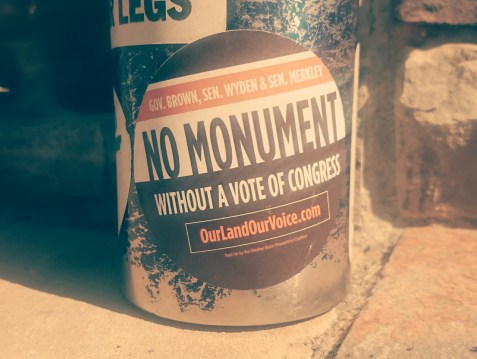
On Thursday, the US House of Representatives passed H.R. 2822, an appropriation bill for the Department of Interior by a vote of 231-196.  Attached to the bill is an amendment that will prohibit the President from declaring certain areas National Monuments.  One of those areas is the Owyhee Canyonlands.

The amendment states:

None of the funds made available by this Act may be used to make a Presidential declaration by public proclamation of a national monument under chapter 3203 of title 54, United States Code in the counties of Mohave and Coconino in the State of Arizona, in the counties of Modoc and Siskiyou in the State of California, in the counties of Chaffee, Moffat, and Park in the State of Colorado, in the counties of Lincoln, Clark, and Nye in the State of Nevada, in the county of Otero in the State of New Mexico, in the counties of Jackson, Josephine and, Malheur in the State of Oregon, or in the counties of Wayne, Garfield, and Kane in the State of Utah.

House Democrats attempted to remove the amendment from H.R. 2822 but were unsuccessful by a vote of 202-225.

On his website, Rep. Greg Walden (R-Or) states, “The President shouldn’t be able to lock up thousands of acres of federal land to all productive uses with just the stroke of his pen and no say from the people who are most affected. Some have identified the Owyhee Desert as a target for a national monument designation, and I have heard strong local opposition to such an action.”

According to this July 15, 2016 Argus Observer article, H.R. 2822 also includes a provision for “$480 million for payments in lieu of taxes, which provides money for county governments to offset losses in property taxes on federal land.  It will also delay “for at least one year further action on greater sage grouse and eliminates a proposed increase on grazing fees on federal land.”

That article goes on to say that the bill may face filibuster in the Senate, and President Obama has threatened to veto it if it passes the Senate in its current form.

You can read why I feel the Owyhee Canyonlands should not be declared a National Monument here.

New Gun Control Measures Signed Into Law in California

_20160702_171750

Katie Aguilera

On Thursday, June 30, 2016, the California senate approved a series of gun control measures.  On Friday, Governor Brown signed many of them into law to take effect next year.

These include the requirement that owners of magazines that hold more than 10 rounds must give them up.  They also make the sale of guns with bullet buttons illegal and require current owners of such guns to register them.  Additionally, the new laws will require that ammunition sellers be licensed, and that purchasers of ammunition undergo a background check and the purchases must be recorded.

The measures were pushed through the Senate in order to have them passed before the summer recess in an effort to “forestall a competing gun control proposal headed for the November ballot” according to this Huffington Post article.  That article goes on to say it was rushed through because Democrats “worried in part that Newsom’s [Lt Governor Gavin Newsom] initiative would boost turnout in November among Republicans who oppose gun control.”

This Mercury News article puts it this way:

Speaking to reporters after the vote, De Leon [California Senate’s top Democrat, Kevin de Leon] thanked Newsom for “keeping gun control on the front burner” and inspiring the Legislature to act.  But citing concerns that Newsom’s measure could fail, he insisted the Capitol is the best place to craft tighter rules for gun owners–not the ballot box.  In addition, many Democratic leaders worry that the measure could drive pro-gun voters to the polls in November and swing close congressional and legislative races.

A valid concern, considering that according to polls discussed in this Yahoo News article, in 2014, 63 percent of Americans believe guns make homes safer, and California protesters are already saying that they won’t comply with the new laws.

Don’t let those pesky voters decide for themselves!

These new laws passed in California, not unlike the passage of  Senate Bill 277 among others, are important as California often leads the way on such changes. If California sets the precedent, other states may follow suit.

The Yahoo News article linked above states, “long a legislative leader in the US on issues from energy to farming, California’s new gun control package also comes amid growing judicial concerns about so-called right to carry laws, which give officials little leeway in denying concealed carry licenses.  Last month, the federal 9th Circuit Court of Appeals upheld the right of California to control who can carry a concealed weapon, requiring ‘good cause’ to do so.”

There is a plethora of information available online regarding the effectiveness, or lack thereof, of gun control laws.  Here are just a few to consider, this article on assault weapon bans, this video, and this video, both on gun control measures.  You can also read what I wrote after the San Bernardino shootings here.

***********

Man Arrested After Attempting To Bomb BLM Facility in FBI Sting Operation

Yesterday, June 22, 2016, the Federal Bureau of Investigation arrested William Keebler in Nephi, Utah, after he allegedly attempted to detonate a fake bomb they had provided him with.  Keebler was present in Bunkerville, Nevada in 2014, at the Bundy ranch and apparently at the stand off between Bundy supporters and the BLM on April 12, 2014.  He is described as the leader of a citizen militia group, the Patriots Defense Force.

The felony complaint document states that Keebler was an associate of Lavoy Finicum, the Arizona rancher killed by law enforcement at a roadblock in Oregon during the occupation of the Malheur National Wildlife Refuge earlier this year.

According to the felony complaint, the FBI had had undercover officers inside the Patriots Defense Force, acting as members and participating in various training exercises with the militia group, for several months.  The felony complaint describes several meetings over that time period in which Keebler discussed “going on the offensive” and “gathering intelligence on potential targets.”  One such meeting is described as follows:

On March 19, 2016, Keebler organized and led an FTX [field training exercise] for the PDF militia group.  Keebler described the direction the PDF was going to focus on.  Keebler said the government had been allowed to harass people, but the repercussions were going to start.  Keebler had previously said the BLM was overreaching their authority to implement grazing restrictions on ranchers.  Keebler had opined the land belonged to “the people” and could be used responsibly at the American people’s discretion.  Keebler said the PDF was going to target BLM facilities in the “middle of nowhere.”  Keebler stated the PDF was going to sneak in and severely damage vehicles or buildings.  Keebler requested a PDF member/UCE [FBI undercover employees] who has explosive materials expertise, to build an explosive device that could disable a BLM vehicle or damage a building.  Keebler made it clear he didn’t plan on blowing people up for now, but he wanted his group to be prepared to escalate things, and take people out if necessary.

On May 14, 2016, Keebler announced to the group that they would target a BLM facility at Mount Trumbull, Arizona and requested two bombs be built by the UCE, one to place at the facility to be remotely detonated, and the other for use in case they were stopped by law enforcement on the way to or from the BLM facility.

According to the felony complaint, Keebler had previously scouted the Mount Trumbull facility in October, 2015, with Lavoy Finicum, accompanied by an FBI undercover employee who took pictures of the facility.

On June 21, 2016, one of these devices was “placed against the door of one of the BLM cabins in Mount Trumbull [Arizona].  After the device was placed against the door, Keebler was handed a remote detonation device.  Keebler then pushed the detonator button multiple times in order to remotely detonate the inert explosive.”  Keebler was arrested the following morning after he had returned to Utah.

This calls several things into question for me.  First of all, who placed the bomb next to the door of the BLM cabin?  Who handed the detonator to Keebler?  Was it entirely Keebler’s idea and decision to bomb a BLM facility?  It wouldn’t be the first time the FBI has stopped  a crime that they helped to plan.

One example that most of my fellow Oregonians probably remember is the case of Mohamed Osman Mohamud who was arrested in Portland, Oregon, in 2010 for attempting to detonate a fake car bomb at a Christmas tree lighting ceremony.  The FBI had provided him the bomb after encouraging the plot.

In a September 18, 2011 Los Angeles Times Op ed, Petra Bartosiewicz writes:

The government’s marquee post-9/11 terrorism investigations, including cases such as the Miami Seven, the Ft. Dix Six and last year’s Portland Christmas Tree Bomber, have not involved real attacks but, rather, have been sting operations involving plots invented by law enforcement. New York University’s Center on Law and Security, which tracks federal terrorism prosecutions, reports that since 2009, the FBI has escalated its use of stings in which a confidential informant or undercover officer approaches a suspect and “assists him in the planning of an attempted terror crime.”

The defendants in these plots, most of them male Muslim immigrants with no history of terrorism or violence, have become unwitting actors in a disturbing theatrical performance: The FBI scripts the plot and provides the weapons, along with money, cars and any other logistical support needed to carry out the “attack.”

She goes on to discuss the argument that only the “true bad guys will take the bait” in such sting operations by stating, “terrorism stings go much further than presenting a likely bad guy with a passing criminal opportunity. The operations last for months and sometimes years, with suspects offered all manner of enticements to participate in a plot they probably would never have come up with on their own.”

I suppose that we should all feel so much safer as the FBI is so effective at stopping their own plots.  Even though they were unable to stop Omar Mateen from killing 49 people in Orlando, Florida in spite of the fact that the gun dealership where Mateen requested a thousand rounds of ammunition and body armor reported concern about him to the FBI weeks before the shooting.  And this after Mateen had previously been on the terrorist watch list and under intense investigation in 2013-2014.

Even though they seem unable to stop armed wildlife refuge “take overs” in spite of their success, as demonstrated in this case with Keebler, at infiltrating groups associated with those who did occupy the Malheur refuge.  Clearly all the surveillance and infiltrating works wonders.

UPDATE, June 29th, 2016:  According to this Salt Lake Tribune article published today,  “Lavoy Finicum did not accompany Keebler when he scouted the BLM cabins in October 2015, as was alleged in the charging documents.”  The article also states that Keebler’s federal defender said in court:

“…undercover agents proposed the explosive types, drove Keebler to the location, placed the bomb, handed Keebler a remote trigger and told him to press the button three times.”


The Owyhee Canyonlands Debate

_20160531_100551

Katie Aguilera

On Monday, May 23rd, I spent a good part of the day at the Oregon state capitol in Salem attending the House Interim Committee on Rural Communities, Land Use, and Water informational hearing regarding the Owyhee Canyonlands Monument proposal.  It was a very well attended meeting, with  the main hearing room and an overflow room filled to capacity.  This is a pretty important topic here in Oregon right now, in the aftermath of the occupation of the Malheur National Wildlife Refuge earlier this year which brought national attention to a number of issues.  Not the least of which is the debate over who should control public lands, the states those lands are contained within, or the federal government.

The Owyhee Canyonlands Monument proposal seeks to add an additional layer of permanent protection to 2.5 million acres in southeast Oregon by having the area declared a national monument by the President through the use of the Antiquities Act of 1906. According to this report written for Congress by the Congressional Research Service, the Antiquities Act “authorizes the President to create national monuments on federal lands that contain historic landmarks, historic and prehistoric structures, or other objects of historic or scientific interest.”

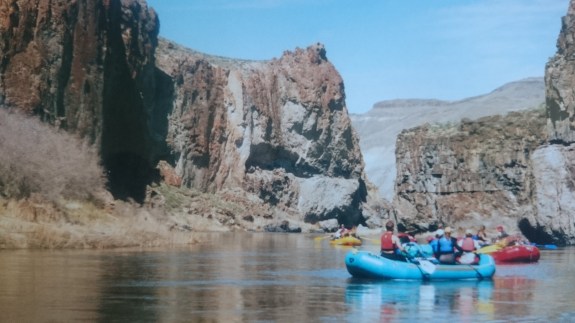
The canyonlands are located in Malheur County, Oregon’s second largest county. This area is incredible, and certainly unique as one of the largest roadless areas in the lower 48 states.  It is very remote, rugged and beautiful, home to petroglyphs, plant species found nowhere else, and vast habitat for a wealth of wildlife.  It is also home to one of my favorite rivers to float, the Owyhee.

DSC_0296

There is no doubt the Owyhee Canyonlands are a special place cherished by anyone who has explored them, and especially by those who live in the area.  That fact was made very clear by all who spoke before the House Committee during the meeting.  It seems that everyone agrees there needs to be some level of protection for these lands, and there have been numerous plans and discussions over the years about implementing various forms of protection.  Also, as was pointed out at the meeting, as well as here on a website formed by some of the opponents to the monument, 100% of the 2.5 million acres are already public and protected.

Richard C. Niederhof, professor emeritus of Central Oregon Community College, in a letter to the Bend Bulletin, puts it this way:

The Owyhee River canyon is already protected from rim to rim. Congress has already designated 120 miles of the Owyhee River in Oregon as a wild river component of the National Wild and Scenic River System, extending from the Oregon-Idaho border to the Owyhee Reservoir, excluding only 14 miles of non-canyon river near Rome.

Furthermore, the actual canyon lands, river and all significant canyon tributaries make up only 9 percent of the 2.5 million acres in the proposal. Therefore, the primary “selling point” of “saving of the canyon lands” is unjustified and deceptive.

So why, if this land is already protected, is this now an issue so hotly contested and up for discussion in a House Committee meeting?

The real debate, as Rep. Sherrie Sprenger stated very clearly during the meeting, seems to be about control.  This is the very debate that is sparking growing frustration, anger, and even violence throughout the western states.  Who should control and manage these lands, the federal government, or the states?  And the push for monument status for the Owyhee Canyonlands demonstrates exactly why this has become such a hot debate.

Oregon Natural Desert Association (ONDA), a Bend based organization that works to “protect, defend, and restore Oregon’s high desert” and Keen Footwear company have proposed the establishment of the monument.  They cite a poll that suggests as much as 70% of Oregonians support the proposal, 66% in the district where the canyonlands are located.

However, Malheur County residents voted no in an advisory vote on the monument proposal in March of this year.  This was a single-action ballot, the monument proposal the only issue on it, and according to Elias Eiguren, a Malheur county rancher who spoke at the meeting, 54% of Malheur county voters participated in the vote.  90% of those participants voted no on the monument proposal.

According to this Oregon Business article, a poll they conducted showed that 54% of Oregonians supported the monument (vs. the 70% in the poll ONDA promotes), and the article makes the point that this is largely a divide between urban and rural residents.  The majority of the people who are most likely to be affected by the monument designation, and possible resulting legislation over use of the area, do not support the proposal.  So why the push now, as President Obama nears the end of his term, and the local areas are still reeling from the divisive effects of the Malheur Refuge take-over?

Malheur County Sheriff Brian Wolfe spoke of the very real sensitivity in the area after the refuge occupation.  He clearly stated his concern that outsiders would come in with their own agenda if the area is declared a monument, and stated his belief that public safety will be at risk.  More than one member of the committee also questioned the timing of this proposal.

When asked about this, Brent Fenty, Executive Director of  ONDA, reminded the committee that permanent protections for lands such as the Steens Mountain area were not agreed upon until the possibility of monument designation was discussed for them.  As if to suggest that the monument proposal is a way to force the establishment of permanent protection.  It is a tactic reminiscent to the use of litigation to force legislation by groups like ONDA, often referred to as sue and settle.  Exactly the sort of tactics that increasingly lead to management policies that hurt local residents and economies.  This leaves local people feeling unheard and irrelevant in the process, resulting in mistrust, frustration, and anger.

The reality is, the Owyhee Canyonlands are worth protecting, and the local people living and working in the area have done a good job for over 100 years of doing just that.  They deserve to have a say in how the lands are protected and managed, and asking for a monument designation completely disregards that.  It is time that people on both sides of debates such as this one stop allowing special interest groups to drive the decision-making that effects us all and instead return the decision making to the local level.

**************


Legalizing Assassination With Drone Strikes

drone-161414_1280
Image courtesy of Pixabay.

Katie Aguilera

According to numbers compiled by the Bureau of Investigative Journalism, the low estimate of civilians killed by US drone strikes in Pakistan, Yemen, Somalia, and Afghanistan is in the hundreds, high estimate is over one thousand.  US officials would have us believe the number of civilians killed is much lower, that strikes by UAVs are accurate, precise, and incur less collateral damage than strikes by manned aircraft.  However, there is no shortage of information showing otherwise.

In light of this growing body of information refuting the official claims of the US administration, more and more critics are calling into question the use of UAV’s for targeted killings, but we have heard little discussion of that in the mainstream media here in the US.

There has been some recent discussion in the UK press after the British Parliament Joint Committee on human rights released a report that calls on the Government to “clarify legal case for lethal drone strikes outside armed conflict.”  The report covers the findings of an investigation launched as a result of the killing of Reyaad Khan, a British citizen fighting for ISIS in Syria, by a targeted drone strike in August, 2014. Because this strike took place before Parliament voted on military action in Syria it raised questions on the legality of targeted killings outside of areas where the UK is involved in armed conflict with terrorist organizations, as well as questions on targeting a British citizen for execution without a trial.

Similar questions arose in the US after the September 30, 2011 targeted drone strike in Yemen that killed US citizen Anwar al-Awlaki, the first US citizen to be placed on the list for such a strike.  Also in the killing of his 16-year-old son, Abdulrahman al-Awlaki two weeks later, reportedly by mistake.  But, just as the UK’s strike on Khan in Syria, al-Awlaki’s targeting and eventual killing was quickly justified as both he and Khan were considered imminent threats and capture was infeasible.  Little more has been said about the al-Awlakis deaths since.  The US Justice Department did release a white paper explaining their legal justification for the killing, and that seemed to satisfy the media and the public.*

The New York Times stated that the white paper explains that “Obama administration lawyers have asserted that it would be lawful to kill a United States citizen if ‘an informed, high-level official’ of the government decided that the target was a ranking figure in Al Qaeda who posed ‘an imminent threat of violent attack against the United States’ and if his capture was not feasible.”  The article goes on to say that the paper “adopts an elastic definition of an ‘imminent’ threat,” that does not mean an actual attack needs to be in progress.  The target need only be “generally engaged in terrorist activities aimed at the United States.”  The Times article also says that the paper “asserts that courts should not play a role in reviewing or restraining such decisions.”

As for the strike on Reyaad Khan, David Cameron stated it was a “new departure” in UK drone strikes as it occurred in a country where the UK is not at war.  But he asserted that it was an act of self-defense, stating, “we took this action because there was no alternative.”

But for the Joint Committee on human rights, that wasn’t sufficient explanation in the case of Khan, and others.  They state in their report:

“Clarification of the legal basis is essential in order for Parliament and the public to be satisfied that the Government is complying with the rule of law and to provide absolute clarity for all those involved in the chain of command for such actions (intelligence personnel, armed forces, officials, Ministers et al) so they have a legal defence against any possible future criminal prosecution for murder from within or outside of the UK. The need for clarification is urgent in view of the increasing use of lethal force in Libya.”

This Guardian article states, “British drone pilots, intelligence officers and ministers could face murder charges if the government does not clarify its policies on targeted killing, a parliamentary committee has warned.”  The article points out that while it would be unlikely for such charges to be brought forth from within the UK, other nations might bring charges if their own citizens are targeted and killed outside of areas of armed conflict.  In other words, the real concern of the Parliament is that the laws are clarified to protect and justify the use of targeted drone strikes, anywhere in the world.

Consider what Chris Cole writes in a Guardian article published yesterday:

“While these are at some level sensible recommendations, we must be careful not to fall into the trap of putting in place policies and procedures that normalise and legitimise extrajudicial killing. The UK must not follow the US down the path of adding suspects to a “kill list” in order that they will be assassinated at the first opportunity in an ever-expanding, global battlefield.”

It is not a question of whether the entire program of targeted killing through drone strikes is moral, humane, effective, or even truly supported by national and international law.  It is a question of whether the laws can be explained in such a way as to make drone strikes legal.  To make state-sponsored assassination legal, at least as long as it is called ‘targeted killing’ and is not utilized by enemies of the west.

After all, it is clear that the US and UK have no qualms about violating international law by inventing justifications to invade a sovereign nation. Neither did the US hesitate to create documentation that justified its use of torture.

According to Kate Martin in this April 1, 2016 Center for American Progress article, the largest controversy over the use of drones for targeted killing “stems from confusion about whether the strikes outside of Afghanistan are part of the armed conflict-the war-with Al Qaeda and its associated forces.”  She asserts that clarifying that is critical in determining whether targeted killing is legal.  She writes:

“The applicability of the law of armed conflict is key to determining the legality of the strikes because, in a war, a party is entitled to deliberately target and kill the enemy so long as other requirements of the LOAC [laws of armed conflict] are met.  Outside war, such killings are likely to be murder.”

US officials claim that the United States is in fact in armed conflict with al Qaeda, and the Authorization For Use of Military Force passed in September 2001 after the 9/11 attacks authorizes the deliberate targeting of al Qaeda affiliated people involved with the orchestration of the 9/11 attacks.

Steven Groves writes in this April 10, 2013 article, “targeted drone strikes by the United States against terrorists comply with international law, particularly with the law of war, both because the U.S. is engaged in an armed conflict with al-Qaeda and associated forces and because the U.S. has an inherent right of self-defense.” This engagement in armed conflict allows the US to “lawfully target them [al Qaeda and associated forces] with lethal force.”  Groves adds:

“Critics contend, however, that the United States is not now—and perhaps never has been—in an armed conflict with al-Qaeda that would be recognized under international law and that, accordingly, drone strikes in places such as Pakistan, Yemen, and Somalia are not justified and are in fact “extrajudicial executions” prohibited by international human rights law.[8]

However, as a sovereign and independent nation, the United States may determine for itself whether it is at war with another nation or, in this case, with a transnational terrorist organization. U.S. officials have considered the United States to be in a state of armed conflict with al-Qaeda since at least the attacks on September 11, 2001.”

Groves goes on to write, “whether the sum total of these attempted terrorist attacks are of an intensity sufficient to sustain an armed conflict is a debatable point, but in the end analysis the United States will make that final determination.”  He points out that the Geneva Conventions do not give a definition of armed conflict or set a level of intensity that must exist in order for conflict to be defined as armed.  So, if the US wants it to be war, then war it shall be, because the US says so.

Another key aspect of the debate is the claim that targeted killing is justifiable as a means of self-defense, that the US and the UK have the right to target individuals who pose an imminent threat.  But documents leaked to the Intercept, described in The Drone Papers give much more detail to the process of targeting an individual, including the fact that once an individual is approved for targeting, the Pentagon and CIA have a full 60 days to act.  As James Downie writes in this May 5, 2016 Washington Post opinion piece, “you don’t need a dictionary to know that 60 days is not ‘imminent.'”

Kate Martin points out in her Center for American Progress article linked above that the laws of armed conflict require distinction when targeting individuals.  That means only “lawful targets-such as combatants and other military objectives-be intentionally targeted.  Also necessary is proportionality, “which requires that the anticipated collateral damage of an attack not be excessive in relation to the anticipated concrete and direct military advantage from the attack.”

This is the most egregious aspect of the debate.  US officials repeatedly claim that great care, and much intelligence, goes into the decision to target someone, as well as a ‘near certainty’ that civilians won’t be at risk.  But again that is refuted in details published in The Drone Papers, as well as reports from other drone whistleblowers.  Individuals are targeted because they are identified as ‘terrorists’ by paid informants or they possess a certain SIM card in their cell phone that has been identified as belonging to a person believed to be a terror suspect.

In James Downie’s opinion piece linked above, he writes, “the leaked documents show the disturbing ease with which an innocent civilian — American or not — can be added to the U.S. government’s main terrorist database, such as on the basis of a single ‘uncorroborated’ Facebook or Twitter post.”  He goes on to add that of the 469,000 names nominated for the “known or suspected terrorists” database, only 4,900 were rejected.

So, if any of those 464,100 who made the list happen to borrow the wrong cell phone, or write the wrong rant on their Facebook page, or infuriate their neighbor enough that the neighbor decides to turn them in as a terrorist in exchange for payment, or interact in any way with other known terror suspects, they will likely end up on the target list. And when the ‘intelligence’ is wrong?  Just label anyone killed an enemy combatant, a ‘military-aged male,’ and therefore a legitimate target in this ‘armed conflict’ on terror.

It isn’t as if, for the most part, anyone is verifying who is being killed.  Consider that Reprieve, a human rights charity, reported that “US drone strikes in Yemen and Pakistan have killed as many as 1,147 unknown people in failed attempts to kill 41 named individuals.”  It goes on to identify 41 men who are reported to have been killed more than once!

So much for ‘distinction’ and ‘proportionality.’ But then, when did empires ever abide by laws of armed conflict set forth by the international community?  Empires make their own rules.  At least as long as those ruled by them allow them to.  It is obvious that the Obama administration will not stop using targeted killing (assassination), and it seems highly unlikely that Obama’s successor will end the practice either. As long as we continue to give consent with our silence, as long as we allow the media to ignore the facts, as long as we continue to allow officials to justify it with laws they create or manipulate to legalize it, targeted killing with drones will continue, and will undoubtedly increase.

———-

*Adam Klasfield reported today that “Dueling battles to uncover the CIA’s legal rationale for drone strikes on U.S. citizens crashed this week, as the American Civil Liberties Union’s unsuccessful lawsuit sank another one filed by an investigative reporter for Vice News.
The ACLU and Vice News reporter Jason Leopold have spent years trying to obtain a ‘white paper’ justifying the bombings that killed Anwar al-Awlaki and Samir Khan, two al-Qaida propagandists.”

***As if the ease in which an individual can be targeted, and the ease in which a drone can strike a target, aren’t terrifying enough, consider this article out today by Nafeez Ahmed:  “Official US defence and NATO documents confirm that autonomous weapon systems will kill targets, including civilians, based on tweets, blogs and Instagram.”

***********

Read an article I wrote for Newsbud with more information about the Obama administration’s policies on targeted killing here.

Update: That link above to the Newsbud article I wrote doesn’t work as Newsbud has removed all my work.  You can read that article here instead.  11/2/2017.


If you enjoyed the article and would like to support the author, click here.

Growing Concerns About Glyphosate

The Growing Weight of Glyphosate

Weeds are tough, they grow everywhere, with little need for water and nutrients. If left alone, they proliferate and take over. Anyone who tries to keep a neat, green lawn can tell you that weeds are a threat to that endeavor. Any farmer will tell you that weeds present a challenge to producing the food we eat. The solution to that challenge, both for the lawns and flower beds of our communities, and for the vast food-growing fields, has increasingly been the use of herbicides. The most common herbicidal ingredient, well-known for its use in Monsanto’s Round Up, is glyphosate.

According to Wikipedia, glyphosate “is a broad-spectrum systemic herbicide and an organophosphorus compound, specifically a phosphonate.” John E. Franz, a Monsanto chemist, discovered it’s herbicidal properties in 1970 and Monsanto held a patent on it until 2000. RoundUp remains the most common herbicide containing glyphosate.

Glyphosate works by prohibiting a plant’s production of a growth enzyme, known as the EPSP enzyme, which then causes the plant to be unable to produce essential proteins needed for growth. When the plant can no longer continue to grow, it withers and dies. When it was initially discovered and approved for use, glyphosate proved to be highly effective and was considered to be safer than other herbicides. It’s use has been widely adopted around the world for home weed control, in agriculture, and even in wild lands to control invasive species.

Monsanto states the following on it’s website about the safety of glyphosate:

“Glyphosate inhibits an enzyme that is essential to plant growth; this enzyme is not found in humans or other animals, contributing to the low risk to human health. Comprehensive toxicological studies in animals have demonstrated that glyphosate does not cause cancer, birth defects, DNA damage, nervous system effects, immune system effects, endocrine disruption or reproductive problems. The U.S. Environmental Protection Agency (EPA) classified the carcinogenicity potential of glyphosate as Category E: “evidence of non-carcinogenicity for humans.”

It goes on to state that both governmental agencies and third party experts, after reviewing hundreds of studies, support the conclusion that glyphosate is safe, posing very low threat of toxicity to humans. It is certainly possible that there are many studies showing that glyphosate is pretty harmless. But, if you don’t already feel some concern about studies funded and supported by the company that markets the product being tested, than consider this situation with Merck’s mumps vaccine. Also consider the statements made here about the validity of studies done by Monsanto. And don’t forget Seralini’s studies on GM food, and the way that has been handled.

As a result of the declarations of the safety of glyphosate, and its purported effectiveness, the development of “roundup-ready” crops was not far behind. Creating a genetically engineered plant that is resistant to glyphosate allows farmers to spray the herbicide on the fields during cultivation of their crops. These plants were supposed to decrease the use of herbicides but that hasn’t exactly worked out. This article puts it like this:

“Monsanto’s Roundup Ready system, which involves applying glyphosate (Roundup) herbicide to crops genetically engineered to tolerate it, was supposed to decrease overall herbicide use-and for a while, it did just that. However, this has changed drastically in recent years.”

According to this paper published just this past week, the use of glyphosate has increased 100 fold since the late 1970’s, with an annual use as of 2014 of approximately 240 million pounds. This huge increase in use is blamed primarily on growing resistance in weeds to glyphosate. It has become a cycle of more herbicide resulting in more resistant weeds, then more herbicide, and so on. Its a pattern reminiscent of the dangerous over-use of antibiotics which has resulted in bacteria which resist all antibiotics. This begs the question, is this really safe?

Safety Concerns Over Glyphosate Are Also Increasing

With the vast increase in use of herbicides containing glyphosate, the question of just how safe they are is increasingly important. Monsanto continues to maintain that it’s glyphosate-containing RoundUp is safe, as proven by decades of studies. The EPA’s stance has also been that glyphosate is safe. In fact, this article by Newsweek states the following:

“…the U.S. Environmental Protection Agency has relaxed its rules about what it considers a safe level of glyphosate. Fifty times more glyphosate is allowed on corn grain now than in 1996, for example, Freese says. The agency has also increased what it considers a safe amount of glyphosate exposure by a factor of 17.

Freese adds that EPA’s high-end estimate of infant exposure to glyphosate exceeds the level the Agency considered safe for them in 1983.”

Increasing the allowable safe amount of glyphosate exposure is concerning, especially in light of new studies that suggest the potential harm glyphosate may be causing in humans. A study conducted by an Australian university looked at the effects of glyphosate on the endocrine system. According to this article at Global Research:

“The blockbuster herbicide Roundup causes damage to the human endocrine system at levels that people could easily — and legally — be exposed to, according to a new study conducted by researchers from Flinders University in Australia. The researchers found that, in a laboratory study, Roundup killed cells responsible for producing progesterone in women, leading to a drop in levels of that hormone. The effects were seen at Roundup levels currently permitted in Australian drinking water, which 1 mg/L.”

and:

“Both Roundup and pure glyphosate caused JAr cell death at glyphosate concentrations similar to the maximum allowed in Australian drinking water. This led to a corresponding drop in synthesis of progesterone, showing that glyphosate does indeed act as an endocrine disruptor.”

Multiple studies have shown that the dangers posed by glyphosate only increase when the ingredient is combined with the other inert ingredients in herbicides like RoundUp. The occurrence of damage to cells is greater when exposed to the entire concoction.

Another study took a different approach to disputing Monsanto’s safety claims. As Monsanto pointed out, humans don’t have the same enzymes that glyphosate prohibits production of in plants, but the study suggests a another way in which glyphosate may be causing far-reaching harm to humans. Consider this article’s description:

“Roundup® kills plants by interfering with a biochemical pathway involved with synthesis of amino acids, called the shikimate pathway. This pathway is not found in humans, therefore it was assumed that glyphosate does not harm humans. The pathway is found in bacteria, however, and humans depend on bacteria in the gastrointestinal (GI) tract to synthesize the essential amino acids.

By interfering with the biochemistry of bacteria in our GI tract, consumption of glyphosate depletes essential amino acids and predisposes humans to a host of chronic health problems. Specifically, glyphosate depletes the amino acids tyrosine, tryptophan, and phenylalanine, which can then contribute to obesity, depression, autism, inflammatory bowel disease, Alzheimer’s, and Parkinson’s.”

It’s an alarming suggestion considering the amount of glyphosate currently being used. Industry sponsored safety studies do not generally look at the long-term effects of exposure. The acute toxicity of glyphosate may prove to be low, but chronic toxicity is not looked at. If, as the above mentioned, and a host of other studies suggest, glyphosate is not so benign as has been claimed for decades, further investigation is critical.

Awareness of Glyphosate Use and Risk Needs To Grow

The concerning increase in the use of herbicides containing glyphosate will continue to go unchecked if public awareness doesn’t also increase. Powerful industries have powerful interest in keeping the information suppressed. Anyone who remembers how Fox canceled the rBGH (bovine growth hormone) story, described in this video is aware of the lengths companies such as Monsanto will go to protect their products. As this paper states:

The steep rise in the pounds of herbicides applied with respect to most GE crop acres is not news to farmers. Weed control is now widely acknowledged as a serious management problem within GE cropping systems. Farmers and weed scientists across the heartland and cotton belt are now struggling to devise affordable and effective strategies to deal with the resistant weeds emerging in the wake of herbicide-tolerant crops.

But the skyrocketing herbicide use is news to the public at large, which still harbors the illusion, fed by misleading industry claims and advertising, that biotechnology crops are reducing pesticide use. Such a claim was valid for the first few years of commercial use of GE corn, soybeans, and cotton, but as this report shows, it is no longer.”

The growing number of studies suggesting harmful effects on humans as a result of the use of herbicides, and the recent distinction of glyphosate as “probably carcinogenic to humans” by the World Health Organization have led a group of scientists to collaborate on a paper that lists the following conclusions:

  1. GBHs [glyphosate-based herbicides] are the most heavily applied herbicide in the world and usage continues to rise

  2. Worldwide, GBHs often contaminate drinking water sources, precipitation, and air, especially in agricultural regions

  3. The half-life of glyphosate in water and soil is longer than previously recognized

  4. Glyphosate and its metabolites are widely present in the global soybean supply

  5. Human exposures to GBHs are rising

  6. Glyphosate is now authoritatively classified as a probably human carcinogen

  7. Regulatory estimates of tolerable daily intakes for glyphosate in the United States and European Union are based on outdated science.

They go on to recommend more epidemiological and toxicology studies. “We suggest that common commercial formulations of GBHs would be prioritized for inclusion in government-led toxicology testing programs such as the U.S. National Toxicology Program, as well as for biomonitoring as conducted by the U.S. Centers for Disease Control and Prevention.”

It would be all too easy to rely upon those recommendations to actually make a difference in this problem. However, the real power lies with the consumers. Considering the FDA only just announced this past Thursday that it will begin testing certain foods for glyphosate residues, it is obvious that any change affected by industry or government agencies will come dangerously slow. Consumers need to stand up, put pressure on lawmakers to address this, and vote where it really matters, with our dollars.

************

Author’s Note:  I originally wrote this article for the website opensourcetruth.com where it was published, in part, on February 22, 2016, with heavy editing by that site.  I am re-publishing it here in it’s original form, with source links.

************

If you liked the article and would like to support the author, click here.

Words For Peace: A Letter To The Wall

_20160426_103010

Katie Aguilera

Back in November, when I started my blog, I had a conversation with Doug Rawlings who is a co-founder of Veterans For Peace, if you haven’t read those posts yet, please do, what he has to say is so powerful and important. In that conversation he told me about a Memorial Day event that took place last year in which Veterans for Peace asked for people to write a letter “to the Wall,” describing how they have been affected by the war in Vietnam and its aftermath.

151 letters and 32 postcards were received and placed at the foot of the Vietnam Veterans Memorial Wall for the public to read. And they did read them. Conversations happened, a critical message was shared with many. Afterward, the National Park Service requested to place some of the letters on display in their archival museum, where those words can continue to be read.

This year, it is time to go even bigger. Veterans For Peace is asking for at least 1500 letters that can be placed at the Wall for Memorial Day 2016. Letters can be emailed to vncom50@gmail.com or they can also be physically mailed directly to Doug Rawlings (address can be found in Doug’s post about the event here)

If the Vietnam War still causes you to reflect deeply about the meaning of that war and its place in your life, then we need you. We need your help. We need your words. Veterans For Peace wants to deliver 1,500 letters to The Wall in Washington, DC this coming Memorial Day as a way of acknowledging the impact of that war on our lives. We need you to write one of these letters.

Doug Rawlings on Vietnam Full Disclosure

I see this event as an excellent opportunity to share a powerful message of peace, of ending war, with people who might not ordinarily pause to think about the devastating effects of war, beyond the lives lost, as they wander through the various war memorials in Washington D.C. on Memorial Day. Those memorials are very moving, but they don’t really portray the destruction of the lives of the survivors, they don’t show the destruction of families, the environmental destruction, the effects that still linger today.  They certainly don’t show the devastation wrought upon other nations of the world. But our letters can.

I was born years after America ended its fighting in Vietnam, but that war has still had its effects on me, not only because my father was drafted and spent a year in Vietnam.  My views on war have been largely shaped by what I learned of this war as a youth.  I believe that war has had far-reaching effects on our society that touch us all, even today.  I’ve written a letter of my own to ‘the Wall,’ and I’m sharing it here, in hopes it might inspire you to write one too.

To The Vietnam Veterans Memorial Wall, And More Importantly, To Those Who Visit It:

I stood before you alone on a warm, sunny August day, and fought to keep my tears to myself. I wished desperately that my father could be there too, but he was 3000 miles away, and we didn’t talk much anymore anyway. I was awed by the simplicity of your portrayal of such heavy sorrow. I was awed by how much sadness you stirred in me. There are no names on that wall that I recognize.  I didn’t lose a loved one to this war, my father came home physically intact from his year in Vietnam. If he hadn’t, if his name were inscribed on your surface, I would not have been alive to stand before you, to touch your smooth granite and read the names of people I didn’t know, people I could never know.

My emotion that day was partly a reflection of my father’s feelings about you. Even though he never had the opportunity to visit you, it meant a lot to him knowing you had been built to honor those who died in the war he too had served in. The only time we ever talked about his service in Vietnam was when he shed a tear over an essay I wrote about you in sixth grade. It was such a powerful moment, and it felt a bit as though I stood before you in his honor.

But my feeling as I touched your cold, shiny surface that day was also a sadness of loss. My understanding of this war, and all wars, had come a long way since I wrote that essay in sixth grade. I feel the things that are lost to war very strongly. They are a weight on our society much greater than that of your granite slabs.

The loss of so many American lives is beyond tragic. But there are so many sad things about this war, so many more things than the loss you represent. An estimated 1,313,000 deaths occurred as a result of war in North and South Vietnam, Laos, and Cambodia just in the years between 1965 and 1974, and only a little over 58,000 of those are inscribed on your surface. At least 587,000 of those were civilians. Men, women, children. Every single one is a tragedy.

And people continued to die after 1975, they are still dying as a result of this war. We left behind a legacy of un-exploded ordinance, waiting for innocent people to stumble upon them. We left behind a legacy of people poisoned by Agent Orange. We left behind a legacy of refugees and instability in many of these countries resulting in more death, more destruction. Those names are not on your surface.

And those who came home to America? They were left alone to face what they had done, what they had seen, what they had experienced, what they had suffered. How many, unable to deal with their horrors, took their own lives? How many also suffered from the toxic effects of Agent Orange? Where are their names on your surface?

Your moving simplicity leaves out so much, as if to excuse our ignorance in this nation of the devastating effects our wars have on generations of Americans, and on generations of people around the world, and on the world itself. As if war, and soldiers dying, is as clean as your shiny wall and the simple white crosses of Arlington Cemetery.

I wish the American people would see a reflection of all that loss in your surface, so we might all rise up together and bring an end to the wars and devastation our nation is waging around the globe. I wish we would honor the many who have died for the few who profit from war by refusing to fight. I wish you said that on your surface, especially to the young men and women thinking of enlisting who happen to pass you by.

Katie Aguilera

The Vietnam Veterans Memorial: An Essay From Sixth Grade

_20160426_102816

A Note From The Author:  I wrote this essay in the sixth grade.  I mentioned this essay in my second blog post I published here at Seeking Redress (it was the first that I actually wrote, it was what drove me to start this site), and will be mentioning it again in another post I’m publishing today discussing an important Memorial Day event.  Since this essay played such a role in one of my most vivid memories of my father, and it demonstrates my changing understanding of war and how we memorialize it, I thought I’d just go ahead and share it.  Please forgive the naivete, I was pretty young and only beginning my long journey into researching that painful chapter in history.

The Remembrance of a Nightmare

The Vietnam Veterans’ Memorial started as just a dream for Jan C. Scruggs but it became a reality just the same.  Scruggs asked Senator John W. Warner for $5,000.00 to start building the memorial.  Senator Warner gave the requested $5,000.00 and earned another $50,000.00 within weeks.  So the soon-to-be-great memorial was built.

On the paneled sides of the wall are printed about 58,000 names of the soldiers who died in the Vietnam War or who remain missing, in the order that the clutches of war finally tore the life out of them.  The people who remain missing are marked by a simple, but important, cross that is circled if the person is found.  1300 of the names are those of missing soldiers.

This memorial has touched the lives of many people across America.  They see a familiar name that triggers their memory and tears flood from their eyes.  It comes as no surprise that the memorial has become one of the most visited memorials in Washington.

A book will be published called To Heal A Nation by Jan Scruggs and Joel L. Swerdlow.  [This book was already published when I wrote this essay, and can be found on Amazon.]  It will, like the memorial, list all the names of these great men.

The people love the memorial and will probably love the book as well.  It is only obvious by the look of gratitude on the people’s faces that they greatly appreciate America’s respect for the men who gave the ultimate sacrifice for their country they loved.  Many people have read the names of the veterans and have relived the nightmare of Vietnam in 1961-1971.  Many memories have been spurred by this long granite wall called The Vietnam Veterans’ Memorial.

The End

Another Curious Case of Arson on Federal Land

UPDATE: 3/6/2017: this post is receiving some new traffic due to an episode of the Lifetime Movie Network show 24 to Life which aired Wednesday, March 1st, 2017, and again on March 5th, 2017, on A&E.  This episode chronicles Ben Cunha’s final 24 hours before reporting to federal prison.  I want to direct any new readers to the two, much more detailed stories I have written about Ben Cunha’s story after talking with Cunha and others involved.  Those can be found here and here.  Both articles clear up much of what I had previously questioned in this article.

********

On February 23rd, 2016, Benjamin Cunha was sentenced to five years in prison, and fined $246,862.00, on a single count of arson.  At first glance, this doesn’t seem all that odd.  After all, we learned from the Hammonds’ case that violating 18 U.S.C. 844(f)(1) means a mandatory minimum sentence of 5 years, and the fact is, Cunha had admitted to starting at least 30 fires over a two year period.  Considering the number of fires he supposedly started, five years certainly doesn’t seem excessive, and Cunha is undoubtedly lucky his fires didn’t injure anyone or cause greater damage.  (His fellow El Dorado County arsonist responsible for the devastating King Fire in September 2014, Wayne Allen Huntsman, was just sentenced to 20 years, and fined $60 million, on a single count.)

However, Cunha’s case is much more interesting than that simple five-year sentence for a single count of arson implies.  That one count is a result of only one of the fires Cunha admitted to starting, a fire called the Mine Fire that burned approximately 80 acres, at least some of which was federal land.  That fire occurred in 2007, and the other fires he admitted to igniting all occurred between August 2005 and September 2007.

Cunha, who had worked as a volunteer and wildland firefighter, was arrested in September 2007 and charged with three felony arson charges.  A plea agreement was reached in the case, described here to include:

As part of his plea agreement, he admitted to the details of the 30 fires he set. He had disclosed to local law enforcement that because of his firefighter experience, he was able to build a time delay device to create “fires big enough that significant fire-fighting resources would be required to extinguish the fires.”

He is said to have started the fires in order to earn extra money fighting them, and also to impress his fellow fire-fighters, presumably to help secure his position within the ranks.

In 2008, according to 2016 court documents, Cunha was “sentenced to 365 days in jail, which he was allowed to serve in a program that allowed him to leave the jail each day for work and return for sleep.  Cunha was also sentenced to 72 months of probation.”  Terms of his probation included wearing a GPS monitor during the fire season.  This probation period concluded in 2012.

Benjamin Cunha was arrested and charged, he reached a plea deal and admitted to setting the fires, he served his jail time and his probation, and yet, he was charged again in 2013 for the Mine Fire.  Initially, he was charged with two counts, for the Mine Fire and Palmer fire, both of which burned onto federal land, but due to another plea deal, the second count was dropped.  What brought the second round of charges?  Well, apparently more fires, and the Bureau of Alcohol, Tobacco, and Firearms and Explosives.

The summer following the completion of Cunha’s probation, in July and August of 2013, two new fires were being investigated for suspected arson.  Again according to the court documents linked above, “Law enforcement determined that at least one of the fires was started using a time-delay incendiary device similar to the time-delay incendiary devices Cunha had admitted to using in the 2007-2008 series of El Dorado/Amador county fires.  Cunha was a primary suspect in the 2013 fires.”

The investigation into the 2013 fires was halted, and Cunha was arrested and charged with the two 2007 fires that burned onto federal land.  This time he faced federal charges, and, at the very least, the resulting mandatory minimum sentence of five years.  The prosecutors pushed for a longer sentence in his case, arguing that the decision to shorten the sentence in his plea deal included the provision that Cunha would provide assistance to the government.  Again from the court documents:

The plea agreement contains the possibility that the government would recommend 84 months [versus the 90 months sought] if Cunha provided substantial assistance to the government.  The government, in its discretion, has determined that Cunha has not provided substantial assistance…

In 2008, Cunha cooperated with authorities to reach a plea deal in that he admitted to starting the fires and gave details of the time-delay incendiary device he designed and used.  What more information could he provide in the second case that would be considered “substantial assistance?”

In the end, Cunha was sentenced to only five years, and he wasn’t charged for the 2013 fires as part of the plea deal reached in the federal case.  Considering that the investigation into the 2013 fires was dropped and Cunha was apparently considered the only suspect, the feds must have had significant enough proof to put pressure on him.  So why not charge him with those fires too, in order to secure that longer sentence?

As stated in the 2016 court document, the federal government felt “the need to protect the community, the need to promote respect for the law, and the need to provide just punishment.”  But only after the two 2013 fires Cunha wasn’t charged for?  Why not in 2008, when he started at least 30 fires, including the two that burned onto federal land that he was sentenced for in 2016?

In 2008, he was charged only by the state and sentenced to 365 days and probation instead of facing federal charges and the mandatory minimum of five years.  In the prosecution’s push for a longer sentence in 2016, it is stated that “it defies common sense that a serial arsonist, who voluntarily admitted to setting at least 30 fires, would score at criminal history zero and receive the same mandatory minimum sentence as a first-time offender.”  Could it be that the feds did not stand to gain anything from Cunha’s case in 2008 and therefore did not feel the need to protect the community from an admitted serial arsonist at that time?

What is even more curious is that, in spite of the fact that Cunha was told in 2008 that he would be sent to prison if he violated his probation, he somehow appears to have done so without any consequence at all.  According to this article, and this one, Benjamin Cunha was arrested and charged with felony counts while on probation.  The second article, from California Fire News, has this to say:

Former CAL FIRE firefighter now troubled man-child Benjamin Cunha, who has volunteered for several fire departments in El Dorado County and hails from a long line of career firefighters, and who was convicted of arson earlier this year has been re-arrested on suspicion of arranging a deal to sell firearms.

He had received a six-year suspended sentence on the arson charge and was told he would go to prison if he violated rules of his probation.

The first article claims that officials from the sheriff’s department stated that Cunha was charged with four felony counts as a result of this stolen firearms deal.  Bail was set at $10 million.  These charges included being a felon in possession of a firearm and facilitating the sale of stolen weapons; both clear violations of his probation.  This occurred in December 2008, not so very long after Cunha would have been released after his 365 days in (bedtime only) prison.  Yet, this seemingly rather huge violation of his probation does not appear to land him back in prison, nor does it appear to be mentioned in 2013 and his subsequent case with the federal charges, even as the federal prosecutors pushed for a longer sentence by arguing that Cunha was a danger to the community.  How can that be?

Benjamin Cunha’s case, like so many others, leaves me with many questions about the way the federal government pursues criminals, and also how it criminalizes people.  Just as the Hammonds’ arson case had so much more to the story, I wonder what else might be involved in Cunha’s story.  A curious case indeed.

Common Core is a Racket

Katie Aguilera

In 1983, the National Commission on Excellence in Education published a report titled A Nation At Risk and set in motion a series of education reform efforts that ushered in an ever-growing, insatiable industry for private education companies.  Like so many things: healthcare, drug use, war, etc…education has become the target of, and is being driven by, greedy corporations seeking yet another avenue to increase profit.  With A Nation At Risk, the Reagan administration had successfully conjured up a crisis in public education, one that was certain to destroy the nation due to failing schools and illiterate citizens.  A crisis to which the inevitable solution would be to pour billions of taxpayer dollars into the hands of private education companies.

The National Commission on Excellence in Education (NCEE) had 18 members, appointed by then US Secretary of Education Terrel Bell.  The formation of this commission was likely driven by a need for more political support from women who tended to lean democratic, and also the need for a scapegoat for the precipitously lagging economy.  A poorly educated populace tends to be more of a drain on the economy than a boost to it, after all.

Their report was armed with strong words and lots of statistics that appeared to show the destructive decline in public education, and it got a lot of media attention from the moment President Reagan announced it’s release.  The clamor for improving public education grew, and the promises to do so became political campaign ammunition with the right and the left each proclaiming their plans would be the better solution.  The lobbyists and corporations swooped in, leading eventually to No Child Left Behind, Race To The Top, and Common Core, but not a lot of improvement in public education.

It didn’t matter that another study in 1990 by the Sandia Laboratories in New Mexico found the statistics to show a different picture than the one painted by the NCEE.  The decline in test scores from 1963 to 1980, according to A Nation At Risk, was an indication of the failing public education system.  But when the scientists at Sandia Laboratories examined the statistics in individual subgroups, such as ethnic minorities, rich versus poor students, and student rankings, they found the averages held steady or even increased for the same period.  This difference is explained here as Simpson’s paradox.  “The average can change in one direction while all the subgroups change in the opposite direction if proportions among the subgroups are changing.”  The number of students taking tests increased in those years, causing the proportion of those students that ranked high to decrease.  This resulted in the total average scores declining, even as they held steady within different subgroups of test-takers.

It also didn’t matter that the National Commission on Excellence in Education was made up largely of school administrators and only one teacher.  Administrators chosen and appointed by the Secretary of Education with what appears to be the goal of proving a fore-gone conclusion.  Consider the following statement in this May 2015 Salon article:

A Nation At Risk began from the assumption that our public schools were failing.  Of course our public schools were failing.  Our public schools are always failing.  No investigative panel has ever found that our public schools are succeeding.

Well, of course, because schools that aren’t failing don’t need reform, they don’t need new curriculum, texts, and tests year after year.  They don’t generate steady profits for private corporations.

The Sandia study should have highlighted the question of whether or not attempting to gauge the success or failure of a nation’s public education system can be accurately accomplished with statistics and averages while ignoring the problems of individual schools and students.  But it was never released by the government, it wasn’t published until 1993, in the Journal Of Educational Research.  The criticism that the Commission was made up of administrators rather than teachers, parents and child development professionals should have called into greater question the usefulness of the findings in defining positive reforms, but such criticism was lost in the fearful rhetoric on the risks of failing schools.

None of that mattered because by then, the education-reform machine had gained a full head of steam and was well under way.  There were voters to sway and profits to be made.  And now, decades later, the Common Core State Standards Initiative is just the latest iteration of this education reform racket.  Indeed, the development of the Common Core standards seems disturbingly similar to the development of A Nation At Risk with its disregard for the input of teachers and parents in favor of pandering to corporate interests.

According to this site, the US federal government spent $621 billion on elementary and secondary public education in 2011/12.  And that money is supplemental to what each individual state is spending on education.  While compared to military spending that is only a tiny fraction of the money the US government is spending, its still a tempting pot to dip into for corporations looking to profit from public education.

Race To The Top was a competitive grant program launched by the US Department of Education in 2009, ostensibly to encourage schools to make substantial improvements in their standards and outcomes.  States would compete for a share of the $4.35 billion in grant money, and one of the easiest ways they could do so was to adopt the Common Core Standards.  And of course, increased use of high stakes testing in order to measure the improvements and maintain funding.  This proved to be highly successful in pushing CCSS into the public education system, ensuring states would then spend a small fortune on curriculum and test changes.  (Ironic, considering that ultimately states will spend more implementing CCSS than they gained from RTTT, read more on that here.)

The director of RTTT, Joanne Weiss is quoted in this Breitbart article as writing in her own article (subscription required), “…the large pot of funding we had to offer was a significant inducement for states to compete.”  The Breitbart article goes on to say she adds “the surprise number of 46 states willing to sign onto the Common Core standards initiative was due to ‘our decision to leverage the spirit of competition.'”  Weiss states:

It [RTTT] arguably drove more change in education at the state, district, and school levels than any federal competition had previously been able to achieve.

The nationwide cost of implementing the CCSS, according to this article, is around $15.8 billion to $16 billion.  In my own state of Oregon, it is estimated to cost $182.027 million, according to a resolution opposing CCSS by Oregon Republicans quoted here.  To be fair, it is difficult to gauge the cost of implementation because it can always be argued that states will be spending large sums on improvements all the time.  As this Watchdog.org article points out, the money would likely have been used in education anyway, and the article points to a claim that CCSS could actually save states money for “an educational product far superior to what is being offered today.”

Of course, that is based on the premise that the Common Core Standards do represent a superior product, one that will enact positive reform to our ‘failing’ public education system.  A premise that numerous corporations are happy to promote.

One such company is Pearson PLC, which according to Wikipedia is the “largest education company and the largest book publisher in the world.”  Pearson has a considerable stake in the roll out of CCSS.  This Huffington Post article from 2013 states that Pearson says “that education business accounts for more than 60% of earnings and sales,” in a statement issued in 2012.  The Huff post article also says: “As of May 2012, Pearson worked with eighteen states in the U.S., as well as Washington D.C. and Puerto Rico.  In New York, Pearson held a $32 million, five-year contract to produce standardized tests.  In Texas its contract was worth $500 million.”

In 2014, Pearson was awarded a “major contract to administer tests aligned to the common-core standards, a project described as being of ‘unprecedented scale’ in the U.S. testing arena by one official who helped negotiate it,” according to this  EdWeek Market Brief article.  This contract was awarded by the Partnership for Assessment of Readiness for College and Careers, a consortium of states tasked with creating exams that are aligned with the CCSS.  The EdWeek article goes on to state:

While a number of companies inquired in response to PARCC’s request for proposals for the project, ultimately Pearson was the only bidder, said James Mason, who helped negotiate the contract as part of a team of PARCC state leaders.

and:

While a number of companies initially inquired about bidding for the contract, in the end Pearson was the only one to bid, Mason said. Despite that, PARCC state officials are convinced the process was sound and resulted in the best vendor getting hired, Mason said.

Surely there is no cause to question how Pearson managed to be the sole bidder on what is undoubtedly a lucrative contract, or how the PARCC members felt so certain that Pearson would be the best company for the job.  Or is there?

Pearson has proven willing to go to questionable lengths before in order to secure contracts.  According to this 2011 New York Times article, “since 2008, the Pearson Foundation, the nonprofit arm of one of the nation’s largest educational publishers, has financed free international trips–some have called them junkets–for education commissioners whose states do business with the company.”  The trips are supposedly for attending conferences with “educators from around the world to get ideas for improving American schools.”  But the NY Times article also points out that they meet with “top executives of the Pearson company” on these trips as well.  It goes on to say:

Illinois is paying Pearson $138 billion to administer the state’s standardized testing program; Virginia is paying $110 million and Kentucky $57 million.  All three of their commissioners have attended the conferences.

This 2013 New York Times article follows up by stating “The Pearson Foundation, the charitable arm of one of the nation’s largest educational publishers, will pay $7.7 million to settle accusations that it repeatedly broke New York State law by assisting in for-profit ventures.”

The New York State attorney general, in an inquiry into the foundation’s actions, “found that the foundation had helped develop products for its corporate parents,” and “had helped woo clients to Pearson’s business side by paying their way to education conferences that were attended by its employees.”

The case shed a light on the competitive world of educational testing and technology, which Pearson has come to dominate. As federal and state leaders work to overhaul struggling schools by raising academic standards, educational companies are rushing to secure lucrative contracts in testing, textbooks and software.

Unfortunately, those paying the price in all these manufactured ‘failing schools crises’ and the resulting “rushing to secure lucrative contracts” is the students and teachers.  As the CCSS are implemented, the need to assess how well students are meeting them becomes critical in order to maintain funding.  This means that, in spite of the claims that the CCSS do not impose specific curriculum on states, the curriculum will be structured to ensure students perform well on the CCSS aligned assessments.  Schools will be forced to “teach to the test” because their job depends on their pupils passing those tests.  The end result:  narrowly focused curriculum, memorization rather than learning, an undermining of the development of critical thinking skills.

Consider a few quotes from How A Generation Lost Its Common Culture by Patrick Deneen (and please please go read the entire essay!):

My students are know-nothings. They are exceedingly nice, pleasant, trustworthy, mostly honest, well-intentioned, and utterly decent. But their brains are largely empty, devoid of any substantial knowledge that might be the fruits of an education in an inheritance and a gift of a previous generation.

and:

Our students’ ignorance is not a failing of the educational system – it is its crowning achievement. Efforts by several generations of philosophers and reformers and public policy experts — whom our students (and most of us) know nothing about — have combined to produce a generation of know-nothings.

and finally:

Our students are the achievement of a systemic commitment to producing individuals without a past for whom the future is a foreign country, cultureless ciphers who can live anywhere and perform any kind of work without inquiring about its purposes or ends, perfected tools for an economic system that prizes “flexibility” (geographic, interpersonal, ethical).

In such a world, possessing a culture, a history, an inheritance, a commitment to a place and particular people, specific forms of gratitude and indebtedness (rather than a generalized and deracinated commitment to “social justice”), a strong set of ethical and moral norms that assert definite limits to what one ought and ought not to do (aside from being “judgmental”) are hindrances and handicaps.

“Cookie cutter” students indeed.  Good little boys and girls who will not be taught to  question, who will not be taught to reason for themselves.

Common Core is just the latest in what is sold as a desperate need for school reform, for improvement in public education in order to compete with other nations, all while companies like Pearson rake in huge profits.  All while public education not only does not improve, but becomes more and more uniform and indoctrinating.  If we are to truly improve our children’s education, we must stop allowing our public schools to be turned into profitable markets for greedy corporations.  We need to return the control to the local level, to the educators and parents and students.

As a footnote, here is a link to a 17 minute video of a TedX talk by Joshua Katz (thanks RD for sending this my way!) that explains the “toxic culture of education” we find ourselves in currently, I highly recommend watching it.

You can read my other posts on Common Core related issues at the following links:

Will the Higher Standards of Common Core Improve Early Childhood Education

Common Core: Is There Sense in the Mad Math?

Common Concerns With Common Core

***************

If you liked the article and would like to support the author, click here.