Healing On The Range: A Look At Central Oregon Veterans Ranch

dsc_1555

Katie Aguilera

Alison Perry described the 19 acres of land situated between Bend and Redmond, Oregon, as a place of peace while leading a tour of Central Oregon Veterans Ranch on Friday, December 2, 2016. She said the ranch will help veterans find a sense of purpose and meaning, and it is designed to be a community for veterans, built by veterans.  Perry also described a desire to bring attention to the lack of services currently available for Central Oregon veterans in spite of the large number who live in the area.  She pointed out that veterans make up nine to ten percent of the Central Oregon population, numbering around 20,000.

Perry is the executive director of Central Oregon Veterans Ranch.  She has been working with veterans since 2003, including as a trauma therapist for the Department of Veterans Affairs.  As she spoke with the group of around twenty-five people gathered for the tour, Perry described a couple of cases she had dealt with that inspired her to found the ranch.  She talked about the efforts that have gone into creating this place of healing, and the plans for its success.  Her determination to help veterans, and her dedication to this project were very apparent as she described her work and the ranch.

dsc_1546

The Central Oregon Veterans Ranch is a working ranch.  Currently it is home to numerous animals; chickens, pigs, goats, sheep, even mini donkeys.  The ranch plans to build a greenhouse for growing produce, and has received donations for this project from Central Oregon rotary groups.  Veterans can volunteer to help on the ranch, and Perry said just the day before the tour, 18 local veterans had come out to work, many of them dealing with Post Traumatic Stress Disorder (PTSD).

Coming to the ranch, working on projects there, and helping with the animals, is therapeutic.  According to the ranch brochure, “studies and pilot programs prove that veterans engaged in farming and ranching and returning to meaningful forms of service succeed.  Combat veterans struggling to re-engage in their communities after returning from deployment become productive members of their community and beyond after participating in sustainable agriculture and ranching activities.”

dsc_1554

The tour ended with a look at the bright and airy home that will soon be opened as an adult foster care facility serving up to four terminally ill or aged veterans.  The home has been recently remodeled, with money from a private grant, and much of the work has been done by veteran volunteers.  It has been furnished with money donated by the Central Oregon chapter of 100 Women Who Care. There are three bedrooms for the residents, with four beds covered with beautifully made, red, white, and blue quilts.  There is another space for a live-in residential assistant, who is already living at the ranch, and described the job as a dream job.

dsc_1541

dsc_1539

Priority will be given to Vietnam veterans suffering from Agent Orange related illnesses, according to Perry, and the cost of the service is based on a sliding scale which will allow the ranch to serve indigent veterans.  The home will provide “an environment that fosters dignity, improves quality of life, and provides specialized care for the unique needs of the Veteran population,” according to the ranch’s website.  Perry pointed out that there are no veterans’ specific senior care facilities currently in Central Oregon, and she said the facility intends to place a lot of focus on healing at end of life from PTSD.

dsc_1544

The ranch is a beautiful place, with a stunning view of the Three Sisters and Broken Top. Perry said she has been told by volunteers that they feel a sense of peace as they cross the cattle guard at the entrance to the property, and she stated, “the property itself is an intervention.”  It is easy to see why it can bring peace and healing to anyone visiting or working there.

The Central Oregon Veterans Ranch continues to raise funds to grow the operation.  Currently they are inviting people to become a part of the First 100 Campaign by being one of the first 100 to make a donation of $1000.00 or more.  Those who do will have their name memorialized in a Peace Garden planned for the ranch.  Donations of any size are welcome, including donations of services, time, and goods, such as the coffee donated by Strictly Organic of Bend that was served during the tour.  Of course, there is also the weekly veterans volunteer day on Thursdays.  The ranch also invites anyone to tour the property.  More information can be obtained by calling 541-706-9062, and by visiting their website at www.centraloregonveteransranch.org.

dsc_1556

A Conversation With Doug Rawlings, a Co Founder of Veterans For Peace

This is a re-post of a two part piece I posted a year ago.  This is one of my favorite pieces I have published here, and I wanted to re-post it today, Veterans Day.

_20161110_104132

I was poking around the internet a little while ago, reading and exploring new sites, when I came across an essay written by Doug Rawlings entitled “Don’t Thank Me For My Service,” published on The Indypendent site on April 9th, 2015. I was moved by what he had to say in that essay, and as a co-founder of Veterans For Peace, I thought Mr. Rawlings might have some interesting things to say about encouraging more veterans to speak out against the wars. I thought he might have some interesting things to say about the increasing war mongering and corruption we are seeing in our government, and some ways we can put a stop to it. So I reached out to Mr. Rawlings, and I was right, he does have many interesting things to say. I am so grateful to Mr. Rawlings for taking the time to consider and answer my questions, and for allowing me to share them here.

SeekingRedress (SR): You were drafted into the Army and served in Vietnam. Since then, you co-founded Veterans For Peace (VFP), and I’m sure you have interacted with many veterans over the years. What encouraged you to speak out? What do you think is the most difficult thing about speaking out against our wars as someone who has served in them?

Doug Rawlings (DR): I should begin this process with a few disclaimers of sorts. First off, I have found that the task of crafting poems from my experiences has proven to be therapeutic for me. The key, though, is if a poem not only “works” for me but also works for the reader. And that’s the cutting edge where therapeutic scribblings become more than that, where they become a form of art, where they become poems. I tend to think of poetry as a valid means of communication on a regular basis, not merely some artifact to occupy a dusty corner of some bookshelf. I use poetry a lot. So to answer the question “what encouraged you to speak out,” let me offer this poem…

Bicentennial Poem: Autumn 1976

My daughter is two now
and can almost
speak in complete sentences
Why, if this were seven years ago
and she Vietnamese

She would almost
be old enough
to sell her mother

This captures for me some of the reasons why I chose to use my military experience as a tool, if you will, to educate all of us of the complexities of war. I “served” on a landing zone and a fire base in the central highlands of Vietnam with the 7/15th artillery, attached to the 173rd Airborne. Since the village of Bong Son was off limits, we were supposed to remain behind our concertina wire and sand bags unless we were setting out on convoys to other fire bases. Yet every day village children and mama sans would venture up to the wire to try and sell us stuff, or just out of curiosity. Although at the time, I was unmarried and not a father, something in me stirred when I looked at little kids who were scared of me and whose eyes seemed so sad. Then, when I had children of my own, a daughter and a son, I really became aware of the wonder and joy that we took away from those Vietnamese children years ago. So when I joined with four other veterans to form Veterans For Peace in 1985, I was really motivated by my concerns for children in Central America who were then suffering under the same abusive forces let loose when we engage in war. Here is what I wrote in 1985:

Fifteen years ago I survived that latest, crazy forgotten war of ours. And for a long time I was more or less satisfied with that. After all, survival was better than the other alternative I witnessed in Southeast Asia, that some of you witnessed on the six o’clock news, and that our children catch glimpses of in their distorted text books. But now I have children of my own. Beautiful, happy children. And I remember the faces of other so-called ‘survivors’: the five year old Vietnamese girls selling their mothers; the ten-year-old ‘dump boys’ who scrounged for our garbage by day and snaked through our barbed wire by night; and now the faces of Central American children surviving yet another onslaught of our mindless, blood-soaked technology. Survival may have been good enough for me fifteen years ago, but it is not enough for my children-or yours. It is not enough for the children of El Salvador, for the children of Nicaragua, for the children of Honduras, or for the children of Guatemala. It is not enough.
As a veteran, then, I feel a specific obligation to bring back old memories, to rekindle anguish and despair long buried, and to speak out against this military madness that has so grotesquely distorted our past, that is tearing apart our present, and that threatens to extinguish our future. We, as veterans, as survivors, should ask for…DEMAND…more than survival for the children of the world.
A group such as Veterans For Peace can offer us, veterans of war, a vehicle to bring our special message to the children of the world. Together we can work for a world where there will be no more war memorials. It is the least—and the most—we can do.

SR: What do you think is the most difficult thing about speaking out against our wars as someone who has served in them?

DR: As you well know, this is a complex issue. Trust me, Veteran’s Day and Memorial Day are two very difficult times for those of us in VFP who are determined to use our military experience to counter militarism and war itself. The dilemma is this for me: in some sense I do want to be acknowledged for having had a period of my life wrested away from me and having been put into harm’s way. On the other hand, I am not proud for having contributed to the suffering of the Vietnamese people. But I do have an obligation not to shrink from self-analysis, from looking into the mirror, no matter how dark it gets. That process has led me to the conclusion that the most difficult self-revelatory hurdle to leap involves coming to terms with betrayal. No matter if you joined the military out of some genuine patriotic fervor or if you were led into it because you lacked the moral fiber to resist induction, you have to admit that you were duped. You were susceptible to what the poet, Robert Bly, refers to as ‘…Americans’ fantastic capacity for aggression and self-delusion…’ And, unfortunately, not only do you pay the price for such self-delusion, but those who came before your weaponry and your instinct to survive at all costs, pay in spades. So here are another two poems about Veteran’s Day that I have written over the past two years:

November Comes

November comes on to me like a C-130
slinking into Dover Air Force base
laden with tin caskets
draped in red, white, and blue

I know. I know
I should just
let it be

Okay.
I can still do this:
push my shopping cart down
the local IGA’s aisles
pick up cheese and wine and crackers
while avoiding aluminum cans
like the plague
pay the cashier
smile at the bagger
push the cart out into the parking lot
neatly place everything I just bought

into the dumpster out back

light up a smoke
relax

Sure, sure
you want me to join in
on your celebrations
bless our bounty
accept your thanks
for my service
as if I were some Pilgrim
come home to receive your grace

It is November, you say, and we set aside
a day just for you to wrap up war
with a dissonance of fife and drum
and bagpipes blaring down main street

as if we can all finally dance
to the same tune

Sorry about that

My dancing days are long gone
I’d rather skate across the pond alone

I have more faith in ice

and

Veteran’s Day 2015

What strange creatures we are
setting traps for our own young
using words as spoor to mark the trails
leading them to their excruciating fate–
call it the war to end all wars
call it the good war
call it a war of liberation
desert storm desert shield

and knowing that we lack the power
of regeneration
we use our clever little minds
to design plastic limbs from
the remains of extinct forebears
to hide their pain from our sight

And then each cycle of twelve full moons
we choose the interim
from one dawn
to one twilight
to trot them out
yet one more time
in quaint uniforms
to make them shuffle before us
to grovel for our gracious thanks
to disappear back into the deep forest
of our collective forgetting

so much dust
so much ashes

SR: How do you encourage veterans to speak out, and what do you think we who haven’t served can do to encourage more veterans to speak out?

DR: First off, a veteran has to be prepared for some serious blowback, because he or she is challenging the core of many veterans’ beliefs that their ‘service’ was noble in some sense. To say to them that they were ‘duped’ into serving something other than the Constitution of the United States or the ‘homeland’ is to suggest that their service and their buddies’ sacrifices were for naught. But once they have reached that conclusion, then they are encouraged to speak from their heart of their experiences, to avoid self-righteousness for having ‘found the truth,’ and to weave their messages into narrative form. Most people will resist being preached to, so rather than lecture, we tell narratives of who we are and how we got to this place in hopes that others will follow suit. You who are not military veterans can help us out by, first off, listening non-judgmentally, by resisting the urge to talk over the narrative with your own experiences, and then, then, sharing your own experiences as someone who is on the receiving end of the narrative. It is important for us veterans to hear what our loved ones are going through as they engage our pain, our angst, because their lives matter too. Here’s a relevant poem:

PTSD Remedies
For Tarak

First off, drop the ‘P’
There’s nothing ‘post’
about a mirror that threatens
to slit your wrist

But keep the ‘D’
I’ll take ‘disorder’-sweet chaos–
any time over this close order drill
that haunts my early morning hours

Then let the healing begin:

(1) Ask yourself: “Who am I?”
(2) Ask your lover: “Who are you?
(3) Remain still. Wait for he or she
to whisper: “Who are we?”

Now the ache
has permission to leave

and the sunrise
can ease you into
another day

If we can create a community, even if it is only a community of two, then all of us can build a meaningful life together. We veterans need you as much as you need us. Unfortunately, the current insidious phenomenon of framing each veteran’s ‘service’ as ‘heroic’ creates a barrier between the veteran and her or his loved ones. It challenges the veteran’s need to speak honestly, truthfully, of what he or she has witnessed and done—almost all of which, if not all of it, is hardly heroic.

SR: People seem to feel so obligated to thank veterans for their service. I wonder if some of that comes from a sense of guilt that we silently continue to allow war to be waged in our name. What do you think can be done to change that, to convince people that withdrawing our support for war, for the need for that service, doesn’t mean we have to withdraw our support for those who served?

DR: Excellent question that many of us in VFP grapple with all the time. First off, I think guilt is a debilitating, self-referential response that gets us nowhere. Yes, we should face up to our past actions and recognize where we have failed. But if we spend time wallowing in our guilt, we remove ourselves from meaningful action. But back to being thanked, here’s one answer in this poem I wrote after being in Washington D.C. last year for Veteran’s Day:

Walking The Wall: A Song
for Don

#Note: My time in Vietnam started in early July, 1969—Wall panel number W21—and ended in early August, 1970—panel W7, line 29—a walk of about 25 paces past the names of around 9800 dead. I call this ‘walking The Wall.’

Got to tell you that you’re making me nervous
Every time you thank me for me service
I know you’re trying to be nice and kind
But you are really, truly fucking with my mind

Trust me, it’s not that I really care what you think
You who have had too much of their kool-aid to drink
Trust me, you don’t know shit about what service really means
You just need to know that nothing really is as it seems

So take a walk with me down the Wall some late evening
Where we can all listen to the ghostly young soldiers keening
But don’t waste your time thanking them for their service
They just might tell you the truth—all your wars are worthless

Now, I realize this poem is somewhat harsh, but it did come out of the experience of people offering their gratuitous ‘thanks’ without knowing anything about my so-called ‘service.’ I think it’s better to ask, ‘how are you? Would you care to talk about your military experience?’ But, of course, that would take more time and might lead us down some uncomfortable pathways. A veteran friend of mine, an ex-Marine, says this: “I didn’t serve. I was used.”

Now, you also bring up a very real scenario that we in VFP have had to face over the years—we are often accused of ‘not supporting the troops.’ Even though we are veterans, troops ourselves in a previous life. If given the chance, I ask those people who accuse me of not supporting the current military forces how much time they actually devote to thinking about today’s soldiers. I know I think of these soldiers a great deal. Like many of my fellow Veterans For Peace, I have chosen to remain engaged with the very military that I have pledged to restrain as much as I can from dehumanizing the ‘other.’ I provide weekly writing sessions in our state’s VA psychiatric hospital; a fellow veteran, who was a nurse in Vietnam, works with homeless veterans; another was recognized as the national hospice volunteer of the year for working with homeless veterans; and on and on. We in VFP are actually disappointed in those who merely offer a fatuous ‘thank you’ to veterans and then continue on with their lives. We appreciate those among us who actively work to right the wrongs we have participated in during our so-called ‘service.’

SR: I worry it has become too easy to feel that merely thanking a veteran fulfills our sense of duty. It encourages me greatly to hear about actual outreach and activism that you at VFP do. It inspires me, and I hope it will inspire anyone reading this to reach out as well in any way we can.

(SR): You say, “the Vietnamese people suffered greatly at our hands. Millions lost their lives, hundreds of thousands still suffer from the ravages of Agent Orange and unexploded ordinance just waiting to be touched and set off.” This really hits me hard, for several reasons. One is that I have been reading about and researching the Hmong people of Laos since high school, the effects of our war on them and their own refugee crisis that happened when we left SE Asia. And, of course, we are facing a new refugee crisis in the middle east and Europe, and since the Paris attacks of November 13, 2015, this has become a raging debate here in the US. There seems to be so little compassion for these people that suffer from our military interventions. Why do you think that is? How can we address it?

Doug Rawlings (DR): I think one of the weaknesses of our culture can be found in an educational system and a religious milieu that does not nourish empathy in our young people and certainly in all generations. I believe we are born with empathy—the capability of putting ourselves in another’s shoes—but that capability has to be worked on, allowed to mature, and then be nourished throughout our lives. Then we could indeed imagine what it must be like for Syrian mothers and fathers, fleeing war torn areas, as they struggle to protect their children.
Of course, another reason is the obvious one—very few US citizens have ever witnessed war as the victims of prolonged bombing campaigns. So it takes education, especially provided by veterans, to nudge Americans into a frame of mind that actually includes others rather than just themselves and their families. (Emphasis added.)
I am also currently under the influence of Naomi Klein’s recent book, “This Changes Everything” that ties self-serving corporate capitalism to the devastation of our global environment while also impoverishing large swaths of people. She points out that the US military that is often employed to protect the interests of ‘extractivist’ corporations is the largest polluter in the world. So we as a people, as US citizens, must work locally, as well as globally, to lessen our negative impact on the world. Finally, I urge all citizens to volunteer their services at their local VA hospitals, to witness firsthand, some of the damage done by war, but also to actively help in the healing process. Compassion can begin at home and then widen out from there..

SR: During the war in Vietnam, America saw huge protest movements. In the run up to the 2003 Iraq invasion, we again saw a wave of protests. But it has been largely silent since. Why do you think that is? What do you think it will take to pull Americans together to stop this increasing militarism and corruption of our current leaders?

DR: I think that for some reason Americans have lost the capacity to become engaged in a social movement for an extended period of time. Think of the movements of the past—the abolitionists, the suffragettes, the civil rights activists, the anti-war activists, the feminists, the nuclear war resisters, etc. I do have hope that real concerns for the environment are galvanizing people to act and that their actions will indeed build into a movement that politicians cannot ignore. I have to say, though, that the current two party system in this country does not inspire me—mainly because both parties are deeply beholden to corporate interests. What scared ‘the man’ during the Occupy Movement was the whiff they got of the counter-culture movement that rose up during the sixties. People involved in these movements just took themselves completely out of the system and created their own lives, lives that were full and satisfying. It took the popular media years to co-opt that pulse in American life back in the sixties. I also believe in the social equivalent of evolutionist Stephen Jay Gould’s concept of punctuated equilibrium. He used the notion to explain that evolution is not a gradual process but a process that involves real spikes and valleys. So just when it looks like our society is doomed, I hope an uprising will take place to change everything. We just have to keep working to have that uprising take place non-violently. As far as we in VFP (Veterans For Peace) go, I think our major contribution might be in convincing rank and file soldiers that they do not have to participate in the corporate militarism wracking this world. I think there have been tens of thousands of soldiers applying for conscientious status since 9/11. There are also countless deserters from the military floating around, looking for a moral anchor, whom we can help and protect. Finally, I think we can pull together when we wake up to the plantation system we are currently serving—we do not have to be violent, nor do we have to sacrifice the good life—we just have to work together communally and locally welcome others into our communities who share our values. Gandhi knew that the most powerful tool to thwart colonialism was to disengage with it completely. We can work on doing the same with corporatism. (Emphasis added)

SR: What do you think is driving us into this increasing militarism? This constant state of war?

DR: Our fear that our current level of over-consumption will be threatened and taken away from us. Add in a touch of good old American ‘exceptionalism’ and you have a lethal mixture. And, of course, don’t underestimate the power of the advertising industry. I have to admit to being an avid football fan, so I weekly expose myself to the rant and militaristic glorification that surrounds these games. Note: a recommended read is the novel Billy Lynn’s Long Halftime Walk, by Ben Fountain. The author nails it in this book. We cannot allow ourselves to be manipulated by this “soma.” (see Aldous Huxley’s Brave New World.)
So, look at this vicious cycle—our imperial military (really, we are in the belly of an empire) needs oil to fuel its grand machine, so it must guarantee that oil reserves are protected, so it must occupy other countries to ensure that the flow continues. And now that technology allows us to send in robots (i.e., drones) so that our young soldiers are kept out of harm’s way for the most part, we can sit back and enjoy the fruits of our whiz bang wizardry. For a while. But the chickens will come home to roost—suicide bombers with nothing to lose because we have destroyed their futures. And, of course, the threat of such terrorism fuels even further the fear that war mongers (and munitions makers) use to keep people at bay. Here’s a related poem:

On War Memorials

Corporate America
be forewarned:
We* are your karma
We are your Orion
rising in the night sky
We are the scorpion
in your jackboot

Corporate America
be forewarned:
We will not buy
your bloody parades anymore
We refuse your worthless praise
We spit on
your war memorials

Corporate America
be forewarned:
We will not feed you
our bodies
our minds
our children
anymore

Corporate America
be forewarned:
If we have our way
(and we will)
the real war memorials
will rise
from your ashes

*The ‘we’ in this poem are Vietnam veterans and their friends who believe war is immoral, unjust, and plain stupid.

SR: The final two paragraphs of your essay are really powerful to me:

“It deeply saddens me to see that our nation’s self-perpetuating war machine is cranked up and once again running in high gear. Here in 21st century America, there is an insidious, self-serving faux adulation at play, one that has been fed on steroids, to turn every soldier automatically into a “hero,” so every poor soul coming back from his or her war (and, oh yes, we do own those wars) can’t even cuddle up with a loved one and speak the truths of his or her experience for fear of tarnishing the thread-worn mantle of hometown hero.
This is by design. Unscrupulous politicians use returning veterans as the emotional equivalent of human shields to deflect the public’s frustration with disastrous wars in Iraq, Afghanistan, and elsewhere. Heaven forbid if these new veterans would ever join us old namvets and stop the palaver about valor and heroics for a moment to acknowledge the grotesqueries of war. Think of how the munitions factories and war colleges would all have to shut their doors. And people would have to publicly thank teachers, nurses, doctors, maintenance workers, police officers for their service. Imagine that.”

You’ve already mentioned some things, but can you offer some solutions, some ideas, of things that we can all do in our day to day lives to end our support of the corporations (“munitions makers”) and politicians who are running our country right now?

DR: We have to accept more personal responsibility for our actions and become more educated, more conscious of how our lifestyles impact others. Klein talks about ‘sacrifice zones’ in her remarkable book—i.e., for most of the privileges and luxuries we enjoy in the western world, a group of people have been forced to ‘sacrifice’ their comforts and their lifestyles to accommodate our rapacious corporations. As Marine General Smedley Butler, two time winner of the Congressional Medal of Honor, remarked: “war is a racket” whereby the military protects the corporations. In addition to that, we have become a nation whose economy is dependent on war manufacturing. For example, we have become the number one exporter of small arms. As we collectively wring our hands about the slaughter of innocents around the world, we should take a moment to see where the weapons the so-called terrorists are using are made. So what we can do is look for weapons manufacturers in our states and begin encouraging them to shift their production from weapons to infrastructure projects. That is not as far fetched as it might seem—military contracts are notoriously fickle and most war production is not as labor-intensive as infrastructure production. So an economic shift to peacetime production could be a win/win situation for everyone. We just have to do our research and then make a commitment to maintain pressure on local and state politicians.

SR: We are approaching the 2016 election. Do you see a solution there?

DR: I waver back and forth. Most of the time I am fed up with both parties—the Republicans have become a dangerous joke, and Bernie sounds good most of the time but then his support of Israel and some military adventures causes me pause. And Hillary is a real war hawk who scares me. Dr. Jill Stein of the Green Party is the most competent and politically savvy of the bunch, but she doesn’t stand a chance with the system we now have in place. So I think we need to work on local and state politicians to push back against the militarists. When it comes to the actual election day, I will probably vote for the candidate who is not a Republican because I can’t contribute to letting any one of those clowns win the day.

SR: I am really concerned about the things we are taught, and not taught, about history today. You are currently involved in a project that is addressing the way the historical narrative about the war in Vietnam is portrayed. Will you tell me a little bit about Vietnam Full Disclosure?

DR: Thanks for asking. Unfortunately President Obama has dedicated $65 million for a Pentagon scheme to “commemorate” a series of fifty year anniversaries over the next decade focusing on the Vietnam War. The Pentagon purports to be the ultimate source for young people to turn to if they are studying the war. We have found their website to be woefully inadequate, mainly because it provides only a superficial context for most events, pretty much ignores the plight of the Southeast Asian people caught up in our war, and almost completely ignores the significance of the anti-war movement. We are convinced that their motives are not to be purely educational, but that they want to sugarcoat this war and make it more palatable for young Americans so that it loses its significance as a real “canary in the mine” (as in, “look what happens when we bring our military into a civil war, when we choose to side with the over-reaching landlords, when we sacrifice our own young soldiers in an immoral war”). We believe their intent is to put this war in what they consider to be its rightful place, so that they can wage more wars like it. And the insidious part of this enterprise is that they are couching their efforts in the terms that make it sound as if they are finally giving us Vietnam veterans our due. Hogwash. So we have mounted our own website at vietnamfulldisclosure.org  as a resource. We have developed our own timeline, and asked for articles, art, music, personal narratives, and historical accounts to flesh out what that war was really like. And we pay special attention to the Southeast Asian perspectives as well. Finally, we have put together a series of teach-ins around the country and will continue to do so for the next decade. We would love to collaborate with high schools and colleges in this endeavor.

SR: I love this. I encourage everyone to check out this website, and to share this! I’ll be looking into the teach ins more, and the idea of working with schools, because I think its critical RIGHT NOW to make our youth aware of the truth about war, since they are inheriting this increasingly scary mess.
Are there any current or upcoming events you would like to bring to my attention, that I can share with readers? Also, is there somewhere you would like to direct us to see more of your writing?

DR: Well, one event that holds a special place in my heart is our annual Memorial Day letter writing campaign. Last year we sent out a request for people to write a letter to the Vietnam Veterans Memorial in Washington D.C. (The Wall). We asked them to speak directly to the names on the memorial. We received 151 letters and 32 postcards, each expressing a heartfelt response to the war. Some were written by medics who directed their pain towards those on The Wall whom they could not save; some were written by the children of veterans; some were written by military deserters who fled the US rather than serve in the war; some were written by conscientious objectors; some were written by partners of those who died. Almost all of the letters shared one theme—the authors were deeply dismayed by the futility of that war. In any event, on Memorial Day, we placed those letters and postcards at the foot of The Wall and encouraged passers-by to read them. We witnessed some very moving encounters with these words. Then, a few weeks later the National Park Service contacted us and asked to put some of the letters on display. So, we will be asking for a thousand more letters this year—please write one.
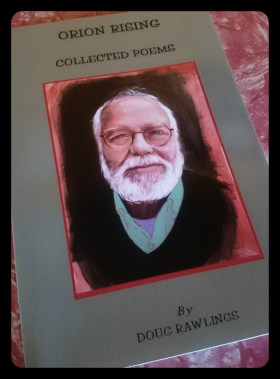
By the way, if anyone is interested in my poetry, I have two collections published—Orion Rising and A G.I. In America—that can be purchased through Lulu.com. (Just go to their bookstore and then to their poetry section and put in my name.)

_20161110_110358
Letters from the past two years have now been published in one volume entitled “Letters To The Wall,” which can be purchased here.

SR: I am just going to include the link for your poetry books here.
Again, I want to thank you, this means so much to me to be able to share your thoughts and ideas. And some of your poems, which I find to be so honest and moving. I sincerely hope that people will consider what you’ve said, and spread the word!  Here is one more of your poems, which I think says a lot:

Unexploded Ordnance: A Ballad

for Chuck and the thousands of Vietnamese who are working to undo what we have done.

So I was maybe all of twenty-one
when they whipped me
into some kind of soul-less shape
Yet another one of America’s
weeping mothers’ sons
Sent forth into this world
to raze, pillage, and rape

And now it’s coming on
to another Christmas Eve
And songs of joy and peace
fill up our little town
How I ask myself
could I possibly believe
I could do what I did
and not reap what I had sown

In that land far away
from what I call home
A grandfather leads
his granddaughter by the hand
Into a field where we did
what had to be done

They trip into a searing heat
brighter than a thousand suns

Oregon Stand Off Trial Verdicts Are In

The verdicts are in this afternoon for the seven defendants on trial in Portland for their roles in the occupation of the Malheur National Wildlife Refuge earlier this year.  The verdicts are as follows:

Ammon Bundy, not guilty on all counts

Ryan Bundy, not guilty on conspiracy charge, not guilty on firearms charge, no verdict on theft of property charge.

Jeff Banta, not guilty on all charges

Shawna Cox, not guilty

Ken Medenbach, not guilty on all charges

David Fry, not guilty on all charges

Neil Wampler, not guilty

After Questions of Bias Arise, Juror Dismissed in Oregon Stand Off Trial

Yesterday in the trial of seven defendants accused of conspiring to impede federal employees from doing their jobs after the January 2, 2016 occupation of the Malheur National Wildlfe Refuge, the jury sent questions to the judge.  One of those questions, hand written in all capital letters, was:

“Can a juror, a former employee of the Bureau of Land Management, who opens their remarks in deliberations by stating, ‘I am very biased…’ be considered an impartial judge in this case?”

The defense asked for the juror to be dismissed.  Judge Anna Brown met with the juror and the attorneys and decided she would not immediately dismiss the juror.  She gave the attorneys until 9am today to present case law to support the argument to dismiss the juror.  This is an unusual development, and has resulted in a flurry of discussion and speculation from all sides on how it will effect the trial.

Ammon Bundy’s defense lawyer, Marcus Mumford, filed a motion  to dismiss the juror this morning.  Many reporters in the court room tweeted that Judge Brown stated, “there is not a way forward that is not fraught with risk.”  Judge Brown asked that all parties agree to dismiss the juror on ‘good cause’ and she had a replacement juror chosen from a cup in preparation.  She said if the prosecution did not agree to dismiss the juror, she would hear oral arguments on the motion to dismiss.

Meanwhile, the jury continued to deliberate.  Judge Brown said if they reached a verdict while the court was deciding whether or not to dismiss the juror it would be yet another problem.

Finally, the prosecution agreed to dismiss the juror. The judge informed the jury that she had determined that juror 11 needs to be excused in the interest of justice, and that everyone would be back in court tomorrow morning for another round of jury instructions.  She told the jury they will have to set aside the conclusions they had already come to and start over.


While the Pentagon Wastes Billions of Dollars, Soldiers Are Forced to Repay Re-enlistment Bonuses

As the wars in Afghanistan and Iraq (and other countries) have dragged on for more than a decade, maintaining an all volunteer military force has become increasingly challenging.  The Department of Defense has relied on large cash incentives to keep the ranks filled, offering re-enlistment bonuses for soldiers in jobs that are in high demand.  (A former Air Force service member in the drone program told me about a re-enlistment, tax free, bonus of $72 thousand!)  Unfortunately, those bonuses were not always given to personnel that qualified for them.

Yesterday, it was reported by David S. Cloud in the Los Angeles Times that “nearly 10,000 soldiers, many of whom served multiple combat tours, have been ordered to repay large enlistment bonuses–and slapped with interest charges, wage garnishments and tax liens if they refuse–after audits revealed widespread overpayments by the California Guard at the height of the wars last decade.”  According to Cloud, these “bonus overpayments occurred in every state at the height of the two wars.”

Cloud goes on to discuss several soldiers now faced with repaying these bonuses they had no idea they didn’t qualify for when they received them.  These are veterans who deployed in Iraq and Afghanistan, many of them wounded while serving.  While some have attempted to appeal the decision, that has proven to be a long and difficult process.  Meanwhile, the interest on the amount owed continues to accrue.

One soldier, Bryan Strother, faced with a total of $25,010.32 owed “for mistaken bonuses and student loans,” filed a class action lawsuit in February.  Cloud writes that Strother filed the suit “on behalf of all soldiers who got bonuses, claiming the California Guard ‘conned’ them into reenlisting.”  His lawsuit seeks an injuction to stop further collection, as well as the return of money already re-payed.

Strother was notified in August that the Pentagon would not require him to repay the money he had received in enlistment bonuses, and shortly thereafter, lawyers for the US Attorney “petitioned the court to dismiss Strother’s lawsuit, arguing that it was moot since most of his debt had been waived.”  This motion is set to be decided on by January.  If the case is dismissed, that would take care of the injunction request for all soldiers who received bonuses.

Cloud writes, “even Guard officials concede that taking back the money from military veterans is distasteful.”

“At the end of the day, the soldiers ended up paying the largest price,” said Maj. Gen. Matthew Beevers, deputy commander of the California Guard.  “We’d be more than happy to absolve these people of their debts.  We just can’t do that.  We’d be breaking the law.”

Meanwhile, the Pentagon remains unaccountable for vast sums of tax payer money.  Scot J. Paltrow wrote in this November 18, 2013 Reuters article, “the Pentagon is the only federal agency that has not complied with a law that requires annual audits of all government departments.  That means that the $8.5 trillion in taxpayer money doled out by Congress to the Pentagon since 1996, the first year it was supposed to be audited, has never been accounted for.”

Matthew Gault wrote in his March 31, 2015 War Is Boring article that the Pentagon could not account for $45 billion of the $66 billion that was allocated to the Pentagon for the task of rebuilding Afghanistan.  Gault states, “the Pentagon has a history of wasting billions in the country [Afghanistan] on bad projects, corrupt business partners and disreputable construction companies.”

“It wasted five years and $20 million refurbishing an old Soviet prison that still isn’t finished. The Air Force blew half a billion dollars on transport planes that never flew. It sold the aircraft for $32,000 worth of scrap.”

All that waste, fraud, corruption, bad spending, and lack of accountability for billions of dollars is apparently acceptable.  But when the Pentagon resorts to bribery to maintain its volunteer force (after all, a draft would likely put a stop to these wars pretty quickly), 10,000 soldiers who were mistakenly given bonuses for re-enlisting are forced to repay the money they received.

Sure, that makes sense.

Homework, After More Than a Decade

_20161020_175515

Today, for the first time in years, I had a homework assignment due.  When I say years, I mean more than a decade.  I have no idea what sort of grade I will receive for my work, but I enjoyed doing it.  This assignment was to attend an event and report on it as if I was writing a piece for a newspaper.  Not an easy thing for me as a blogger who enjoys a lot of freedom to editorialize all I want, and as a novelist who has the power to kill off any character that disagrees with me.  But the challenge is what made it so fun.

I chose an event that I thought would be interesting to me personally, but also worth writing about here at seeking redress.  I chose to ‘report’ on a presentation given in Bend, Oregon, on October 6, 2016, by the Rural Organizing Project.  There is a lot I would like to say about this presentation, about the atmosphere in the room, about the security team present, about this organization, about the responses I heard afterwards…but that was not the purpose of this assignment, so maybe another time.

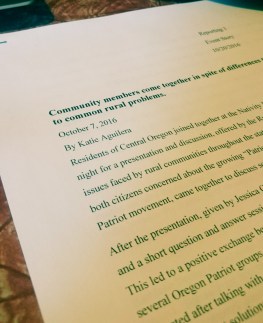
I really wanted to focus on something positive that I saw during this event.  So, for my homework assignment, this is what I reported:

Community members come together in spite of differences to discuss solutions to common rural problems.

October 7, 2016

By Katie Aguilera

The Rural Organizing Project gave a presentation Thursday night in Bend at the Nativity Lutheran Church as part of their statewide “Beyond Burns: the Growing Patriot Movement” tour.  Following the presentation and a short question and answer session, members of the audience were divided into smaller groups to discuss the issues presented.

This led to a positive exchange between Central Oregon residents concerned about the Patriot and militia movements and leaders of several Oregon Patriot groups.  Both groups agreed they share more common ground than expected after talking with each other.  In spite of their different opinions, all agreed that further dialogue about solutions to local problems was both possible and necessary.

The presentation was given by Jessica Campbell, co-director of the Rural Organizing Project.  The problems she discussed included the lack of funding for basic services like emergency dispatch services, full time law enforcement services, the lack of jobs, and more.  Campbell explained how these often lead to numerous problems, including a growing sense of discontent and disenfranchisement in rural communities.

Campbell explained how Patriot and militia groups seek to fill these voids in order to spread their message and recruit new members.  These groups often organize community service projects to gain support and also work to get politicians supportive of their goals elected to local offices.

A brief introduction of various groups such as the Oath Keepers, Oregon Three Percenters, Constitutional Sheriffs and Peace Officers Association, and the Pacific Patriots Network was given.  Campbell went on to discuss confrontations that have occurred between these groups and law enforcement over the past two years, from Cliven Bundy’s standoff with the Bureau of Land Management in Bunkerville, Nevada in 2014 over cattle grazing fees, to the occupation of the Malheur National Wildlife Refuge in Oregon earlier this year.

Another confrontation Campbell discussed occurred near Galice, Oregon, at a mine known as the Sugar Pine Mine, where various militia groups sought to prevent the Bureau of Land Management from shutting down operations at the mine.  This incident, occurring near Campbell’s hometown of Cottage Grove, brought the growing movements to Campbell’s attention, and led to Rural Organizing Project’s partnering with Political Research Associates of Somerville, Massachusetts, to co-produce the report, “Up In Arms: A Guide To Oregon’s Patriot Movement.”

People attended the presentation for various reasons.  Connie (Smith*) of Bend, said she came because she is concerned about the “mainstreaming of the [Patriot] movement,” and explained that while it is easy to recognize a member of a militia visually, it isn’t easy to recognize politicians supportive of the movement who are running for office.

Kathleen Brady, of Redmond, said she came to learn about the Rural Organizing Project.  She said she felt that much of the information presented was factually flawed, and while there was common ground between the Rural Organizing Project members and the Patriot movement, the methods of creating dialogue at the meeting were seriously lacking.

Bj Soper, also of Redmond, and founder of the Central Oregon Constitutional Guard and co-founder of the Pacific Patriots Network, said a lot of information was left out of the presentation, specifically in regards to the Sugar Pine Mine incident and another incident discussed that occurred at a mine in Montana.  However, he agreed the community could work together to solve problems faced by rural areas, stating, “we’re crazy not to try.”

The Rural Organizing Project was formed in 1993 in an effort to promote liberal democracy in what has largely been considered conservative rural areas of the state.  It began as a network of over 40 human dignity groups and formed a permanent staff to facilitate local organizing, communication, and political analysis.

The group will host four more presentations around the state, in Canyon City on October 7, Baker City on October 8, Lostine on October 9, and finally La Grande on October 10.  More information about the group can be found on their website at www.rop.org.

*I neglected to ask Connie her last name while speaking with her.


FBI Agent Testifies of Advance Warning of Malheur Wildlife Refuge Takeover Plan

According to testimony given by FBI Agent Chadd Lapp in the ongoing trial of seven defendants charged with conspiring to impede federal officers from fulfilling their duties as a result of their occupation of the Malheur National Wildlife Refuge that began January 2, 2016, the FBI received advanced warning of the plan on January 1, 2016.  It has been acknowledged during the trial that there were informants at the refuge during the occupation.

On Wednesday, September 28, 2016, Agent Lapp testified that on January 1, one day before the planned rally supporting the Hammonds, FBI agents learned there was a plan to take over the refuge.   Maxine Bernstein wrote in the Oregonian on September 29, 2016:

“Lapp said he heard the information from another agent. Ammon Bundy’s lawyer Marcus Mumford referred to an email sent to the chief regional refuge law enforcement office that he said made mention of ‘intelligence from four people within the militia about a plan to take the refuge.’

‘I remember telling him there was intelligence. It was a potential target,’ Lapp said. ‘It was really basic words…Malheur…wildlife refuge, and there may be a plan to take it.’

Under questioning from Mumford, Lapp said he conveyed the intelligence to several people in his office, but didn’t do anything further with the information.”

That nothing was done to prevent this plan, even with the short notice, is surprising given the testimonies made previously by Harney County Sheriff Dave Ward and Chad Karges, the manager of the Malheur National Wildlife Refuge, who both spoke of taking preventative measures prior to the January 2 rally.

Sheriff Ward testified earlier in the trial that after several meetings with Ammon Bundy prior to the January 2 rally and numerous emails, warnings, and his own research into what had happened at Bunkerville, Nevada in 2014, he prepared by moving the inmates from his jail in Burns, Oregon to the next county.  He added that he moved all of the weapons and ammunition to the jail, which could serve as a fortified bunker should something happen during the January 2 rally.

Chad Karges testified that “he made the decision to keep employees away after New Year’s Day because of the ‘continued intimidation and threats towards federal employees,’ ‘type of arms that they had,’ and the ‘type of stand they were taking.'”  Defense Attorney Lisa Maxfield asked Karges why no security was placed at the refuge before the rally, Karges answered, “at that time, federal agencies were being told the threat was towards the BLM, and the refuge hadn’t entered into the conversation.”

If the FBI had received information a day in advance of the takeover of the refuge, as Agent Lapp testified yesterday, why indeed weren’t steps taken to increase security at the refuge?  Clearly law enforcement and federal employees were concerned in the months leading up to the Hammonds returning to prison and the January 2 support rally.  Considering that, and the stand off that had occurred in Nevada nearly two years before, why would such a warning not be taken seriously?

With the well-known presence of the Bundys and the others who joined them in taking the refuge, as well as that of the Pacific Patriots Network and other “militia” groups in Burns, Oregon, for the support rally for the Hammonds, I find it difficult to believe there was a shortage of law enforcement in Harney County on January 1, 2016.  Why then was there no law enforcement presence placed at the Malheur National Wildlife Refuge on January 2, 2016 after the FBI received warning of the planned occupation?


Wildfire in El Dorado: Was Justice or Vengeance Served in California Arson Case?

Cunha one

Katie Aguilera

“I always wanted to be a firefighter, you know, the third generation thing, my dad and grandpa were firemen.”

On July 28, 2013, at around 12:05, a fire started in dry grass along the side of Highway 49 in Amador County, California, between the communities of El Dorado and Plymouth.  A 911 call was made at 12:07 by a passing motorist, and firefighters responded to the fire and quickly had it contained.  It burned approximately 0.2 acres of the oak covered hillside above the highway.  Within hours, a Cal Fire investigator was on the scene.  There had been no lightning strikes or thunder storms in the area for days, and after ruling out a discarded cigarette due to the weather conditions, campfire, hot engine pieces from passing cars, and other accidental human causes, the investigator determined the fire was started by an arsonist.  A small paper fragment at the ignition site led the investigator to conclude the arsonist used some sort of incendiary device to start the fire.

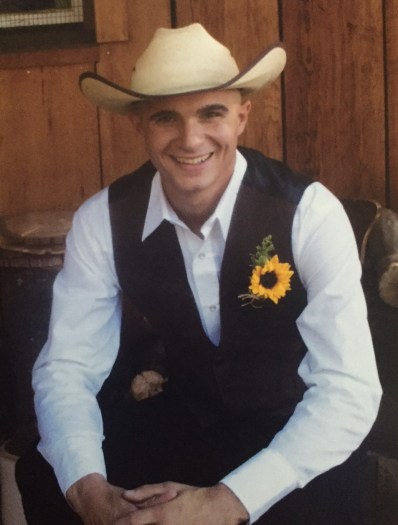
That same day, not far away, a 30-year-old Placerville, California resident, Benjamin Cunha, was attending the Amador County Fair.  Cunha is well known within the community.  He hails from a family of firefighters, his grandfather had served the Diamond Springs Fire Protection District as chief for 20 years, and his father retired from the same district after serving as a captain for 25 years.  Cunha had served in various volunteer positions since his teen years, including at the El Dorado County Museum and the El Dorado Western Railroad.

Becoming a firefighter was Ben Cunha’s goal, and he began taking college fire science classes in high school.  After graduating high school early, he took a seasonal job with Cal Fire, working six months a year, and also served as a volunteer firefighter for the Diamond Springs Fire Protection District.  In 2004, Cunha obtained a position as an apprentice firefighter at the El Dorado County Fire Department.

But growing up amongst firefighters and working as a firefighter wasn’t Benjamin Cunha’s only history with fire.  In August of 2005, Cunha made a decision he would come to regret “more than anything.”  He started a fire in the grass alongside a road in El Dorado County.  It would not be the only fire Cunha would light in El Dorado and Amador counties.  Over the course of that summer, and the following summer, Cunha lit numerous fires in grassy road side areas and hill side stands of oak trees.

Cunha was sentenced for those fires in 2007 and served his time in prison and on probation.  He settled back into his community, immediately getting a good job.  By the time the July 28, 2013 fire on Highway 49 started, Cunha was a successful and productive member of his community, enjoying the local county fair with friends and family.  But that didn’t matter when his presence at the Amador County Fair, a mere two miles from the fire on Highway 49, was noted by Cal Fire personnel.  After a second suspicious fire started on August 4, 2013, Ben Cunha was once again arrested and charged with arson.

“I wish I’d never done that, more than anything in my life.  But I did.  I did.”

Recently, in a phone call, Cunha explained to me why he lit the fires in 2005-2007.  He stated, “it was the stupidest decision I’ve ever made in my life, but, making $6.00 an hour and trying to support myself, I figured out, hey, I can make a few extra dollars, come in on my days off, and…I did that.  And I regret that more than anything in my life.  I also, I was trying to get a…I was being laid off, actually, in 2007, and I was trying to secure a position there.”  He gave similar reasons back in 2007, and he certainly isn’t the first person to light fires in order to profit from them.  This August 2, 2010 High Country News article gives some examples of other cases.

Cunha went on to explain, “it was a real difficult thing, there were six of us at that station, we worked in Caloma…they called us apprentice firefighters and we didn’t have a captain or anything there [they were supervised under the captain of the neighboring fire station]. I drove the fire engine.  We were there 24 hour shifts, 10 days a month…it was really hard, everybody was always just trying to scrape by because they wanted to be a firefighter so bad, they were willing to work that job for $6.00 an hour, even though you couldn’t really live on that.”

According to the book Fire Raisers, Freaks and Fiends:  Obsessive Arsonists in the California Foothills by Ed Nordskog, published in September, 2013, Cal Fire investigators were in the midst of an ongoing investigation into suspicious fires later attributed to Robert Eason, a former volunteer firefighter with the Capay Volunteer Fire Department the summer Cunha started lighting fires.  By 2006, the investigators were aware that Eason wasn’t the only person setting fires in the area. The book states that at one of the fire locations, “Cal Fire Captain and Investigator Tom Oldag found a time-delay incendiary device at this scene.  This device consisted of a single cigarette without a filter surrounded by four paper matches affixed to the cigarette with black tape.  Oldag, who was aware of the Eason fires that took place about eighty-miles away, was sure that this was not Eason’s type of device.  He now became concerned about a copycat arsonist in the area.”

Nordskog goes on to add, “Cal Fire and USFS investigators were extremely worried.  They realized they had an emerging series on their hands and the suspect was getting extremely dangerous.  The fires were all linked by location, time of day, ignition fuels, similar device, and ambient temperature.  The only factor that was good news for the investigators was that the fires were all set on days with very little wind, which every firefighter knows is the main critical factor in the spread of wild land fires.”

In July 2007, after yet another hot afternoon fire, a “witness reported seeing a yellow and black motorcycle in the area just before the fire broke out.”  Investigators had a camera placed along Sand Ridge Road, and the film showed a “small Toyota pickup being driven by a young white male passing through the area four times prior” to another fire.  The truck was identified as belonging to Ben Cunha’s grandfather, and the motorcycle as belonging to Cunha himself.  Investigators began surveilling Cunha, and according to Nordskog’s book, they suspected him of lighting at least fifteen fires.  Nordskog writes, “Cunha’s time records showed that he was not assigned to a fire station when most of the fires were reported.”

Captain Oldag began an investigation of Cunha’s personal life.  Not surprisingly, he found that Cunha “frequently wore firefighter tee shirts, boots, and other accessories,” and he “seemed to only hang out with firefighters and at fire stations,” according to Nordskog’s book.  It seems unlikely that a young man whose life goal is to be a firefighter would avoid all things firefighting related in his off hours.

More surprisingly, Nordskog writes that Oldag also discovered that a local fire chief recalled that “when Cunha was around ten or eleven years old, he and another Cal Fire chief in the area had recognized Ben Cunha as a ‘problem-child fire setter.’  They suspected him of setting several fires in and around his family’s home and had even watched the young boy to see if they could catch him in the act.  The chief said that Ben Cunha had been such a problem a decade before that they actually had to enroll him in a juvenile fire setter counseling program.”

Both Ben Cunha and his father have denied this claim.  Ben Cunha stated to me, “that was nonsense, that didn’t happen.  I got in trouble when I was like, seven or eight years old, for playing with matches, not lighting a fire, playing with matches.  Just as an educational thing, my dad took me to talk to the prevention officer…I was never in a juvenile fire setters class.”  His father, Ed Cunha, told me that he remembered speaking with a Cal Fire firefighter, the chief mentioned by Nordskog, years ago about a program, but didn’t remember that his son had ever attended it.  He also confirmed what Ben said, that he had been playing with matches and did not start a fire.

After Nordskog’s book was published, Ed Cunha again spoke to the fire chief Nordskog mentions in the book, and the man confirmed he was interviewed by Oldag, but denied making the statements in Nordskog’s book.   Additionally, that fire chief was still serving the Diamond Springs Fire Protection District when Cunha became a volunteer, and there is no indication that he voiced concerns about Cunha’s childhood then.   To date, I have been unable to reach the fire chief mentioned, or other Cal Fire personnel who might have knowledge about this.  I contacted the author, Ed Nordskog, via email, and asked about this and his response was that he has information from “multiple sources (more than one firefighter) that Cunha was involved in a Juvenile Firestarter’s type program as a young boy.”

In 2007, as Oldag was studying Cunha’s history, Cal Fire investigators watched Cunha’s every move, following him whenever he left his home.  Since Cunha often drove his motorcycle, airplanes were used to follow him around the countryside.  After watching Cunha light two more fires, the investigators made their move and arrested him Sunday, September 9, 2007.  In March, 2008, after reaching an agreement with the prosecutors, Cunha pled guilty to two counts of arson.  As part of his plea deal, Cunha agreed to give details to the Cal Fire investigators about the fires he started in exchange for transactional immunity from further prosecution.

Cunha explained, “Cal Fire investigators were pushing for, they wanted to know what fires I started.  So they came up with the…transactional immunity.  They said, ‘you have transactional immunity, in order to get the plea deal, one year in jail, five years of probation, but you need to sit down with the investigators and confirm all the fires that were set,’ and, ‘that nobody will ever charge you, nobody can do anything against you with that, this is transactional immunity.’  The judge explained it to me, everybody did, and so they said, ‘you have nothing to worry about.’  So I went in there and basically told them of every fire I knew of that was set, and that was that.”

Cunha received a six-year sentence, most of which was suspended by the court.  In his book, Nordskog describes this as a “galling move by the court.”  He writes that “the investigators who worked so hard on this case remain bitter to this day,” and “rumors were rampant that some retired fire chief had gotten into the judge’s ear and possibly influenced the sentencing.”  Cunha had a different explanation for the sentence when he told me that the District Attorney and the judge examined his case and his history and decided to give him another chance at life.  Cunha said they told him, “’you don’t have any criminal charges, you’re active in your community’ and they said, ‘we’d like to give you a second chance.  We think you’re a good guy, and you screwed up.’”

I have another idea as to why the District Attorney and the Judge felt Cunha deserved a light sentence.  Perhaps, like me, they heard rumors that Cunha was not the only firefighter involved in lighting these fires.  Another area resident that I spoke with, who wished to remain anonymous, stated, “things came out back then, when it first happened, that Ben was basically the fall guy for a much bigger operation that was going down.”  Could it be that Cunha, after receiving transactional immunity, claimed responsibility for fires that he didn’t start to protect fellow firefighters, believing he wouldn’t face additional charges?  When I asked Cunha about this, he was unwilling to discuss it, which is understandable, if true.

I asked Nordskog via email if he had heard any explanation for the fires that were started when Cunha was on duty, and he responded, “I have no doubt (based on my experience) that Cunha was lighting fires both on-duty and off-duty as most firefighter arsonists do.”  He added that Cunha drove a water tender and was “always alone and unsupervised.”  This is possible of course, but doesn’t explain the rumors of others’ involvement, which the investigators surely were aware of.

Cunha served his time, 365 days, in the El Dorado County Jail, and was released.  As part of his sentence, he remained on probation, and was required to wear a GPS tracking device during fire season.  The judge had warned him that any violation of his probation would land him in state prison to serve the suspended sentence.

Several months after his release, Cunha received a phone call that would land him back in jail for over a year.  Nordskog writes in his book that “Cunha did not seem to understand the extraordinary break he had received.  Within just a few months, he was rearrested by the local cops for violating his probation, being a felon in possession of firearms, and facilitating the sale of stolen property.”  Nordskog’s book was published while Cunha was in prison fighting the charges.

According to this December 3, 2008 Firehouse article, Cunha was “arrested on charges of violating probation, possessing weapons, facilitating the sale of stolen weapons and for a felon in possession of a firearm.”  It goes on to state, “Cunha was allegedly involved with people who stole weapons and helped sell them, Placerville police officials said.”  His bail was set at an astounding $10 million.  But the news reports fail to explain whether Cunha was ever convicted for these charges, or to explain how this apparent violation of his probation did not lead to his serving the suspended sentence in state prison, as the judge had warned would happen.

In fact, Cunha wasn’t convicted for any of these charges.  He told me, “a guy I knew, I met in there [jail], called me up one day and said, ‘Hey, I’ve got some guns I inherited from somebody,’ some nonsense story.  He said, ‘do you know how much they’d be worth, or would you want to buy them?’  I said, ‘well, I don’t want to get involved with anything like that, but you can call a friend of mine, he might be interested,’ and I gave him a phone number, and that was the extent of my involvement in the whole thing.  The guy got in trouble, and they brought up my name, they immediately came and arrested me, and they charged me with a felon in possession of a firearm, which I’d never done, I hadn’t touched them…I was stuck in jail for another year and a half on that, and it finally came to it that we were fighting this and fighting this, and we wouldn’t take any deals on it, and the judge finally wanted to know what was going on, they had a private meeting at the court, and they came out and they said, Mr. Cunha, just plead guilty to a violation of probation and you’ll go home today.”  And that is what Cunha did.

In 2011, Cunha was again arrested for a probation violation.  He was called to the probation office because something was going on with his GPS tracker, and when he arrived, he was arrested.  He asked what it was about, and was told his tracker wasn’t transmitting, that he must not have charged it, allowing it to go dead.  Cunha disputed that, saying he charged it every day, but he was sent to jail anyway.  He said, “I sat in jail for almost a month, 20-25 days, something like that.  My attorney went to them and said, ‘I want to look at your equipment to make sure it’s not malfunctioned,’ and they came back and said, ‘we’re going to go ahead and drop this case, we’re gonna dismiss it.’”  The next time he checked in with his probation officer, Cunha asked why the equipment wasn’t checked before he was arrested.  He said that he was told, “this was input from Cal Fire that was requesting you be detained, but they said, ‘yes, we realized the equipment was broken within the first week of you being detained.’”

“What I don’t understand, is why did a judge tell me, look me in the face, and tell me nobody could ever prosecute me for this.”

In the summer of 2013, Ben Cunha had completed his probation and believed the past was behind him. He told me his community “basically forgave me for what I did, they said, ‘yeah, you screwed up, you did what your punishment was and you moved on with your life.’”  But then came the two fires in July and August, 2013, and Cunha was once again arrested.  However, he wasn’t charged with the two 2013 fires, but rather was charged with two of the fires he had described to Cal Fire investigators back in 2007.

According to court documents, in “July and August of 2013, authorities investigated two new suspected arson fires in the El Dorado/Amador area.  Law enforcement determined that at least one of the fires was started using a time-delay incendiary device similar to the time-delay incendiary devices Cunha had admitted to using in the 2007-2008 series of El Dorado/Amador county fires.  Cunha was a primary suspect in the 2013 fires.  Rather than continue the investigation of the 2013 fires, and to curb the risk of any additional fires in the meantime, Cunha was charged in the current indictment for the two 2007 fires that the government alleged burned onto federal land.”

It didn’t matter that Cunha had received transactional immunity from the state to prevent further prosecution in exchange for giving information about those fires.  The sentencing document explains in a footnote, “Cunha received transactional immunity from state prosecutors for the information he provided to local law enforcement.  However, the uncompelled grant of transactional immunity by the state prosecutors does not bind the federal authorities.”  It goes on to cite court cases that support that position.

According to Cunha, the judge made clear his displeasure over the federal charges at trial.  Cunha told me that the judge said to the prosecution, “why are we here?”  The prosecutors responded that it was arson on federal land, and Cunha said the judge answered back with, “yes, but I believe the state took care of this issue ten years ago.  I’m not sending this man to prison for seven years, I want to send him home.”  Cunha went on to say that the judge “apologized to me over and over again.  The judge said this is not right, this is wrong…he also made a comment saying he felt that the investigators were unsatisfied with the original case and were pushing it.”  I am hoping to obtain a copy of the court transcripts from the trial to verify the judge’s statements.

There was no evidence to show he started the two fires in 2013.  A security camera on a bank that showed the highway leading to the fire location did not capture Cunha’s vehicle passing by on the days of the fires.  The tiny fragment of paper found at the July fire was supposedly an incendiary device similar to what Cunha had used previously, and that combined with the fact that he had been at the fair two miles away the day of the July fire, seems to be all it took to make him the prime suspect.  And that was enough to get him back into court to be sentenced to five years in federal prison for fires that Cunha believed he had immunity from prosecution for.

Cunha was sentenced to five years in federal prison on February 23, 2016, and ordered to pay $246,862.00 in restitution.  He was originally scheduled to report to federal prison in July, 2016 but due to health issues, has had the date postponed until October, 2016.  He has been on house arrest since 2013, which cost him his job due to the resulting time restrictions.  He stated, “I’ve been on house arrest since 2013, since day one of this case.  I don’t get any credit for that, I could be on house arrest for ten years fighting the case, and they’d still say, ‘okay, you have your full sentence to do.’  It doesn’t count for anything, even though they’ve taken away my rights, and I have no freedom to leave, or do anything.  I get zero credit for any of this.”

“The last year you can do in a halfway house, so they can teach you how to get a job, and live life.  And I’m like, well, I have a house, I had a great job…”

It is clear from Nordskog’s book, the judge’s statements, and from Cunha and his father, that the Cal Fire investigators were unhappy with the original sentence in 2007.  Captain Oldag seems to have made use of Cunha’s case in a series of seminars on arson investigation, one of the largest was at the national arson investigators conference in Las Vegas in 2013.  According to Ed Cunha, Ben’s father, Oldag was “extremely upset with the Judge’s decision and made his position on the matter known to Fire Officials across the state.”  One wonders if vengeance rather than justice has been served in this case.

Interestingly, in what strikes me as a remarkable coincidence, and an incredible stroke of luck, Oldag caught another arsonist red-handed in July, 2007, along the very same highway as the July 28, 2013 and August 4, 2013 fires Cunha was arrested for but not charged with.  According to this August 1, 2007 Cal Fire blog post, “Cal Fire investigator Tom Oldag caught an arsonist in the act in Plymouth Friday afternoon on his way to an unrelated fire that burned 19 acres near Jackson earlier that day.”  The article goes on to say, “according to Oldag, the arsonist, Juan Antonio Cardona, had just started the grass fire on Highway 49 a half mile north of town when Oldag drove by in a marked truck.”  Oldag is quoted as saying, “I just happened to be in the right place at the right time.”

According to the investigation report, this fire was lit on the west side of Highway 49, half a mile North of Plymouth.  Oddly, Oldag was driving with lights and sirens on as he passed Cardona on the highway, but Cardona, who admitted to drinking at the Amador County Fair earlier in the day, stated he didn’t hear the sirens until after Oldag had passed by.  In the fire investigation report for the July 28, 2013, the fire occurred on the west side of Highway 49, approximately one mile south of Bell Road, which intersects Highway 49 about six miles outside of Plymouth.  The incident reports for the two fires, however, put the latitude and longitude of both at almost exactly the same place!  Additionally, the August 4, 2013 fire also occurred at nearly the same location, according to incident reports.

With his February 23, 2016 sentencing, Cunha, now a husband and father, has little options left.  He remains at home due to his health condition, but will have to report to federal prison in October unless he receives an additional extension for medical reasons.  He spoke of the irony, that as part of his sentence, he would spend the last 15% in a halfway house in order to learn life skills to prepare him for his return to society.  As though he hasn’t already made a successful life for himself in spite of his past mistakes, a life the federal government will expend untold tax dollars removing him from for five years.


Update:  Former California firefighter enters federal prison to serve second sentence for arson committed nine years ago.

Cal Fire Investigates Suspected Arsonist For a Year, Fails To Stop Devastating Clayton Fire in California

Katie Aguilera

Damin Pashilk, a resident of Clearlake, California, was arrested and charged Monday, August 15, 2016, for starting 17 wildfires.  The last fire Pashilk started before being arrested was the Clayton Fire, which at the time of this publication was 50% contained, but had already destroyed 175 structures, many of which were homes.  While serving a sentence for drug and weapons charges in the past, Pashilk worked on an inmate fire fighting crew.  He isn’t the first notable former inmate firefighter in California.  Wayne Allen Huntsman who started the September 13, 2014 King Fire that burned 12 homes and nearly 100,000 acres in California also worked as an inmate firefighter.

According to this August 16, 2016 LA Times article, Pashilk had been under investigation by Cal Fire for “about a year.”  This August 17, 2016 LA Times update on the story adds this, “Clearlake, Calif., resident Damin Pashilk has started or tried to start 17 fires in Lake County since July 2015, prosecutors said.”  That article goes on to describe other fires Pashilk is alleged to have started.  It states, “on July 27, Pashilk allegedly attempted to start a fire near the Holiday Island mobile home park in Clearlake. A week-and-a-half later, GPS trackers put his vehicle near where a matchbook had started a small blaze in Lower Lake, though it burned itself out. Four days later, the Clayton fire began.”

In other words, Cal Fire had nearly a year to catch this alleged arsonist.  They had him under surveillance.  Currently, they are charging him with 17 counts of arson, so they must have some evidence to support those charges.  But, remember, fire number 17 destroyed peoples’ homes.  It destroyed at least 175 structures, and still continues to burn.  If Cal Fire had reason to charge Pashilk with any of the previous 16 fires, why did they wait to arrest him?  Why did they wait until he started this most recent fire, the Clayton Fire, destroying peoples’ homes?

Here’s the answer offered by Lake County Sheriff Brian Martin according to this local CBS report. “It wasn’t until the Clayton Fire investigators had enough to make the arrest on Monday.  ‘You get one shot at this. If you take that shot too soon, you jeopardize bringing someone to justice who truly needs to be brought to justice,’ Martin said Wednesday.”

That after a year of investigation?


If you liked the article and would like to support the author, click here.

Just What is Transactional Immunity?

Let’s say a friend and I decide to set out on a protest mission against animal cruelty and we start a series of fires around the state at privately owned slaughter houses.  We also release wild horses being held in a Bureau of Land Management facility and light the corrals on fire.  At some point, we get caught.  Faced with years in prison, I agree to a plea deal that includes cooperating with the prosecution by giving details of every fire my friend and I started while on our crime spree, including the fire at the BLM’s wild horse facility.  My end of the deal includes only facing one charge of arson, and the prosecution agrees to give me transactional immunity.  What does that mean?

Transactional immunity is described here as follows:

Immunity from prosecution for an individual is generally sought when that individual has information necessary to the public interest, but has refused or is likely to refuse to testify or provide the information on the basis of the privilege against self-incrimination. There are different types of immunity that may be granted in exchange for a person’s testimony.

Transactional immunity bars any subsequent action against the immunized person, regardless of the source of the evidence against that person.

This website offers an example of a bank robber receiving transactional immunity in exchange for giving details of the crimes he committed.  These details include the fact that the robber used some of the stolen money to purchase cocaine, another illegal act.  However, because of his transactional immunity, he cannot be charged for this purchase of cocaine.

Now, back to my hypothetical acts of arson.  After reviewing my record the judge finds I have no prior criminal charges, and believing that I acted on a strongly held belief against animal cruelty, she determines I made mistakes and decides to give me another chance.  She believes I understand the gravity of my mistakes and will not commit them again, and gives me a light sentence.  So I made my deal and I serve the short sentence I receive for my single charge.  I get out of prison and return to a productive life.  I believe the entire ordeal brought on by my rash decisions to be behind me.

However, the federal government decides to bring a charge of arson on federal property against my friend and I.  This charge means that I once again find myself back in court, because the federal government is not bound to the transactional immunity the state granted me in my plea deal.  Imagine my surprise when I’m sentenced to a federal charge of arson and am sent back to prison for five years!

Of course, this is a made up scenario and I certainly have no intention of starting any fires that aren’t in my wood stove, fire ring, or barbecue.  So, why did I feel the need to write this short blurb describing transactional immunity?  Well, I wanted to write this because transactional immunity plays an important role in the very real, un-made-up, story I’m currently working on.  Stay tuned…