How Sentence Enhancements Increase Plea Deals And Reduce Transparency in America’s Justice System

Author’s Note:  this article was originally published on Newsbud.com over a year ago and may contain outdated information.  I am posting it here now because it is no longer available on that website (more about that here).  I will be posting a couple additional articles that I wrote for Newsbud that are also no longer available there.

Katie Aguilera

Most Americans today are aware of mandatory-minimum sentences in federal and state criminal sentencing guidelines and the often excessive punishments they place on offenders. What is perhaps less well known is the existence of sentence enhancements in the US judicial system. These are defined as “facts and circumstances that, if present in your case, allow the sentencing judge to increase or ‘enhance’ the sentence that normally applies to the crime.”

This means a sentence determined by sentencing guidelines or mandatory-minimum requirements can be increased, or enhanced, for reasons such as the use of a weapon while committing the crime, repeat offenses, or the age of the victim. The increase in sentence length is then decided upon solely by the judge in the case.

When offenders find themselves facing such large sentences, and their defense attorney is, from the start, likely to be far behind the prosecutors in knowing what the facts of the case are, it becomes all too easy for prosecutors to push for and achieve a plea deal. A deal that allows for a much shorter sentence is a powerful enticement to encourage a defendant to admit guilt, regardless of whether genuinely guilty or not.

Consider this from a 2015 Texas A&M Law Review report: “our criminal justice system…suffers from practices related to sentencing enhancements and the resulting wave of wrongful convictions by guilty plea.”

An astounding 97% of federal criminal cases are resolved in plea bargains, as of 2013, according to this article by Jed S. Rakoff, published in November 2014. He adds that this is mirrored in state felony cases, with most states showing an average of around 95% of cases ending with plea bargains. Rakoff writes, “in both the state and federal systems, the power to determine the terms of the plea bargain is, as a practical matter, lodged largely in the prosecutor, with the defense counsel having little to say, and the judge even less.”

The Sixth Amendment guarantees Americans the right to a public trial with an impartial jury. But, as Rakoff writes, “our criminal justice system is almost exclusively a system of plea bargaining, negotiated behind closed doors and with no judicial oversight.” No jury of peers to hear both sides of the story and weigh the arguments and evidence, or to decide on an appropriate sentence in the case of a guilty verdict.

One enhancement that carries significant weight and is quietly being used is the terrorism enhancement. This enhancement elevates a defendant’s criminal record to the highest level, therefore allowing a large increase in the recommended sentencing range. According to Shane Harris in this July 13, 2007 article, “the application of the terrorism enhancement has largely been overlooked by the media, legal scholars, Congress, and terrorism analysts.”

Harris writes in this article published the same day, “just figuring out how many times the government had sought the enhancement proved impossible–the U.S. Attorneys Office doesn’t track that figure. But I was able to determine that judges have applied the enhancement at least 57 times in the past eight years. I studied more than half those cases–35–and learned that prosecutors sought the enhancement more often against domestic defendants, as opposed to members of international terrorist groups.”

He adds that this enhancement most commonly targets offenders who weren’t religiously motivated and often “consciously avoided human casualties” in their attacks; that most were motivated by “political outrage, and specifically targeted government facilities.” His article highlights the case of Daniel McGowan who was arrested and charged on counts of arson and conspiracy in Oregon after starting a fire at a lumber mill in protest of logging operations. A terrorism enhancement was added in his case, and facing a life sentence, McGowan accepted a non-cooperation plea agreement and was sentenced to seven years in prison.

In fact, Harris points out, the terrorism enhancement can be applied simply because the judge in a case is convinced by the government that “the crime in question was aimed at the government and that it ‘involved, or was intended to promote’ a specific act of terrorism—even one that was never carried out.”

Consider the case of Ahmed Abassi, a student from Tunisia who, upon arriving in the US, was immediately caught up in an ongoing sting operation when he moved into an apartment wired with recording devices, hosted by an FBI undercover agent. Abassi was not one to hold back when talking about his dislike for the US. He was caught on tape discussing “the principle that America should be wiped off the face of the earth” and suggesting “putting bacteria in the air or water supply.”

However, when pushed to action, Abassi refused repeatedly. As Wendy Gillis points out in this March 12, 2015 article, the US federal prosecutor in the case, Michael Ferrera wrote in a court submission, “to be clear, there is no dispute that Abassi repeatedly and emphatically refused to participate in terrorist and violent plots.”

Abassi was arrested in the sting operation, and faced a terrorism enhancement in his case. He spent months in jail, and his attorney, US federal defender Sabrina Shroff said “it was apparent to her that Abassi had not provided the evidence the FBI needed to make its case, that he had not stepped over the line into active participation…Prosecutors told Shroff they would drop the terrorism enhancements if Abassi agreed to plead guilty to the charges that included putting false information on an application for a green card…”

According to Gillis, Abassi “plead guilty to two minor immigration offenses and was deported to Tunisia last fall.” Even though the terrorism enhancement was dropped, Abassi states, “I am still, in the eyes of the world, a terrorist.”

Plea deals are often sought to alleviate pressure on an already over-booked judicial system by keeping cases out of court, or to protect sources such as confidential informants, undercover officers, and cooperative witnesses. But the use of sentence enhancements in cases such as McGowan’s and Abassi’s raises the possibility of prosecution that is the result of a particular agenda. One possibility is that plea deals might be sought in conspiracy cases in order to put pressure on the other defendants allegedly involved in the crime. Another agenda might be making the case for increased measures to prevent acts of domestic terrorism. If the number of defendants charged with terrorism increase, raising fear within the American public, justification can be made for even greater loss of freedoms.

Achieving a plea deal to keep a case out of trial also allows for suppression of the evidence that would enter the public domain during a trial. Plea deals are negotiated out of the public’s view, with no scrutiny of evidence used against the defendant. This can allow questionable investigations, illegal evidence gathering, and an unknown number of innocent people being imprisoned without trial. Ultimately, a plea deal is an assured conviction as it eliminates the risk of a jury finding a reasonable doubt as to the defendant’s guilt.

This fact certainly benefits the private prison industry since convictions usually come with a prison sentence. According to Nicole Goodkind in this article published August 6, 2013, “private prisons bring in about $3 billion in revenue annually.” Even though sentences are generally shortened by plea deals, the rising number of convictions due to these deals over the past decades still ensures a viable supply of prisoners to fill private prisons.

The value of this growing market isn’t lost on the prison industrial complex, and companies invested in this industry have taken steps to ensure it continues to grow. Two of the largest private prison owners, Corrections Corporation of America and GEO, have become influential lobbyists, spending large sums of money to affect policy that benefits the growing business of incarcerating people. Michael Cohen wrote in Washington Post on April 28, 2015, that Corrections Corporation of America stated in it’s 2014 annual report:

The demand for our facilities and services could be adversely affected by the relaxation of enforcement efforts, leniency in conviction of parole standards and sentencing practices or through the decriminalization of certain activities that are currently proscribed by our criminal laws. For instance, any changes with respect to drugs and controlled substances or illegal immigration could affect the number of persons arrested, convicted, and sentenced, thereby potentially reducing demand for correctional facilities to house them.”

As long as the federal government and large corporations continue to benefit from mandatory minimum sentencing and sentence enhancements, it seems unlikely that such policies will be changed. More laws will undoubtedly arise, creating even more crime, and America will continue to house the second largest prison population of countries with the most prisoners per 100,000 inhabitants.


If you liked the article and would like to support the author, click here.

The Expanding Use of National Security Letters

Author’s Note:  this article was originally published on Newsbud.com over a year ago and may contain outdated information.  I am posting it here now because it is no longer available on that website (more about that here).  I will be posting a couple additional articles that I wrote for Newsbud that are also no longer available there.

Katie Aguilera

Last month, the US senate came up two votes short of the necessary number needed to pass an amendment to a criminal justice spending bill that would have expanded the type of information that can be obtained with the use of a warrantless surveillance technique known as a national security letter. The Federal Bureau of Investigation has been pushing for this expansion for some time, and after the June 12th Pulse Nightclub shooting in Orlando, Florida, many expected the amendment would pass. It will likely be voted on again, as Senator Mitch McConnell (R-KY) has already filed to bring the measure back before the Senate.

A national security letter is a demand by law enforcement conducting national security investigations for information from companies about an individual’s use of services. National security letters, or NSLs, have been issued to libraries, internet service providers, telephone companies, even doctors and insurance companies, among others. The information sought might include records of internet usage, records of telephone calls, and banking and credit information. NSLs do not require approval from a judge, and they forbid the recipient from disclosing any details about the request to the public or the individual the requested information pertains to.

The use of national security letters (NSLs) by law enforcement to obtain data has greatly increased since the passing of the Patriot Act in 2001, and it shows no sign of slowing with this renewed push to expand the type of information that can be obtained with the use of NSLs. According to this transparency report on the use of National security authorities, 12,870 NSLs were issued in 2015. It is unlikely the FBI would not take advantage of expanded NSL capabilities, after all, they have demonstrated a willingness to abuse the NSL system already, in multiple cases.

As reported by the Intercept, the FBI continued to issue NSLs requesting data “’electronic communications transaction records’ — email metadata and header information, URL browsing data, and more,” even though, in 2008, President Bush’s Office of Legal Counsel advised that the FBI “was not entitled to anything more than basic subscriber information, including name, address, and toll billing records.”

According to a letter to the Senate judiciary committee signed by many civil liberty groups and businesses, an Office of the Inspector General audit from 2007 “found that the FBI illegally used NSLs to collect information that was not permitted by the NSL statutes.” It also points out that data collected from NSL demands was stored indefinitely, used to access information not related to any FBI investigation, and “NSLs were used to conduct bulk collection of tens of thousands of records at a time.”

The letter argues against the amendment, writing that the proposed expansion of the information susceptible to NSLs “would dramatically expand the ability of the FBI to get sensitive information about users’ online activities without court oversight. The provision would expand the categories of records…that the FBI can obtain using administrative subpoenas called NSLs, which do not require probable cause.”

The letter goes on to say, “the new categories of information that could be collected using an NSL…would paint an incredibly intimate picture of an individual’s life. For example, [they] could include a person’s browsing history, email metadata, location information, and the exact date and time a person signs in or out of a particular online account.”

In the aftermath of various terrorist attacks like the Paris attacks of November 2015 and the recent Istanbul airport attack, as well as the San Bernardino attack last December and the mass shooting in Orlando last month, the rhetoric has grown increasingly alarmist about the possibility of more frequent and more harmful “lone-wolf” attacks. Proponents of increasing the reach of NSLs argue that such expansion will aid in identifying potential threats before they can attack. Senator John McCain stated on the floor of the Senate, “right now, there are unfortunately young people in this country that are self-radicalized, and what vehicle is doing the self-radicalization? It’s the internet.”

This argument is in spite of the fact that the Chairman of the Intelligence Committee, Senator Richard Burr (R-NC) admitted before the Senate vote on the NSL expansion amendment that it “would not have prevented the mass shooting in Orlando, or the attacks in San Bernardino in December of last year.” It also disregards the fact that FBI Director James Comey stated the FBI had conducted a full investigation into the Orlando, Florida shooter, Omar Mateen, under current laws, prior to the attack. He is quoted in this Bloomberg article as saying:

“We had the resources to do a 10-month investigation that based on my review was quite complete involving surveillance, sources, a review of electronic records, international records,” Comey said Monday, adding that agents recorded conversations with the shooter and reviewed ‘transactional records from his communications.’”

This raises the question, exactly how will expanding the use of an information gathering tool that is already arguably unconstitutional, and demonstrably ineffective, help to prevent future attacks? Ultimately, what would this expansion of the FBI’s ability to profile individuals as potential future threats based on data collected without a warrant accomplish?

It may very well present a number of opportunities to identify potential target sites for internet censoring such as is already being called for in the European Union. It also may effectively stifle transparency as NSLs are used to obtain information on journalists, and their sources. Consider this report in the Intercept last week on the FBI’s classified rules, leaked to the Intercept, for the use of NSLs to obtain information on journalists. As this Freedom Of The Press Foundation article states:

“First, the rules clearly indicate—in two separate places—that NSLs can specifically be used to conduct surveillance on reporters and sources in leak investigations. This is quite disturbing, since the Justice Department spent two years trying to convince the public that it updated its ‘Media Guidelines’ [found here] to create a very high and restrictive bar for when and how they could spy on journalists using regular subpoenas and court orders. These leaked rules prove that the FBI and DOJ can completely circumvent the Media Guidelines and just use an NSL in total secrecy.”

This will likely have the effect of intimidating and discouraging potential sources and whistleblowers for fear that NSLs demanding email and phone records will expose them, subjecting them to the Obama administration’s aggressive targeting of whistleblowers. If law enforcement can obtain such detailed information on an individual without any judicial oversight, people will be much less likely to risk speaking out on crimes committed by the government. This suggests that, rather than protecting the people from acts of terrorism, the use of national security letters ultimately serves to protect the Federal government from scrutiny.

If you enjoyed the article and you would like to support the author, click here.

Senator Rand Paul Speaks Some Truth in the Senate

Kentucky Senator Rand Paul has called on Congress to end the 2001 and 2002 Authorizations for Use of Military Force.  Paul opened his speech on the senate floor by saying,

“I rise today to oppose unauthorized, undeclared, and unconstitutional war.  What we have today is basically unlimited war, anywhere, anytime, any place upon the globe.”

He went on to discuss the involvement of the US military in seven countries and the devastating results.  Death, destruction of infrastructure, destabilization, disease outbreaks, etc.  Paul also pointed out the toll that 16 years of nonstop war has had on US finances.

Paul concluded his statement by stating, “I hope senators will think long and hard about the seven ongoing wars…and go on the record to uphold their oath of office…and defend the constitution and it’s requirements with regard to war,” and “I hope they will finally vote to do their constitutional duty.  It is the least we can do to honor the service of our brave young soldiers.”

It’s the best thing they can do for the entire world.  And it’s long overdue.  So, yes, please Congress, do this.

Watch all of Sen. Paul’s speech here.

A History Lesson (Part Three) The Bonus Army

Katie Aguilera

They’re better off, I can hear whoever sent them say, explaining to himself. What good were they? You can’t account for accidents or acts of God. They were well-fed, well- ‘loused, well-treated and, let us suppose, now they are well dead. But I would like to make whoever sent them there carry just one out through the mangroves, or turn one over that lay in the sun along the fill, or tie five together so they won’t float out, or smell that smell you thought you’d never smell again, with luck. But now you know there isn’t any luck when rich bastards make a war. The lack of luck goes on until all who take part in it are gone.

Ernest Hemingway, Who Murdered the Vets? September 7, 1935

On July 28, 1932, the United States Army was ordered to oust thousands of US Army World War I veterans from the streets of Washington D.C.  Three tanks, 200 mounted cavalry with sabers drawn, and 300 infantrymen with loaded rifles and fixed bayonets, proceeded through the city, driving everyone from the streets.  They launched tear gas grenades at the crowds, and ignited fires in the makeshift camps the veterans and family members had erected over the previous months.  Different accounts of the event allege that at least one, possibly two babies died from tear gas inhalation during the attack, though the official investigation would later deny those claims.  Area hospitals were reportedly filled with injured people.

It was a violent attack largely condemned by Americans across the nation in the days that followed.  But it is a story that is mostly unknown to Americans today, 85 years later.

After World War I ended, many veterans returning to the states found it difficult to find employment.  The jobs they held before serving in the military were now filled by people earning higher wages than they had.  Veterans’ groups began to lobby Congress for what was then called “adjusted compensation.”  This push for additional compensation was derided by many as an effort to obtain bonuses the veterans didn’t deserve, and the veterans were often derogatorily labeled “bonus seekers.”

In 1922, Congress did consider a measure to provide additional compensation, but President Warren Harding vetoed the bill.  The veterans’ groups continued their efforts, and in 1924, Congress passed what was popularly known as the Soldier’s Bonus Act.  President Calvin Coolidge vetoed the bill, reportedly stating “patriotism which is bought and paid for is not patriotism.”  However, his veto was overridden, and the veterans were awarded bonuses.

According to this US history website, “Adjusted compensation was to be paid at the rate of $1.25 per day for time spent in foreign service and at the rate of $1 per day for domestic service.  The sum earned by veterans was not to be paid in cash, but was to be used to create a 20-year endowment; in the short term, participants were entitled to borrow up to 22.5 percent of the value of the fund.”

After the crash of 1929, and the resulting collapse of the US economy, many veterans found themselves destitute and they pushed to have the bonuses paid out immediately.  In 1932, Texas Representative, Wright Patman, introduced a bill into the US House of Representatives that would do just that.

Walter W. Waters, a former Idaho and Oregon National Guardsman, took notice of this bill and decided something should be done to bring more attention to it.  Waters was born in Burns, Oregon, and had served both in the Idaho National Guard in 1910 and the Oregon National Guard with which he went to fight in France in 1917.  He was living in Portland, Oregon when Patman’s bill was introduced, and Waters organized a march on Washington D.C. in support of the bill.  250 to 300 men from Portland joined him, and with a banner declaring “Portland Bonus March—On to Washington,” they set off in May of 1932.

The media took notice, and Waters’ group, calling themselves the Bonus Expeditionary Force, was given positive coverage in newspapers and radio broadcasts across the nation.  They were popularly referred to as the “Bonus Army” and gained wide support from the public, and sympathetic authorities.  Many more veterans traveled to Washington D.C. to join in, often riding the rails to get there.  Railroad men refused to turn the illegal passengers in, and supporters donated money and food to the veterans.

The Bonus Army veterans began arriving in Washington D.C. on May 25, 1932.  Most reports state the group was as large as 20,000 men.  They began establishing camps around the city. The largest camp, by the Anacostia River, was named Camp Marks.  Veterans and family members erected shelters from scrap material, and the camp was organized like a city with named streets.  They set up a post office, a library, and their own newspaper.  Waters was strict, and the camp didn’t allow drinking, begging, weapons or fighting.  Anti-government, radical talk and Communists were also forbidden.

In spite of this strict rule, however, communists did enter the camps to argue their cause.  According to this article on Waters and the Bonus Army, the veterans “seized the communists, held trials, and sentenced them to fifteen lashes.  More than two hundred communists were expelled from Bonus Army camps.”  This article states, “rumors about communist revolutionaries soon spread throughout the city, and deeply affected the highest levels of government.  At the Justice Department, J. Edgar Hoover’s Bureau of Investigation labored to find evidence that the Bonus Army had communist roots, evidence that never existed.”  This would later be used as justification for the July 28 attack on the camps.

On June 15, 1932, the US House passed the bill sponsored by Representative Patman, to pay $2.4 billion in bonuses to veterans immediately.  It passed with a margin of 211 to 176 one day after Tennessee Congressman Edward Eslick dropped dead from a heart attack while giving a speech in favor of the bill in Congress.  The bill went before the Senate on June 17, 1932, and as many as 8,000 veterans waited at the Capitol Building for the decision.  The city police had succeeded in keeping another 10,000 veterans from entering the city by raising the Anacostia drawbridge.

It wasn’t until 9:30 that evening that the decision was announced.  The bill was defeated by a vote of 62 to 18.

In the days that followed, some of the Bonus Army veterans left the city, but many stayed, vowing to continue the protest until the bonuses were paid.  Numerous politicians, President Herbert Hoover included, grew increasingly concerned that the protests would become violent.  According to this article, “depression had settled in, the government had been fearful of the possibility of an armed insurrection against Washington.  Even before the arrival of the Bonus Army, the army had developed a plan to defend the city with tanks, machine guns, and poison gas.”  President Hoover ordered the police to evict the protestors, and on July 28, 1932, the police attempted just that.

A violent clash erupted.  One veteran was killed and three policemen were injured.  The police chief, Major Glassford, determined that the police could no longer control the situation and agreed to assistance from federal troops.  Army Chief of Staff, General Douglas MacArthur ordered the army to put its plan into action, and the US Army hit the streets in force.

General MacArthur held a press conference that night and stated, “had the President not acted today, had he permitted this thing to go on for twenty-four hours more, he would have been faced with a grave situation which would have caused a real battle.  Had he let it go on another week, I believe the institutions of our Government would have been severely threatened.”

President Hoover said, “a challenge to the authority of the United States Government has been met, swiftly and firmly.  After months of patient indulgence, the Government met over lawlessness as it always must be met if the cherished processes of self-government are to be preserved.  We cannot tolerate the abuse of Constitutional rights by those who would destroy all government, no matter who they may be.  Government cannot be coerced by mob rule.”

He would order an investigation into the events by the justice department, which ultimately concluded that, “the prompt use of the military to outnumber and overawe the disturbers prevented a calamity.”  The investigation report, submitted by Attorney General William D. Mitchell, concluded by stating, “The right to peaceably petition Congress for redress of alleged grievances does not include assemblage of disorderly thousands at the seat of the government for purposes of coercion.”

While the investigation report conceded that the Bonus Army protestors were law abiding and peaceful up until the Senate vote, it focused much attention on the numbers of protestors who had not served in the military during World War I, those that had criminal records, and those that were communists, radicals, and anti-government.  It also downplayed the actions of the police and the federal troops, and the number of injuries.  The public’s negative opinion of the attack on the Bonus Army wouldn’t change however, and the event certainly didn’t help President Hoover in his re-election bid which he lost to Franklin D. Roosevelt months later.

World War I veterans continued to lobby Congress for the bonuses in the years that followed, returning to Washington D.C. annually.  The number of transient veterans in the city was increasingly viewed as a problem and many veterans were sent to rehabilitation camps in the Florida Keys.  These were work camps for road construction projects, a way to provide jobs for the men.  Unfortunately, hundreds of the veterans were killed by the September 2, 1935 ‘Labor Day Hurricane’ when the camps were not evacuated before the storm.  Their deaths prompted Ernest Hemingway to pen his 1935 piece, Who Murdered the Vets?  Investigations into whether the deaths were the result of negligence were conducted.  One such investigation concluded that there had been negligence, but the report of that investigation was suppressed for decades.

It wouldn’t be until four years after the Bonus Army protest of 1932 and several months after the deaths in Florida that the veterans were finally successful.  3.2 million veterans were paid the bonuses in 1936.


If you liked the article and would like to support the author, click here.

Longbow Productions: The FBI’s Fake Documentary Film Crew


camera-690163_1920
Image courtesy of pixabay.com

“If criminal organizations in the world know that the FBI is willing to pose as journalists in order to infiltrate groups then it puts all of us in danger.”

Rick Rowley on OPB’s Think Out Loud.

The long-rumored and quietly discussed Longbow Productions came out of the shadows this week with the release of the Frontline documentary American Patriot which showed some clips of footage filmed by the Longbow team.  Longbow Productions was a fake documentary film crew, created by the FBI to gather evidence against the people involved in the 2014 confrontation between the Bureau of Land Management (BLM) and supporters of rancher, Cliven Bundy.

Longbow Productions was the creation of the Las Vegas FBI office after the Bunkerville standoff in 2014.  It was led by an undercover agent who went by the name of Charles Johnson, and who has since been arrested in an unrelated case where he posed as an “investigative consultant for a journalist.” A fake website was set up and the crew obtained professional recording equipment, and then approached the Bundy family and supporters requesting interviews.

A motion to exclude Longbow evidence from Cliven Bundy’s trial, filed in February 2017, states, “the FBI created a fake film production company designed to trick defendants into making boastful, false, and potentially incriminating statements that could be used against Defendants.”  It also claims that the FBI “delayed filing of any criminal accusations in this case in order to launch a wide-reaching deceptive undercover operation known as ‘Longbow Productions.'”

The film crew traveled to five states, possibly more, and interviewed at least 20 different people in an effort to gather evidence.  According to the Intercept article America Reloaded (named for the working title of Longbow’s supposed documentary) by Ryan Devereaux and Trevor Aaronson, there were over 100 hours of video and audio recordings from the Longbow team.

That article goes on to call into question the usefulness of such an undercover operation, pointing out that the majority of what was said in the Longbow interviews was already well-documented in many ways, by many different sources. The article states, “despite a clear risk that considerable resources would be expended to gather publically available information, incurring a guaranteed backlash from legitimate members of the news media along the way, Johnson and the FBI pressed on.”

Rick Rowley, Frontline producer of American Patriot, also questioned the operation in an interview with Dave Miller on OPB’s Think Out Loud.  Rowley states, “it seems like it must be part of the case because it’s an embarrassing thing that you wouldn’t want to reveal unless you needed the evidence from it, but to my ears, it’s difficult for me to see what the logic is behind it.”  He describes the questions asked in the Longbow interviews as leading, and that they “seem to be about trying to build a conspiracy.”

The effectiveness of evidence gathered using this undercover film crew is also worth questioning.  In a February 7, 2017 Guardian article by Sam Levin, Ammon Bundy’s lawyer, Daniel Hill, is quoted as saying, “when the jury finds out this tactic they used, none of them will think it’s okay.  It shows the lows the government was willing to go to.”  Indeed, after Longbow evidence was presented in the first trial of defendants in the Bunkerville case, it’s been reported that jurors did in fact think that it was not okay.  According to the Intercept article, Eric Parker’s attorney, Jess Marchese, “said a number of jurors he spoke to were turned off by the government’s presentation of the Longbow evidence.”

The Longbow operation undoubtedly had a high price tag as well.  Cliven Bundy’s motion to exclude the Longbow evidence states, “the FBI’s Longbow operation spent taxpayer money extravagantly and with wild abandon.”  It goes on to describe how the agents conducted many interviews in expensive hotels, plied some interviewees with alcohol, and paid for the interviews.  Charles Johnson even offered to buy the rights to the Bundy’s story, and his assistant, known as Anna, offered to buy tickets to the Wrangler National Finals Rodeo to entice the Bundy’s to Las Vegas for interviews, according to the Intercept article.

What is perhaps most disturbing about the entire undercover operation, is the effect it has on journalism and news gathering.  From Levin’s February 2017 Guardian article, “‘if you think every reporter you meet could be an agent of law enforcement, it really has an immediate impact on any journalist coming to try and cover that story,’ said Gregg Leslie, the legal defense director of the Reporters Committee for Freedom of the Press.”

Daniel Hill, Ammon Bundy’s lawyer, is quoted in this Frontline article by the producers of American Patriot as saying “they impersonated journalists so they could interrogate people the FBI fully intended on charging with serious crimes, without any lawyers present.  We should not have to fear that our government is infiltrating America’s sacred press and media institutions in order to try to gain prosecutorial advantages against its own people.”

In 2015 the Associated Press (AP) along with the Reporters Committee for the Freedom of the Press sued the Department of Justice.  The lawsuit was the result of unanswered Freedom of Information requests made by the organizations seeking information about a 2007 sting operation in which an undercover FBI agent posed as an AP reporter.

“We cannot overstate how damaging it is for federal agents to pose as journalists,” Katie Townsend, the litigation director for the Reporters Committee for Freedom of the Press, said in a statement. “This practice undermines the credibility of the independent news media, and should not be tolerated.”

The Hill, August 27, 2015

And of course, there is Rick Rowley’s perspective, from his Think Out Loud interview about the Longbow operation.  “For people that are reporting on other stories, it puts their lives in danger.  If criminal organizations in the world know that the FBI is willing to pose as journalists in order to try to infiltrate groups then it puts us all in danger.”

The use of a fake documentary film crew is just one more thing to question about the way the FBI handled this entire investigation, from Bunkerville to Malheur.


If you liked the article and would like to support the author, click here.


US Airstrikes In Yemen Increasing

drone-161414_1280

Katie Aguilera

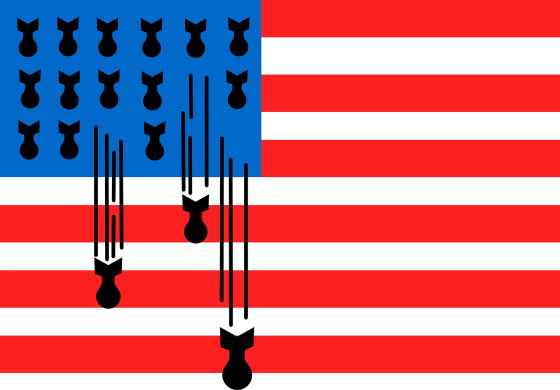
According to Navy Captain Jeff Davis, a Pentagon spokesman, the US has conducted some 50 airstrikes in Yemen from February 28 through last week.  And last weekend, after numerous strikes in eastern Yemen targeting Al Qaeda in the Arabian Peninsula, or AQAP, the total now stands at 70, according to Captain Davis.

Bill Roggio wrote in his April 4, 2017 Long War Journal post that the total number of US airstrikes in Yemen since the beginning of the year is more than 75, which he notes is “already nearly double the yearly total since the drone program against al Qaeda in Yemen began in 2009.”  He adds that “the previous record number of airstrikes conducted by the US in Yemen in any one year was 41 in 2009.”

(Just a reminder, the United States is not at war with Yemen.  For more on how the US justifies such strikes outside of areas it is actively at war, read what I wrote here.)

Yemen has been in the midst of a brutal war with Saudi Arabia for nearly two years.  Adam Johnson writes in a February 27, 2017 FAIR article that the war has “left over 10,000 dead, 40,000 wounded, 2.5 million internally displaced, 2.2 million children suffering from malnutrition and over 90 percent of civilians in need of humanitarian aid.”

His article goes on to discuss the threat of famine Yemen faces as a result of the war that has received media attention lately.  Johnson rightfully points out that the major media outlets ignore the role of the US in the crisis.  He concludes his article with this:

A first step to putting political pressure on Trump to mitigate the suffering in Yemen is for the US public to speak out about their government’s role—a condition unlikely to be met if corporate media never bother to mention it.

Another question the media rarely raises is what these airstrikes ultimately accomplish.  Captain Davis stated that “we continue to target AQAP in Yemen, and this is done in the interest of disrupting a terror organization that presents a very significant threat to the United States.”

That vague explanation does not address the threat of increasing the ranks of the very terrorist organization we are attacking.  In a September 2, 2014 report for Yemen Times, Ali Abulohoom discusses the PTSD experienced by Yemeni citizens as a result of drone strikes, as well as the continuous fear of future strikes that they live with.  He also writes of another effect of airstrikes.

The article states, “it is well-known that animosity against the United States is mounting as the attacks have intensified in recent years,” and concludes with the following quote:

“As long as the United States continues to strike areas in Yemen with drones which are claiming the lives of innocents in addition to their targets, support for Al-Qaeda is going to increase.”

Al-Mohammed Al-Ahmadi

This statement has been echoed by four former drone operators who wrote an open letter to the Obama administration arguing against drone strikes.  In the letter, they state that the killing of innocent civilians by drone strikes served to fuel “the feelings of hatred that ignited terrorism and groups like ISIS, while also serving as a fundamental recruitment tool similar to Guantanamo Bay.  This administration and its predecessors have built a drone program that is one of the most devastating driving forces for terrorism and destabilization around the world.”

As many feared, the new administration shows no indication of slowing the use of targeted killing through drone strikes.  Instead, it appears the strikes will increase, leading to more innocent lives lost, and more anger and hatred towards the United States.  And the drive for revenge.

Image courtesy of pixabay


Verdicts are in for second Malheur Refuge occupation trial

After two and a half days of deliberation, the jury in the second trial involving occupiers of the Malheur Refuge, has delivered verdicts.  Unlike in the first trial, where the jury acquitted seven other defendants involved in the refuge occupation, this jury has delivered split verdicts.

Jason Patrick has been found guilty of conspiracy to impede federal workers, and not guilty of possessing a firearm in a federal facility.

Duane Ehmer has been found not guilty of conspiracy to impede federal workers, and guilty of depredation of government property.

Jake Ryan has been found not guilty of conspiracy to impede federal workers, not guilty of possession of a firearm in a federal facility, and guilty of depredation of government property.

Darryl Thorn has been found guilty of conspiracy to impede federal workers, and guilty of possession of a firearm in a federal facility.

All four defendants still face misdemeanor charges and are awaiting verdicts on those in a bench trial.

There Is No Fear In Love

_20170214_165846

Hatred never ceases by hatred; by love alone is it healed.  This is the ancient and eternal law.

-Buddha’s Little Instruction Book by Jack Kornfield (find it here).

It’s Valentine’s Day again.  Sure, it’s become a day of splurging on greeting cards, flowers, chocolates, etc, to show our romantic love for our partners.  But, I hope on this day of celebrating love we can remember to show some love for all of humanity too.  There seems to be a shortage of love lately.

In this increasingly divisive climate of fear, anger, and hatred, let’s all pause and remember to treat each other with compassion.  Let’s treat each other like the humans we all are.  Let’s honor our differences rather than attacking each other for them.  Let’s stop fearing each other, for we are all people who love, and are loved.  And there is no fear in love.

I have decided to stick with love. Hate is too great a burden to bear.
-Martin Luther King, Jr.


Unexploded: The Deadly Legacy of Cluster Bombs and Other Explosive Remnants of War

terror-155754_1280

Katie Aguilera, February 7, 2017

This month, the United Nations Assistance Mission in Afghanistan (UNAMA) released a report for 2016 that details civilian casualties in Afghanistan for that year.  They reported a 3% increase in civilian casualties since 2015, as much as a 24% increase among children.  The majority of these casualties are the result of on-the-ground fighting, airstrikes, and attacks, but there is an increasing number of civilians falling casualty to what is often called unexploded ordnance, or UXO.

The report states, “between January 1, 2016 and December 31, 2016, UNAMA documented 326 incidents of explosive remnants of war detonation resulting in 724 civilian casualties (217 deaths and 507 injured), an increase of 66% compared to 2015.”  84% of those casualties were children, 183 killed and 426 injured.

Unexploded ordnance are explosive weapons that fail to detonate when employed.  They can be various types of bombs and shells, grenades, land mines, cluster munitions, etc.  Cluster munitions, or cluster bombs, are particularly heinous bombs that separate in mid-air and scatter hundreds of smaller “bomblets” over a wide area.  Not all of those bomblets explode, however, with failure rates estimated between 1% to as high as 30%.  These can be, and often are, detonated accidentally by civilians.  The UNAMA report documented the following personal account from a 13-year-old girl:

“Yesterday, I was playing with other children on the streets near our house in the village.  I saw our neighbor, a boy who later died, holding something made of metal.  I knew it was something explosive.  He told all of us, ‘I’m going to detonate it.’

I slapped him on the face and told him, ‘don’t do it!’ and then I moved farther away from him.  He began hitting the object with a stone.  It exploded.  I fell unconscious and I don’t know what happened next.”

According to the report, that explosion killed four children and injured three more, including the 13-year-old girl.

The report states, “children living in conflict-affected areas are less likely to have received mine-risk education, and motivated by natural curiosity, frequently pick up familiar and shiny objects near their homes while playing outside.  Children also use metal-detectors to find scrap metal to sell, often searching former battlefields or farmland where stray dud ordnance can be found.”  Many people collect scrap metal in spite of the known risks, and farmers are also heavily affected by unexploded ordnance as they work the land.

Afghanistan is far from alone in dealing with this horrible legacy of ongoing war.  According to the Landmine and Cluster Munition Monitor 2016 report on cluster munitions, the estimated number of global, all-time casualties for 33 countries is 55,000.  Many of those casualties have occurred in Southeast Asia, where people are still being killed today by bombs dropped by the United States over four decades ago.

By far the hardest hit country is Laos, where the United States dropped 414,000 cluster munitions, containing an estimated 260 million submunitions during it’s so-called  ‘secret war’ in that country between 1965 and 1973.  In neighboring Vietnam, where the US was fighting overtly, 296,000 cluster munitions containing nearly 97 million submunitions were dropped.  Even at the lowest estimated failure rate, that is a lot of live bombs left lying around.  It is no wonder that an estimated 40,000 Vietnamese have been killed by UXO since 1975, according to George Black in his May 2016 New Yorker article.

The cluster munitions monitor report goes on to document that in the US invasion of Afghanistan, in the years 2001 and 2002, 1,228 cluster bombs were dropped, containing 248,056 submunitions.  It adds, “in 2003 in Iraq, the US and the UK used nearly 13,000 cluster munitions, containing an estimated 1.8 to 2 million submunitions in the 3 weeks of major conflict.”

In May of 2008, more than 100 nations signed the Convention on Cluster Munitions agreeing to prohibit the use of cluster munition weapons.  The United States is not one of them.   According to this Congressional research report, the US policy on cluster munitions is defended because “using cluster munitions reduces the number of aircraft and artillery systems needed to support military operations, and that if cluster munitions were eliminated, significantly more money would need to be spent on new weapons systems, ammunition, and logistical resources. Officials further suggest that if cluster munitions were eliminated, most militaries would increase their use of massed artillery and rocket barrages, which would likely increase destruction of key infrastructure.”

The State Department has claimed the US stopped using cluster munitions in Iraq and Afghanistan in 2003, but the US continues to profit from them by selling them to other countries, most noticeably to Saudi Arabia who employs the weapons in Yemen.

It is yet another tragedy of war that goes largely unnoticed in countries not affected by unexploded ordnance.  According to the cluster munition monitor report, the degree of contamination from UXO is still unknown for Laos, Vietnam, Cambodia, Iraq, Syria, Yemen, and  Ukraine.  Civilians made up the vast majority, 94%, of cluster munition casualties from 2010 to 2015, with children under the age of 18 accounting for 40% of those.  Even if the United States were to end it’s ongoing wars of aggression around the globe, it is unlikely the casualties caused by the unexploded ordnance left behind will end any time soon.

children-60638_1920
Children account for 40% of casualties caused by cluster munitions

Images are credited to pixabay.


If you liked the article and would like to support the author, click here.

Former California firefighter enters federal prison to serve second sentence for arson committed nine years ago.

img_3708-copy-2-copy

Katie Aguilera

On October 31, 2016, Benjamin Cunha surrendered himself to a minimum security federal prison camp in California to serve a five-year sentence for arson on federal land.  It will be the second time he will serve a prison sentence for fires he started during the summers of 2005 through 2007.

Cunha, then a fire fighter, started numerous fires in grassy road side areas and hill side stands of oak trees in Amador and El Dorado counties over the course of those summers.  He was arrested in September 2007, and in March, 2008, after reaching an agreement with state prosecutors, Cunha pleaded guilty to two counts of arson.  As part of his plea deal, he agreed to give details to the Cal Fire investigators about the fires he started in exchange for transactional immunity from further prosecution.  He was given a six-year sentence by the state court for those fires in 2008.  Most of his sentence was suspended, and he served a full year in the El Dorado County jail and then five years on probation.  (Read here for more detail about Cunha’s story.)

After serving his sentence in state prison, Cunha returned to his community and set out to successfully fulfill his probation.  He moved on with his life, believing he had served his time and his past mistakes were behind him.  However, in the summer of 2013, after two suspicious fires started in the Amador/El Dorado area, Cunha became the prime suspect, and was arrested in August 2013.  No evidence has been put forward to connect Cunha with the two 2013 fires, and in the end, he was not charged for those.  Instead, federal prosecutors charged him with two counts of felony arson for fires he had started in 2006/2007 that had burned onto federal land.

In spite of the transactional immunity he had received from the state prosecutors in 2008, Cunha now faced federal charges for fires he had started six years before. The federal prosecutors argued that “the uncompelled grant of transactional immunity by the state prosecutors does not bind federal authorities.”

In February 2016, after agreeing to another deal with prosecutors to receive a shorter sentence, Cunha was sentenced to five years in federal prison, the federal mandatory minimum sentence for one count of arson.

US District Judge John A. Mendez, who presided over Cunha’s 2016 case, had the following to say about Cunha’s sentencing, according to court transcripts.

“My question for the government is, why did it take five years to indict this defendant?  I don’t understand this case in a lot of ways…

…neither the state court lawyers nor the judges anticipated any possible federal involvement in this [in 2008].  They let him talk, and for that you’re paying a price, Mr. Cunha.  But I didn’t see any explanation, when you already had a confession–and now we’re nine years almost, eight and a half years since he was arrested.

And he’s an individual that clearly has turned his life around, has become a productive member.  While you continually refer to him as a serial arsonist, he was eight years ago, and for that, the state prosecuted him.

But I saw no explanation…as to why it took five years for the United States to decide let’s indict this guy now.  It just seems out of the ordinary to me.  I know that there were two federal properties involved, but you knew that back in 2007.  You had a confession.  I don’t know how this got lost in the shuffle or why, after all those years, you decided he needed to be indicted.”

At a follow-up sentencing hearing, Judge Mendez said to Cunha, “I think this is an excessive penalty.  You do have a price to pay for what you did, and I completely understand that.  I think the state handled that, but the Federal Government disagreed.  And as a federal judge, I’m required to apply the law as it sits…You don’t deserve a five-year sentence.”

The sixth amendment to the US Constitution states that “in all criminal prosecutions, the accused shall enjoy the right to a speedy and public trial…”  Not a trial that takes place nearly nine years after the crime was committed, and admitted to, by the defendant.  Not a trial that takes place after the defendant has already served a sentence for and moved on from his crime, maintaining a productive and crime-free life ever since.

Judge Mendez said at Cunha’s sentencing, “I’m not saying you [federal prosecutors] didn’t have a right to bring the case, but to bring it nine years, or eight and a half years, after the fact concerns me.”

Cunha now faces five years in a minimum security prison camp where he spends his weekdays at an E waste recycling facility dismantling and sorting electronics.  He describes the camp as an old air force base that has no fences and the door is never locked.  He says he is free to go outside whenever he pleases, and that he leaves the camp and walks to the E waste recycling facility along a public road to work Monday through Friday.  Cunha points out that he could be doing the same thing on house arrest, actually working, paying taxes, and supporting his family.

This is an interesting point to consider.  The California Legislature’s non-partisan fiscal and policy advisor, the Legislative Analyst’s Office, estimates it costs an average of $71,000.00 a year to incarcerate an inmate in California.  Of course that figure would vary based on the security level and location of prisons, health and age of an inmate, etc, but that is no small sum.  How many inmates are serving a sentence due to indiscriminate mandatory minimum sentences in facilities like the one Cunha is in at the expense of taxpayers, and at the expense of the families that are pulled apart by such incarceration?  At what cost does this apparent need for what is perceived to be suitable, one-size-fits-all punishment come to our society?