Meeting In The Middle, A Christmas Truce

DSC_1252

It was Christmas in the trenches where the frosts so bitter hung.
The frozen fields of France were warmed as songs of peace were sung.

For the walls they’d kept between us to exact the work of war
had been crumbled and were gone forever more.

My name is Francis Tolliver.  In Liverpool I dwell.
Each Christmas come since World War One I’ve learned its lessons well.

That the ones who call the shots won’t be among the dead and lame,
and on each end of the rifle we’re the same.
-John McCutcheon in “Christmas In The Trenches.”

Katie Aguilera

On a frozen Christmas Day in 1914, after nearly five months of devastating fighting, soldiers on opposite sides of the “no-man’s land” that separated the Allies from the German forces came together to celebrate the holiday.  They did so in a spontaneous, collective desire to find some form of humanity, something not easy to do in the trenches of World War I.

Soldiers who had been told that they were enemies came together to help each other bury the dead who had been left to lie in the bomb craters where they fell, sometimes for days and weeks.  They exchanged tobacco, souvenirs, treats, alcohol, and more importantly, the gift of peace for a brief moment.

It’s not really known how it started, or how many soldiers partook in the unplanned Christmas truce of 1914.  Some stories suggest these gatherings between the trenches resulted from the soldiers taking turns singing carols to each other, some simply from soldiers calling out that they wouldn’t shoot if the opposing forces wouldn’t.

However it began, there are a variety of accounts, from several different areas along the front lines, of soldiers taking a break from war for the day.  Against the wishes of those in charge, those directing the killing and dying from afar, who saw such behavior as treasonous fraternizing with the enemy.

Reports of the Christmas truce had a brief appearance in newspapers in America and England, and a few scattered pieces in other newspapers around the world.  But right from the start, France wouldn’t allow the story in their papers.  Germany kept reports under wraps as well.  Soon, the reports faded from the media throughout the world, and the story of the 1914 truce became a topic that was avoided for decades.

It was a dangerous story, one that war-mongering politicians and big military industrial corporations who rely on the willingness of the common man to fight their wars have a powerful interest in suppressing.  Naina Bajekal wrote in her essay titled Silent Night:  The Story of the World War I Christmas Truce of 1914:

…for many at the time, the story of the Christmas truce was not an example of chivalry in the depths of war, but rather a tale of subversion:  when men on the ground decided they were not fighting the same war as their superiors.

and,

The commander of the British Second Corps, General Sir Horace Smith-Dorrien believed this proximity posed the greatest danger to the morale of soldiers and told Divisional Commanders to explicitly prohibit any ‘friendly intercourse with the enemy.’  In a memo issued on Dec. 5, he warned that:  ‘troops in trenches in close proximity to the enemy slide very easily, if permitted to do so, into a live and let live theory of life.’

Of course.  Because it isn’t so easy to attack those you get to know.  If your enemy becomes a fellow human, with families and goals of their own, they are much harder to turn into a target.  And creating an ‘us versus them’ mentality is critical to maintaining a successful military, as well as keeping the rest of us at home supportive of the wars.  The tales of the Christmas truce were tucked safely away from public view.

According to David Brown in a Washington Post article, Remembering a Victory For Human Kindness, Maurice Floquet, a WWI veteran who was 111 at the time of the interview, said:

Such a thing could not be told to the soldiers, for how would they pursue the war if they knew?

And Murdoch M. Wood, a British WWI soldier, is quoted as saying,

I then came to the conclusion that I have held very firmly ever since, that if we had been left to ourselves, there would never have been another shot fired.

In other words, he believed that after the Christmas truce, the soldiers would have packed up and gone home, if their leaders had not required them to return to battle.  Imagine if the soldiers had.

Imagine if the common man, the citizens of this world, like the soldiers in 1914, laid down arms and emerged from trenches, crossing that no-man’s land of our leaders’ divisive intentions to shake hands.  To help each other bury our dead, to exchange tokens of compassion and peace.  Imagine if we simply turned our back on ‘their’ wars, returned to our homes, and worked towards our own prosperity.

That is my Christmas wish.  That we all accept, and admit to ourselves, that everyone in the world is a human being with families and goals of our own, beliefs of our own, lifestyles of our own.  Sometimes we agree, sometimes we don’t, but that is what makes humanity.  I wish we would stop letting corrupt politicians and greedy military industrial corporations convince us that other humans are targets, that they are our enemies because of our differences.  I wish we would adopt that ‘live and let live theory of life.’

Peace, and happy Holidays


If you liked the article and would like to support the author, click here.

A History Lesson (Part Two) The Assassination of Franz Ferdinand

Katie Aguilera

In the early hours of July 28, 1914, the man who was then first in line to take the throne of Austria, along with his wife, left Philipovic army camp of Bosnia in a line of automobiles, on a drive that would end with death, and start a cascade of events that led to world war.  An initial attempt at killing Archduke Franz Ferdinand that morning by throwing a bomb at his car failed, but later that day, the Archduke and his wife, Sophie, were fatally shot in their car in front of Moritz Schiller’s food store on Franz Joseph Street in Sarajevo, Bosnia.  It was an assassination that would trigger global conflict, four years of unprecedented death and destruction.

I think that most Americans, like me, were taught very little about World War I in school.  Just a quick, passing overview, the gist of which was something about Germany attempting to take over the world, lots of men dying in trenches, and Americans swooping in at the last minute to save the day, to save the world.  And there was a little something about some duke or something who was killed.  But there was never any explanation, there was no understanding of just how the assassination of one man and his wife could launch the entire world into such a bloody, devastating war.

World War I, known mostly as the Great War before World War II, began a month after the assassination of Archduke Franz Ferdinand.  On July 28, 1914, Austria-Hungary declared war on Serbia, and then invaded.  There had been increasing tensions between these countries, and surrounding countries, for decades.  Several treaties and agreements had been struck, creating a divisive and increasingly hostile atmosphere throughout Europe and Russia.  Germany, Austria-Hungary, and the Kingdom of Italy had formed a Triple Alliance, agreeing to militarily support each other in the event that either of the three was attacked by any other powerful nation.  The Russian Empire, the French Third Republic, and the United Kingdom of Great Britain and Ireland answered with an agreement of their own, the Triple Entente.  The dominoes were lined up in place, just waiting for the proper catalyst.

When Ferdinand’s car came to a stop outside the store where Gavrilo Princip had just stopped in to buy a sandwich after his fellow assassin, Nedjelko Cabrinovic, had attempted to kill the archduke with a bomb, Princip reacted quickly, and fired two shots.  He hit both the Archduke, and his wife Sophia, who sat next to him in the open car.  Both died shortly thereafter.  This gave Austria-Hungary the excuse it wanted to issue an ultimatum with several demands to Serbia, an ultimatum that was not expected to be agreed upon.  When Serbia agreed to all the demands except for one allowing Austria-Hungary’s participation in an internal investigation into the Archduke’s assassination, the dominoes fell and war was declared.  The countries of the world lined up and took their places in the battle, based on the alliances previously formed.

Over 70 million military personnel were mobilized during the Great War.  More than 9 million combatants were killed, and at least 7 million civilians died as well.  It was one of the deadliest conflicts in the history of the world.  So, just who was this man, Gavrilo Princip, who fired those two shots in Sarajevo that set the world aflame?  What led him to do it?

Gavrilo Princip was born on July 25, 1894 to Serbian parents whose family had been in Bosnia for centuries, according to Wikipedia.  His father was a farmer who earned additional income by transporting mail through the mountains between Bosnia and the Dalmatia region of Croatia.  Gavrilo was a good student, and at the age of 13 he moved to Sarajevo to be enrolled in school there.  In 1911, Gavrilo joined an organization known as Young Bosnia that wanted Bosnia freed from Austria-Hungary’s control and united with Serbia.  In 1912, Gavrilo was expelled from school after involvement in a demonstration against the Austro-Hungarian authorities.  He traveled to Belgrade, Serbia and volunteered to join the guerrilla groups under the leadership of Major Vojin Tankosic that were fighting the Turks.  He was rejected because he was small, and he returned to Sarajevo, humiliated, but traveled back and forth to Belgrade and eventually he met one of the founders of the Serbian Chetnik Organization, Zivojin Rafajlovic, who had him sent to Vranje where the Chetnik training center was located.  There Gavrilo trained to fight and use weapons.  This made him a good candidate for the assassination plot against Archduke Franz Ferdinand.

Major Vojin Tankosic, who had rejected Gavrilo for his small size and would later admit to supplying the weapons used in the assassination of Archduke Ferdinand, was a member of an organization known as Union or Death, commonly referred to as the Black Hand.  This group formed on May 9, 1911, and by 1914, when Gavrilo Princip would cross paths with them, they had several hundred members, possibly thousands.  Their goal was to bring about the creation of a Greater Serbia, in any way necessary, including the use of guerrilla fighters and saboteurs, and terrorism.  Many Black Hand members were also leaders in government positions, and as a result, the Black Hand had influence over government appointment and policy.  Even Crown Prince Alexander was a supporter.  The Black Hand decided to kill Archduke Ferdinand after learning of his planned visit to Sarajevo, and Gavrilo was recruited for the job, along with two other Young Bosnian members, Nedjelko Cabrinovic and Trifko Grabez.

The assassins were trained, and a short time before Ferdinand’s scheduled visit, they traveled back to Sarajevo with the help of Serbian military personnel, and were joined by four more men.  They were supplied with bombs and army pistols from Serbian arsenals.  It seems apparent that they had plenty of support from authorities, and the Black Hand’s activities were not very secret to the Serbian government, given its large number of government and army members.  Eventually, Prime Minister Pasic learned of the plan, and in hopes of avoiding conflict with Austria-Hungary by keeping the involvement of the Black Hand secret, a rather lack-luster attempt was made to stop the assassins with a recall order.  The essay, The Assassination of Archduke Francis Ferdinand: Trigger For War says this:

This ‘recall’ appears to make Apis (Colonel Dragutin Dimitrijevic) look like a loose cannon, and the young assassins as independent zealots. In fact, the ‘recall’ took place a full two weeks before the Archduke’s visit. The assassins idled around in Sarajevo for a month. Nothing more was done to stop them. The extensive network of contacts that smuggled them into Sarajevo, fed and housed them, was not utilized to stop them. This calls into question the Black Hand’s and the Serbian government’s desire that the plot truly be cancelled.

Pasic then decided to warn the Austrians.  Like the recall order, this was basically an effort to cover himself and the Serbian government, giving them a measure of deniability.  But it was a very vague and empty warning.  Jovan Jovanovic, the Serbian Minister in Vienna, simply said to Dr. Leon von Bilinski, the Austrian Minister of Finance, that Ferdinand should not go to Sarajevo because, “some young Serb might put a live rather than a blank cartridge in his gun and fire it.”  The implied warning was missed or ignored, and no further warnings were given.

Archduke Ferdinand and his wife Sophie were murdered in Sarajevo, and the event was used to trigger the armed conflict that had been brewing for some time, that had in fact already been occurring in some areas.  It was just the excuse that was needed.  And it was delivered to the leaders of these countries through the hands of a young, idealistic man who believed he was fighting for his people, and was willing to die for that effort.

It can be easy, looking back, to speculate that the Black Hand, the Young Bosnia group, any of these secret societies, may have been manipulated and used in order to create desired events, to create the necessary trigger.  After all, this has occurred repeatedly throughout history.  There are enough examples to keep me busy writing history lessons for some time.  But, speculation aside, it is known that members of the Serbian military, and government knew of the assassination plan, and in fact, assisted in various ways to ensure that at least one of the seven assassins would succeed.  And for me, that is the most important lesson to be learned from this piece of history.


If you liked the article and would like to support the author, click here.


Bare Feet, Not Arms?

IMG_20151202_181640

Bare feet, not arms.  It was a bumper sticker that occupied prime real estate on the rear window of my little orange van for many years.  In light of today’s events, I felt the need to write about another profound 180 degree journey I have been on recently, one that has, until now, been largely a private one.  Today, after San Bernardino.  After Roseburg.  All the others…you know what I’m talking about.  Shootings.  Mass killings.  Those scary guns.

I  think I first need to give some back story to my journey.  I grew up in rural Oregon, where it seems that pretty much everyone has guns.  It is a place far, far away from inner cities, and gun violence for the most part.  I remember guns in racks in the back windows of pick-up trucks.  My father’s rifles were often in a coat closet, unloaded but in reach.  I never learned to shoot, I never even held a gun, they held no interest for me.  I really didn’t think twice about them.  But, they weren’t scary back then.

Then, Columbine happened.  And closer to home, Thurston.  School shootings, drive by shootings, work place shootings, became common on the nightly news.  Not because they were dramatically increasing, but because the reporting of them was increasing.  And increasingly alarmist in style.  Guns became scary.  I began to believe that no one except law enforcement and the military should be allowed to own handguns and assault rifles.  It made sense to me then, make those illegal, and the problem will go away.

Never mind that I have always supported the right to hunt for food, and have always thought that people should be allowed hunting rifles, which could also suffice for home protection.  Those were just the sort of gun everyone used to have in their coat closet, or their rear windows.  Not the scary sort.

I held onto this belief for many years.  Bare feet, not arms.  I thought that people who wanted an armory were paranoid and crazy.  And this allowed guns to remain a scary bogeyman that I didn’t understand.

The argument that it is necessary to be armed to protect oneself from the government when they decide to round us all up some day seemed absurd to me.  And, it really still doesn’t work for me today.  If the government decides to round us all up, well, I’ll just say that I accept the fact that the government is much better armed than I could ever be.  Or want to be.  Guns aren’t the solution to our power-hungry, corrupt government.  But does that mean that it is worth giving the government the power to take them away?

My 180 degree journey on guns, I think, really began with Sandyhook.  My oldest child was in Kindergarten at the time, and I spent the day trying not to bawl as I waited for the school bus to bring him home safe.  I don’t care about all the conspiracies around Sandyhook.  I believe that babies died, and it was horrible.  At first, it reinforced the thoughts of gun control for me.  But, it also started conversations that led me to challenge my own beliefs.

Around the same time, I was deep in research for the novel I’ve been working on for years.  Research that has made me aware of how serious our situation is, we the people of this nation.  Research that has made me aware of just how corrupt our government really is.  I began to understand some of the pro-gun arguments.

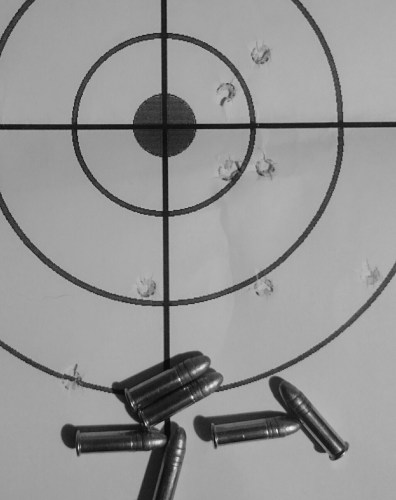
So, I decided that I needed to do some ‘experiential’ research. I decided that, as part of that research, I needed to learn how to shoot a rifle, to learn how they work.  So, I did.  Then, I decided that I needed to experience the full process of legally obtaining a gun of my own.  So, I did.  As I turned to walk out of the gun store with my new purchase in hand, a friendly policeman applauded my choice and an elderly couple cheered me on.  It was bizarre, awkward, and kind of fun all at the same time.  Since then, I have discovered that target shooting is really fun.  And those guns that terrified me?  I know a lot more about them now.  I can pick them up, take them apart, clean them, put them back together, just like I can my bicycles.  They don’t scare me anymore.

As I said, I am still not sure where I am on this journey.  But, I have come to understand what I believe to be the true meaning of a ‘well-regulated militia.’  Yeah, the so-often forgotten part of that amendment everyone loves to argue about, especially after a mass shooting.  I don’t believe it really has so much to do with protecting our right to own weapons as it does with addressing the need for citizens who can defend this nation from attack.  Because, the original intent, I believe, was for our country not to maintain a standing army, but to be able to call up the citizenry in the event of an attack. To defend our borders, to defend our homes, to defend our families.

Now, I find myself a long ways down the road of this 180 degree journey, once again questioning my direction.  The guns don’t scare me anymore.  What does, what truly terrifies me, is this culture of violence we seem to be wrapping ourselves in.  This culture that lacks empathy for one another.  We raise our kids on violent entertainment, we allow them to avoid humanizing face-to-face interaction with their peers by giving them cell phones, tablets, computers, talking robots.  When they act like kids, we freak out and drug them.  We don’t even seem to mind that when a commercial during our nightly news isn’t about pharmaceuticals, it is about the violent program that will come on after the news.  We just sit blankly, letting our kids watch and absorb it.  We normalize violence, we make it acceptable, and then, we scream and yell about the weapons when somebody unleashes.

But, in all of the yelling, no one will tell me exactly how they see increased gun control successfully putting a stop to mass killings.  How will increased gun control keep illegal guns out of criminal hands?  How will increased gun control keep the next Dylann Roof from simply building a bomb to detonate inside the church of those he hates?  It is the anger, the hatred, the violence, the lack of compassion.  It is not the method used to unleash those.

I am still open on this debate.  I want to put a stop to babies dying in their schools.  I would love to hear some legitimate ideas.  Sure, I’m enjoying shooting red cups, paper targets, and rotten produce, but if somebody can present me with a true argument in support of disarming the citizens who are supposed to be our national defense, I might be willing to consider giving up my gun.

But you had better be ready to explain to me how you are going to address the root causes of these violent killings because I hate band aids.  And, you had also better be ready to explain to me why you aren’t ‘up in arms’ over all the people, all the babies, dying around the world as a result of the bombs, and moderate rebels, our own government is unleashing on them.  You better be ready to tell me why you are silent about their deaths.


If you liked the article and would like to support the author, click here.


A Conversation With Doug Rawlings, Part Two

DSC_1074

This is a continuation of yesterday’s post.

SeekingRedress (SR): You say, “the Vietnamese people suffered greatly at our hands. Millions lost their lives, hundreds of thousands still suffer from the ravages of Agent Orange and unexploded ordinance just waiting to be touched and set off.” This really hits me hard, for several reasons. One is that I have been reading about and researching the Hmong people of Laos since high school, the effects of our war on them and their own refugee crisis that happened when we left SE Asia. And, of course, we are facing a new refugee crisis in the middle east and Europe, and since the Paris attacks of November 13, 2015, this has become a raging debate here in the US. There seems to be so little compassion for these people that suffer from our military interventions. Why do you think that is? How can we address it?

Doug Rawlings (DR): I think one of the weaknesses of our culture can be found in an educational system and a religious milieu that does not nourish empathy in our young people and certainly in all generations. I believe we are born with empathy—the capability of putting ourselves in another’s shoes—but that capability has to be worked on, allowed to mature, and then be nourished throughout our lives. Then we could indeed imagine what it must be like for Syrian mothers and fathers, fleeing war torn areas, as they struggle to protect their children.
Of course, another reason is the obvious one—very few US citizens have ever witnessed war as the victims of prolonged bombing campaigns. So it takes education, especially provided by veterans, to nudge Americans into a frame of mind that actually includes others rather than just themselves and their families. (Emphasis added.)
I am also currently under the influence of Naomi Klein’s recent book, “This Changes Everything” that ties self-serving corporate capitalism to the devastation of our global environment while also impoverishing large swaths of people. She points out that the US military that is often employed to protect the interests of ‘extractivist’ corporations is the largest polluter in the world. So we as a people, as US citizens, must work locally, as well as globally, to lessen our negative impact on the world. Finally, I urge all citizens to volunteer their services at their local VA hospitals, to witness firsthand, some of the damage done by war, but also to actively help in the healing process. Compassion can begin at home and then widen out from there..

SR: During the war in Vietnam, America saw huge protest movements. In the run up to the 2003 Iraq invasion, we again saw a wave of protests. But it has been largely silent since. Why do you think that is? What do you think it will take to pull Americans together to stop this increasing militarism and corruption of our current leaders?

DR: I think that for some reason Americans have lost the capacity to become engaged in a social movement for an extended period of time. Think of the movements of the past—the abolitionists, the suffragettes, the civil rights activists, the anti-war activists, the feminists, the nuclear war resisters, etc. I do have hope that real concerns for the environment are galvanizing people to act and that their actions will indeed build into a movement that politicians cannot ignore. I have to say, though, that the current two party system in this country does not inspire me—mainly because both parties are deeply beholden to corporate interests. What scared ‘the man’ during the Occupy Movement was the whiff they got of the counter-culture movement that rose up during the sixties. People involved in these movements just took themselves completely out of the system and created their own lives, lives that were full and satisfying. It took the popular media years to co-opt that pulse in American life back in the sixties. I also believe in the social equivalent of evolutionist Stephen Jay Gould’s concept of punctuated equilibrium. He used the notion to explain that evolution is not a gradual process but a process that involves real spikes and valleys. So just when it looks like our society is doomed, I hope an uprising will take place to change everything. We just have to keep working to have that uprising take place non-violently. As far as we in VFP (Veterans For Peace) go, I think our major contribution might be in convincing rank and file soldiers that they do not have to participate in the corporate militarism wracking this world. I think there have been tens of thousands of soldiers applying for conscientious status since 9/11. There are also countless deserters from the military floating around, looking for a moral anchor, whom we can help and protect. Finally, I think we can pull together when we wake up to the plantation system we are currently serving—we do not have to be violent, nor do we have to sacrifice the good life—we just have to work together communally and locally welcome others into our communities who share our values. Gandhi knew that the most powerful tool to thwart colonialism was to disengage with it completely. We can work on doing the same with corporatism. (Emphasis added)

SR: What do you think is driving us into this increasing militarism? This constant state of war?

DR: Our fear that our current level of over-consumption will be threatened and taken away from us. Add in a touch of good old American ‘exceptionalism’ and you have a lethal mixture. And, of course, don’t underestimate the power of the advertising industry. I have to admit to being an avid football fan, so I weekly expose myself to the rant and militaristic glorification that surrounds these games. Note: a recommended read is the novel Billy Lynn’s Long Halftime Walk, by Ben Fountain. The author nails it in this book. We cannot allow ourselves to be manipulated by this “soma.” (see Aldous Huxley’s Brave New World.)
So, look at this vicious cycle—our imperial military (really, we are in the belly of an empire) needs oil to fuel its grand machine, so it must guarantee that oil reserves are protected, so it must occupy other countries to ensure that the flow continues. And now that technology allows us to send in robots (i.e., drones) so that our young soldiers are kept out of harm’s way for the most part, we can sit back and enjoy the fruits of our whiz bang wizardry. For a while. But the chickens will come home to roost—suicide bombers with nothing to lose because we have destroyed their futures. And, of course, the threat of such terrorism fuels even further the fear that war mongers (and munitions makers) use to keep people at bay. Here’s a related poem:

On War Memorials

Corporate America
be forewarned:
We* are your karma
We are your Orion
rising in the night sky
We are the scorpion
in your jackboot

Corporate America
be forewarned:
We will not buy
your bloody parades anymore
We refuse your worthless praise
We spit on
your war memorials

Corporate America
be forewarned:
We will not feed you
our bodies
our minds
our children
anymore

Corporate America
be forewarned:
If we have our way
(and we will)
the real war memorials
will rise
from your ashes

*The ‘we’ in this poem are Vietnam veterans and their friends who believe war is immoral, unjust, and plain stupid.

SR: The final two paragraphs of your essay are really powerful to me:

It deeply saddens me to see that our nation’s self-perpetuating war machine is cranked up and once again running in high gear. Here in 21st century America, there is an insidious, self-serving faux adulation at play, one that has been fed on steroids, to turn every soldier automatically into a “hero,” so every poor soul coming back from his or her war (and, oh yes, we do own those wars) can’t even cuddle up with a loved one and speak the truths of his or her experience for fear of tarnishing the thread-worn mantle of hometown hero.
This is by design. Unscrupulous politicians use returning veterans as the emotional equivalent of human shields to deflect the public’s frustration with disastrous wars in Iraq, Afghanistan, and elsewhere. Heaven forbid if these new veterans would ever join us old namvets and stop the palaver about valor and heroics for a moment to acknowledge the grotesqueries of war. Think of how the munitions factories and war colleges would all have to shut their doors. And people would have to publicly thank teachers, nurses, doctors, maintenance workers, police officers for their service. Imagine that.

You’ve already mentioned some things, but can you offer some solutions, some ideas, of things that we can all do in our day to day lives to end our support of the corporations (“munitions makers”) and politicians who are running our country right now?

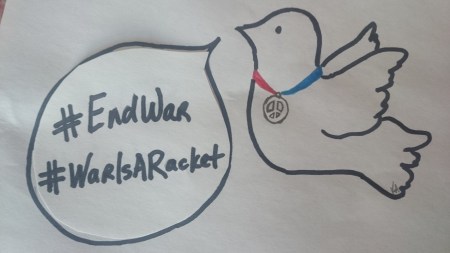
DR: We have to accept more personal responsibility for our actions and become more educated, more conscious of how our lifestyles impact others. Klein talks about ‘sacrifice zones’ in her remarkable book—i.e., for most of the privileges and luxuries we enjoy in the western world, a group of people have been forced to ‘sacrifice’ their comforts and their lifestyles to accommodate our rapacious corporations. As Marine General Smedley Butler, two time winner of the Congressional Medal of Honor, remarked: “war is a racket” whereby the military protects the corporations. In addition to that, we have become a nation whose economy is dependent on war manufacturing. For example, we have become the number one exporter of small arms. As we collectively wring our hands about the slaughter of innocents around the world, we should take a moment to see where the weapons the so-called terrorists are using are made. So what we can do is look for weapons manufacturers in our states and begin encouraging them to shift their production from weapons to infrastructure projects. That is not as far fetched as it might seem—military contracts are notoriously fickle and most war production is not as labor-intensive as infrastructure production. So an economic shift to peacetime production could be a win/win situation for everyone. We just have to do our research and then make a commitment to maintain pressure on local and state politicians.

SR: We are approaching the 2016 election. Do you see a solution there?

DR: I waver back and forth. Most of the time I am fed up with both parties—the Republicans have become a dangerous joke, and Bernie sounds good most of the time but then his support of Israel and some military adventures causes me pause. And Hillary is a real war hawk who scares me. Dr. Jill Stein of the Green Party is the most competent and politically savvy of the bunch, but she doesn’t stand a chance with the system we now have in place. So I think we need to work on local and state politicians to push back against the militarists. When it comes to the actual election day, I will probably vote for the candidate who is not a Republican because I can’t contribute to letting any one of those clowns win the day.

SR: I am really concerned about the things we are taught, and not taught, about history today. You are currently involved in a project that is addressing the way the historical narrative about the war in Vietnam is portrayed. Will you tell me a little bit about Vietnam Full Disclosure?

DR: Thanks for asking. Unfortunately President Obama has dedicated $65 million for a Pentagon scheme to “commemorate” a series of fifty year anniversaries over the next decade focusing on the Vietnam War. The Pentagon purports to be the ultimate source for young people to turn to if they are studying the war. We have found their website to be woefully inadequate, mainly because it provides only a superficial context for most events, pretty much ignores the plight of the Southeast Asian people caught up in our war, and almost completely ignores the significance of the anti-war movement. We are convinced that their motives are not to be purely educational, but that they want to sugarcoat this war and make it more palatable for young Americans so that it loses its significance as a real “canary in the mine” (as in, “look what happens when we bring our military into a civil war, when we choose to side with the over-reaching landlords, when we sacrifice our own young soldiers in an immoral war”). We believe their intent is to put this war in what they consider to be its rightful place, so that they can wage more wars like it. And the insidious part of this enterprise is that they are couching their efforts in the terms that make it sound as if they are finally giving us Vietnam veterans our due. Hogwash. So we have mounted our own website at vietnamfulldisclosure.org  as a resource. We have developed our own timeline, and asked for articles, art, music, personal narratives, and historical accounts to flesh out what that war was really like. And we pay special attention to the Southeast Asian perspectives as well. Finally, we have put together a series of teach-ins around the country and will continue to do so for the next decade. We would love to collaborate with high schools and colleges in this endeavor.

SR: I love this. I encourage everyone to check out this website, and to share this! I’ll be looking into the teach ins more, and the idea of working with schools, because I think its critical RIGHT NOW to make our youth aware of the truth about war, since they are inheriting this increasingly scary mess.
Are there any current or upcoming events you would like to bring to my attention, that I can share with readers? Also, is there somewhere you would like to direct us to see more of your writing?

DR: Well, one event that holds a special place in my heart is our annual Memorial Day letter writing campaign. Last year we sent out a request for people to write a letter to the Vietnam Veterans Memorial in Washington D.C. (The Wall). We asked them to speak directly to the names on the memorial. We received 151 letters and 32 postcards, each expressing a heartfelt response to the war. Some were written by medics who directed their pain towards those on The Wall whom they could not save; some were written by the children of veterans; some were written by military deserters who fled the US rather than serve in the war; some were written by conscientious objectors; some were written by partners of those who died. Almost all of the letters shared one theme—the authors were deeply dismayed by the futility of that war. In any event, on Memorial Day, we placed those letters and postcards at the foot of The Wall and encouraged passers-by to read them. We witnessed some very moving encounters with these words. Then, a few weeks later the National Park Service contacted us and asked to put some of the letters on display. So, we will be asking for a thousand more letters this year—please write one.
By the way, if anyone is interested in my poetry, I have two collections published—Orion Rising and A G.I. In America—that can be purchased through Lulu.com. (Just go to their bookstore and then to their poetry section and put in my name.

SR: I am just going to include the link here.
Again, I want to thank you, this means so much to me to be able to share your thoughts and ideas. And some of your poems, which I find to be so honest and moving. I sincerely hope that people will consider what you’ve said, and spread the word!  Here is one more of your poems, which I think says a lot:

Unexploded Ordnance: A Ballad

for Chuck and the thousands of Vietnamese who are working to undo what we have done.

So I was maybe all of twenty-one
when they whipped me
into some kind of soul-less shape
Yet another one of America’s
weeping mothers’ sons
Sent forth into this world
to raze, pillage, and rape

And now it’s coming on
to another Christmas Eve
And songs of joy and peace
fill up our little town
How I ask myself
could I possibly believe
I could do what I did
and not reap what I had sown

In that land far away
from what I call home
A grandfather leads
his granddaughter by the hand
Into a field where we did
what had to be done

They trip into a searing heat
brighter than a thousand suns


A Conversation With Doug Rawlings, a Co-Founder of Veterans For Peace-Part One

DSC_1070

I was poking around the internet a little while ago, reading and exploring new sites, when I came across an essay written by Doug Rawlings entitled “Don’t Thank Me For My Service,” published on The Indypendent site on April 9th, 2015. I was moved by what he had to say in that essay, and as a co-founder of Veterans For Peace, I thought Mr. Rawlings might have some interesting things to say about encouraging more veterans to speak out against the wars. I thought he might have some interesting things to say about the increasing war mongering and corruption we are seeing in our government, and some ways we can put a stop to it. So I reached out to Mr. Rawlings, and I was right, he does have many interesting things to say. I am so grateful to Mr. Rawlings for taking the time to consider and answer my questions, and for allowing me to share them here.

SeekingRedress (SR): You were drafted into the Army and served in Vietnam. Since then, you co-founded Veterans For Peace (VFP), and I’m sure you have interacted with many veterans over the years. What encouraged you to speak out? What do you think is the most difficult thing about speaking out against our wars as someone who has served in them?

Doug Rawlings (DR): I should begin this process with a few disclaimers of sorts. First off, I have found that the task of crafting poems from my experiences has proven to be therapeutic for me. The key, though, is if a poem not only “works” for me but also works for the reader. And that’s the cutting edge where therapeutic scribblings become more than that, where they become a form of art, where they become poems. I tend to think of poetry as a valid means of communication on a regular basis, not merely some artifact to occupy a dusty corner of some bookshelf. I use poetry a lot. So to answer the question “what encouraged you to speak out,” let me offer this poem…

Bicentennial Poem: Autumn 1976

My daughter is two now
and can almost
speak in complete sentences
Why, if this were seven years ago
and she Vietnamese

She would almost
be old enough
to sell her mother

This captures for me some of the reasons why I chose to use my military experience as a tool, if you will, to educate all of us of the complexities of war. I “served” on a landing zone and a fire base in the central highlands of Vietnam with the 7/15th artillery, attached to the 173rd Airborne. Since the village of Bong Son was off limits, we were supposed to remain behind our concertina wire and sand bags unless we were setting out on convoys to other fire bases. Yet every day village children and mama sans would venture up to the wire to try and sell us stuff, or just out of curiosity. Although at the time, I was unmarried and not a father, something in me stirred when I looked at little kids who were scared of me and whose eyes seemed so sad. Then, when I had children of my own, a daughter and a son, I really became aware of the wonder and joy that we took away from those Vietnamese children years ago. So when I joined with four other veterans to form Veterans For Peace in 1985, I was really motivated by my concerns for children in Central America who were then suffering under the same abusive forces let loose when we engage in war. Here is what I wrote in 1985:

Fifteen years ago I survived that latest, crazy forgotten war of ours. And for a long time I was more or less satisfied with that. After all, survival was better than the other alternative I witnessed in Southeast Asia, that some of you witnessed on the six o’clock news, and that our children catch glimpses of in their distorted text books. But now I have children of my own. Beautiful, happy children. And I remember the faces of other so-called ‘survivors’: the five year old Vietnamese girls selling their mothers; the ten-year-old ‘dump boys’ who scrounged for our garbage by day and snaked through our barbed wire by night; and now the faces of Central American children surviving yet another onslaught of our mindless, blood-soaked technology. Survival may have been good enough for me fifteen years ago, but it is not enough for my children-or yours. It is not enough for the children of El Salvador, for the children of Nicaragua, for the children of Honduras, or for the children of Guatemala. It is not enough.
As a veteran, then, I feel a specific obligation to bring back old memories, to rekindle anguish and despair long buried, and to speak out against this military madness that has so grotesquely distorted our past, that is tearing apart our present, and that threatens to extinguish our future. We, as veterans, as survivors, should ask for…DEMAND…more than survival for the children of the world.
A group such as Veterans For Peace can offer us, veterans of war, a vehicle to bring our special message to the children of the world. Together we can work for a world where there will be no more war memorials. It is the least—and the most—we can do.

SR: What do you think is the most difficult thing about speaking out against our wars as someone who has served in them?

DR: As you well know, this is a complex issue. Trust me, Veteran’s Day and Memorial Day are two very difficult times for those of us in VFP who are determined to use our military experience to counter militarism and war itself. The dilemma is this for me: in some sense I do want to be acknowledged for having had a period of my life wrested away from me and having been put into harm’s way. On the other hand, I am not proud for having contributed to the suffering of the Vietnamese people. But I do have an obligation not to shrink from self-analysis, from looking into the mirror, no matter how dark it gets. That process has led me to the conclusion that the most difficult self-revelatory hurdle to leap involves coming to terms with betrayal. No matter if you joined the military out of some genuine patriotic fervor or if you were led into it because you lacked the moral fiber to resist induction, you have to admit that you were duped. You were susceptible to what the poet, Robert Bly, refers to as ‘…Americans’ fantastic capacity for aggression and self-delusion…’ And, unfortunately, not only do you pay the price for such self-delusion, but those who came before your weaponry and your instinct to survive at all costs, pay in spades. So here are another two poems about Veteran’s Day that I have written over the past two years:

November Comes

November comes on to me like a C-130
slinking into Dover Air Force base
laden with tin caskets
draped in red, white, and blue

I know. I know
I should just
let it be

Okay.
I can still do this:
push my shopping cart down
the local IGA’s aisles
pick up cheese and wine and crackers
while avoiding aluminum cans
like the plague
pay the cashier
smile at the bagger
push the cart out into the parking lot
neatly place everything I just bought

into the dumpster out back

light up a smoke
relax

Sure, sure
you want me to join in
on your celebrations
bless our bounty
accept your thanks
for my service
as if I were some Pilgrim
come home to receive your grace

It is November, you say, and we set aside
a day just for you to wrap up war
with a dissonance of fife and drum
and bagpipes blaring down main street

as if we can all finally dance
to the same tune

Sorry about that

My dancing days are long gone
I’d rather skate across the pond alone

I have more faith in ice

and

Veteran’s Day 2015

What strange creatures we are
setting traps for our own young
using words as spoor to mark the trails
leading them to their excruciating fate–
call it the war to end all wars
call it the good war
call it a war of liberation
desert storm desert shield

and knowing that we lack the power
of regeneration
we use our clever little minds
to design plastic limbs from
the remains of extinct forebears
to hide their pain from our sight

And then each cycle of twelve full moons
we choose the interim
from one dawn
to one twilight
to trot them out
yet one more time
in quaint uniforms
to make them shuffle before us
to grovel for our gracious thanks
to disappear back into the deep forest
of our collective forgetting

so much dust
so much ashes

SR: How do you encourage veterans to speak out, and what do you think we who haven’t served can do to encourage more veterans to speak out?

DR: First off, a veteran has to be prepared for some serious blowback, because he or she is challening the core of many veterans’ beliefs that their ‘service’ was noble in some sense. To say to them that they were ‘duped’ into serving something other than the Constitution of the United States or the ‘homeland’ is to suggest that their service and their buddies’ sacrifices were for naught. But once they have reached that conclusion, then they are encouraged to speak from their heart of their experiences, to avoid self-righteousness for having ‘found the truth,’ and to weave their messages into narrative form. Most people will resist being preached to, so rather than lecture, we tell narratives of who we are and how we got to this place in hopes that others will follow suit. You who are not military veterans can help us out by, first off, listening non-judgmentally, by resisting the urge to talk over the narrative with your own experiences, and then, then, sharing your own experiences as someone who is on the receiving end of the narrative. It is important for us veterans to hear what our loved ones are going through as they engage our pain, our angst, because their lives matter too. Here’s a relevant poem:

PTSD Remedies
For Tarak

First off, drop the ‘P’
There’s nothing ‘post’
about a mirror that threatens
to slit your wrist

But keep the ‘D’
I’ll take ‘disorder’-sweet chaos–
any time over this close order drill
that haunts my early morning hours

Then let the healing begin:

(1) Ask yourself: “Who am I?”
(2) Ask your lover: “Who are you?
(3) Remain still. Wait for he or she
to whisper: “Who are we?”

Now the ache
has permission to leave

and the sunrise
can ease you into
another day

If we can create a community, even if it is only a community of two, then all of us can build a meaningful life together. We veterans need you as much as you need us. Unfortunately, the current insidious phenomenon of framing each veteran’s ‘service’ as ‘heroic’ creates a barrier between the veteran and her or his loved ones. It challenges the veteran’s need to speak honestly, truthfully, of what he or she has witnessed and done—almost all of which, if not all of it, is hardly heroic.

SR: People seem to feel so obligated to thank veterans for their service. I wonder if some of that comes from a sense of guilt that we silently continue to allow war to be waged in our name. What do you think can be done to change that, to convince people that withdrawing our support for war, for the need for that service, doesn’t mean we have to withdraw our support for those who served?

DR: Excellent question that many of us in VFP grapple with all the time. First off, I think guilt is a debilitating, self-referential response that gets us nowhere. Yes, we should face up to our past actions and recognize where we have failed. But if we spend time wallowing in our guilt, we remove ourselves from meaningful action. But back to being thanked, here’s one answer in this poem I wrote after being in Washington D.C. last year for Veteran’s Day:

Walking The Wall: A Song
for Don

#Note: My time in Vietnam started in early July, 1969—Wall panel number W21—and ended in early August, 1970—panel W7, line 29—a walk of about 25 paces past the names of around 9800 dead. I call this ‘walking The Wall.’

Got to tell you that you’re making me nervous
Every time you thank me for me service
I know you’re trying to be nice and kind
But you are really, truly fucking with my mind

Trust me, it’s not that I really care what you think
You who have had too much of their kool-aid to drink
Trust me, you don’t know shit about what service really means
You just need to know that nothing really is as it seems

So take a walk with me down the Wall some late evening
Where we can all listen to the ghostly young soldiers keening
But don’t waste your time thanking them for their service
They just might tell you the truth—all your wars are worthless

Now, I realize this poem is somewhat harsh, but it did come out of the experience of people offering their gratuitous ‘thanks’ without knowing anything about my so-called ‘service.’ I think it’s better to ask, ‘how are you? Would you care to talk about your military experience?’ But, of course, that would take more time and might lead us down some uncomfortable pathways. A veteran friend of mine, an ex-Marine, says this: “I didn’t serve. I was used.”

Now, you also bring up a very real scenario that we in VFP have had to face over the years—we are often accused of ‘not supporting the troops.’ Even though we are veterans, troops ourselves in a previous life. If given the chance, I ask those people who accuse me of not supporting the current military forces how much time they actually devote to thinking about today’s soldiers. I know I think of these soldiers a great deal. Like many of my fellow Veterans For Peace, I have chosen to remain engaged with the very military that I have pledged to restrain as much as I can from dehumanizing the ‘other.’ I provide weekly writing sessions in our state’s VA psychiatric hospital; a fellow veteran, who was a nurse in Vietnam, works with homeless veterans; another was recognized as the national hospice volunteer of the year for working with homeless veterans; and on and on. We in VFP are actually disappointed in those who merely offer a fatuous ‘thank you’ to veterans and then continue on with their lives. We appreciate those among us who actively work to right the wrongs we have participated in during our so-called ‘service.’

SR: I worry it has become too easy to feel that merely thanking a veteran fulfills our sense of duty. It encourages me greatly to hear about actual outreach and activism that you at VFP do. It inspires me, and I hope it will inspire anyone reading this to reach out as well in any way we can.
Mr. Rawlings has so much of importance to say, that I am going to continue this conversation in a second post tomorrow.  We will talk about activism, solutions, and current projects.  Don’t miss it!!  Read it here.

A History Lesson (Part One) The Internment of Japanese Americans

DSC_1039

Katie Aguilera

When I see an article like this  (and now this 1/28/2017 article) and begin seeing renewed calls to stop the refugees our wars in the middle east have caused, I start to think it might be time for a history lesson.  Because, as Edmund Burke clearly stated, “those who don’t know history are doomed to repeat it.”  And I fear we are forgetting a past mistake, and toying with repeating it (admittedly, not for the first time exactly).

In February of 1942, the US Army General in charge of Western Defense Command (which commanded the defense of the entire west coast of the USA), John L. DeWitt, made a request for expanded authority within this area of command.  Initially this was to impose curfews and restrictions on Japanese-Americans living on the west coast.  His request was granted with President Franklin D. Roosevelt’s issuance of Executive Order 9906. Ultimately, this led to the order in May of 1942 that anyone of Japanese descent who resided within 100 miles of the west coast would be required to either relocate from this region or report to detention centers.

The US government defended this action by saying it was necessary for national security.  DeWitt argued it would be impossible to determine a Japanese-American’s loyalty to the United States.  The media fueled the fire by promoting the idea that the Japanese-American citizens couldn’t be trusted, stirring up fears all along the west coast.  The result was that over 100,000 Japanese-Americans were moved to various internment camps around the west, where they remained during the war, and even for some time after the war was over.  They were forced to leave behind property, businesses, farms, much of which was sold at great loss.  They were never accused of any crime, they hadn’t committed any.  They were simply detained in camps on the slim chance that any one of them would commit some traitorous action, or attack, against America.

Whether this action was Constitutional was challenged twice in Supreme Court cases, Hirabayashi v. United States and Korematsu v. United States.  The Supreme Court held in both cases that it was.  This meant that they protected the legal authority of the military to decide what was necessary for national security during war, not the elected representatives of the people, or the people themselves.  Justice Felix Frankfurter wrote:

…the validity of action under the war power must be judged wholly in the context of war.  That action is not to be stigmatized as lawless because like action in times of peace would be lawless.  To talk about a military order that expresses an allowable judgment of war needs by those entrusted with the duty of conducting war as an ‘unconstitutional order’ is to suffuse a part of the Constitution with an atmosphere of unconstitutionality.

I have been to Tule Lake, where one of the internment camps was located, many times.  I have seen homes made from camp barracks.  I find it to be a depressing place, flat and brown.  I can’t imagine being forced to spend years there, behind guarded wires.  I certainly can’t imagine being forced from my home, from my community, to be incarcerated as an act of national security.  The effects were heartbreaking.

Of course there was the devastating loss of property and personal belongings.  That included items that were placed in government storage that were stolen or destroyed.  But more important  were the effects on the people detained.  Some died due to inadequate medical care, seven were even shot and killed by guards.  Dillon S. Myer, the director of the War Relocation Authority that ran many camps, observed that the detainees were becoming “increasingly depressed” and were “overcome with feelings of helplessness and personal insecurity.” Satsuki Ina writes,  in her May 27th, 2015 article entitled, “I Know An American ‘Internment’ Camp When I See One:”

In my work with Japanese-Americans who had been incarcerated as children, many reported struggles with anxiety and depression as adults.  Particularly key was the environment in which they were held and the torment and suffering that they witnessed their parents experiencing.

(I highly recommend reading her powerful article about South and Central American women and children being held in Texas facilities, found here.  Another heart breaking detention crisis.)

It took far too many years to admit that it had been wrong to relocate and detain Japanese-Americans during World War II, and even longer to redress the mistake.  In 1983, Korematsu’s conviction that the Supreme Court had upheld was overturned because material evidence had been withheld.  That evidence included the Ringle Report, a report submitted by an Office of Naval Intelligence officer, Kenneth Ringle, in January of 1942.  In this report, he stated that the majority of Japanese-Americans were loyal to the United States and did not present any danger.  Any that might present a danger could be “individually identified and imprisoned.”  He argued against mass relocation and internment.  It wasn’t until 2011 that the justice department formally concluded that the case no longer stood as legal precedence.

In 1988, the Civil Liberties Act of 1988 provided financial reparations to those affected by the internment.  $1.6 billion was paid out in $20,000.00 increments to 82,210 Japanese-Americans according to this report.  Internment was expensive.  The reparation costs are on top of what it cost to build, staff and operate the internment facilities, and whatever economic loss that may have occurred as a result of the sudden removal of such a large portion of the work force.  So, if you can’t see it as an awful thing to do to people, if you can’t see the cost to humanity, look at the financial cost.

Sadly, it hasn’t taken us very long to forget that it was wrong.  And it hasn’t taken us very long to forget those distressing images of dead children on beaches that had so many people crying out to help Syrian refugees.  The attacks in Paris have once again raised the cries to close borders and round up the refugees who have already come, in the name of national security.

Republican Representative Mick Mulvaney, from South Carolina, said on Tuesday,

Even amongst the most pro-immigration wings of the Republican party, there is a sense that national security absolutely has to come first.  So, we’re trying hard not to over-react.  But, at the same time, if there’s a threat to national security that has to take priority.

See the full article here, in which Speaker Ryan calls for “a pause in Syrian refugees.”

I understand that we are talking about refugees coming from another country, not our own citizens, in this current debate about the refugee crisis in the middle east and Europe.  But how can we make it okay, again, to punish an entire race of people on such a massive scale (it isn’t okay on any scale and I know it happens all the time here) on the small chance that a few of them will cause, or has caused us harm?  Consider what Professor Eugene Rostow, later dean of the Yale law school, wrote in 1945 regarding the internment of Japanese-Americans:

The idea of punishment only for individual criminal behavior is basic to all systems of civilized laws.  A great principle was never lost so casually.

(Same could be said for our wars of aggression!)

And also consider what Justice Black said after Korematsu’s conviction was upheld by the Supreme Court:

I dissent, therefore, from this legalization of racism.  Racial discrimination in any form and in any degree has no justifiable part whatever in our democratic way of life.  It is unattractive at any setting but it is utterly revolting among a free people who have embraced the principles set forth in the Constitution of the United States.  All residents of the nation are kin in some way by blood or culture to a foreign land.  Yet they are primarily and necessarily a part of the new and distinct civilization of the United States.  They must accordingly be treated at all times as the heirs of the American experiment and as entitled to the rights and freedoms guaranteed by the Constitution.

What happens when that race is your own?  What happens when it is your belief system?  How many US mass shooters have been white, US born and bred?  How many were legal gun owners?  Should we round up all the gun owners?  How many of them were Christian?  Should we round up all the Christians?  Should we round up all the Catholics because some in the church raped children?  All for national security?

Yes, I’m taking that to a ridiculous degree, but if you really consider the implications of collective punishment, how can you not consider how ridiculous, and dangerous, it actually is?  If you continue to let the government undermine and remove the rights of others, eventually it will get around to undermining and removing yours.  I dare say it already has.

Additional links and sources

Internment history, supreme court cases, etc

Wikipedia on the internment

A portion of John DeWitt’s letter regarding the internment

Brief biography of Kenneth Ringle

And, the book in the photo, a cherished signed copy of Silent Siege II, by Bert Webber, published in 1988 by the Webb Research Group.


If you liked the article and would like to support the author, click here.

Are You My Hero?

DSC_0891Katie Aguilera

Dear Members of the US Military, Active and Retired,

It’s Veteran’s Day.  A day to honor those who have served as heroes, a day that has become overwhelmed with military pageantry, a day that has lost its original purpose of remembering those who died and celebrating the end of war.  And it is a day I have to ask, are you my hero?

As a child of a Vietnam War veteran, I am very aware of the sensitivity around this subject.  The only time I saw my father shed a tear was when he was discussing with me an essay about the Vietnam War Memorial Wall that I wrote in the 7th grade.  I don’t remember his exact words, something about honoring those who served, those who died.  Something about how those who had served in Vietnam had waited a long time for that honor.  As he spoke, I was startled to see a tear drop onto the page, and that tear haunts me to this day.  It has taken me a long time to reconcile the feeling that I’m supposed to support the troops with the fact that I am opposed to what the troops are doing.

We all make decisions in life, we all choose the path we will walk.  I have made many, many bad choices, some due to ignorance, some due to fear, some due to not really considering the repercussions.  And the truth is, I nearly made the same choice as you, I used to want to enlist.

One of the first things I can actually remember wanting to be was a fighter pilot.  I loved WWII era airplanes as a kid.  And I developed an obsession with Vietnam War stories when I was eleven or twelve (curiosity about what my father had experienced, perhaps.) and one of my favorites was a series of books by Mark Berent that involved a fighter pilot and a Forward Air Controller, and I fell in love.  I’m sure the movie Iron Eagle had some influence too.  I was determined to learn to fly, and a kind school bus driver who had a little, homemade, two-seater airplane took pity on me and took me flying a couple of times.  I was hooked.  I was more than ready to join the Air Force in order to fly.  I wanted to be the first female fighter pilot (maybe there already were some, but we’re talking about grandiose childhood dreams of glory here.)  This was my goal for many years, until I turned 15 and headed for the DMV for my learner’s permit.  I was forced to admit that I needed glasses and my dream of being a fighter pilot was smashed, like many pairs of my glasses in the following years.  After a suitable period of grief, I moved on.  I read the book Chickenhawk by Robert Mason and decided I would fly helicopters for the Army.  Once again I was more than ready to enlist.  And by no means was I unaware of what exactly happens in war, as I said, I was obsessed with war stories, gore and all.  I knew what these aircraft were meant for, and I was still willing to enlist to reach my goal of flying.  Then I learned about scouts who go out ahead of the front lines to scout out the enemy, and for some reason I thought I would like to do that too.  But, women weren’t allowed jobs like that, so it was obviously not an option.  I don’t know what would’ve happened had I been a boy.  I don’t know what would’ve happened had my eyesight been perfect.  I don’t know if by the time I was 18 and graduated high school I would’ve still wanted to enlist.  I was, after all, easing into my hippy phase by then.  I do know now that I’m extremely glad I didn’t enlist.  But, because I chose a different path, I can’t address these seemingly never-ending wars from the perspective of someone who has served in them.

All of these things have made me hesitant to address this.  Who am I to preach at any of you who have served in the military?  What right do I have?  Well, this is America, where at least for now, we have the right to state our opinions.  And as a concerned American, I can no longer keep silent on mine.

I don’t wish to offend or dismiss anyone who has served in the military with what I have to say, though I’m sure it will offend some.  I believe that most of you are willing and courageous people.  I believe you have done many heroic things, saving lives, protecting civilians, providing assistance in disasters, raising your children, and so on.  I respect and admire the desire to serve the people and to protect those you love.  I share those sentiments.

But, I find nothing heroic about the wars our country is waging.  Nothing is heroic about invading Afghanistan, or Iraq, or Syria, or any of the 100+ countries we have military deployed in.  There is nothing heroic about dropping bombs on these countries or sniping the people in their streets.  This is not protecting me, or our country.  This is not about fighting the battle over there so we don’t have to fight it here.  These wars are about greed, empire, the filthy rich getting richer while the poor suffer and die.  The truth is, it is putting us at greater risk with the growing anger and hatred towards our nation.  It is eroding any hope of economic recovery and stability for generations to come.  And, it is tearing apart our society with devastating effectiveness.  People are coming home destroyed from these wars (according to a 2012 estimate, more than 20 vets A DAY commit suicide!!).  Broken minds, broken bodies, broken families.  Just like Vietnam.

So, my answer to the question is no, you are not my hero.  I cannot, in good conscience, thank you for your service.  Ultimately what message would that send, to the people around the world we are attacking?  To the kids nearing the age of 18 who are considering the decision to enlist?  To my own sons?  Certainly not the message that I vehemently oppose these wars.  I did not want you to fight, to kill, to die in these wars.  I am furious, and terribly sorry, that you have had to.  It has to stop!  I want to see your courage used for the every day heroic things that hold our society together, not squandered away in some foreign land so that mega corporations can become more mega.

I realize that many of you enlisted because you saw no other occupational opportunities, or you saw it as a starting point to reach your goals (like my desire to enlist simply because I wanted to fly.)  I realize that many, many, many of you enlisted because you saw the towers fall and believed you were doing the right thing to ensure that never happens again.  I realize the majority of us in this country are ignorant of many truths because we aren’t taught real history, the history that isn’t written by those who wish to control the narrative.  We certainly aren’t told much by our so-called free press.  I realize we live in this weird time where we glorify our military to an extreme degree and the history that we are taught glamorizes our past wars, glossing over the true costs.  I don’t blame you for your choice to serve, I have no idea why you made that choice, and, as I said, I nearly made the same choice.  It would be counter-productive anyway.  But, I am as tired of feeling like I have to support the troops, shifting the blame solely to those in charge, as I am of keeping my mouth shut in this mind-numbing society.  We all have to take responsibility for our actions, our choices.  We can choose to follow orders regardless of our conscience, or we can choose to make a stand and change things.

Since you are still reading, let me tell you about something I do find heroic.  Speaking out against these wars.  Many of you have and I thank you for finding the courage to do so.  I want more of you to do so, to tell the apathetic, desensitized people of this country that war sucks for everyone but the few who profit from it while sitting safely in their castles.  You have been there, you can tell it from the perspective of someone who has served.  Your voice is so important!

Let’s change the course our nation is taking.  Let’s refuse to fight their wars, but rather fight for our own peace.  We the people, let’s take a stand together, right now, before we are turned completely against each other.


If you liked the article and would like to support the author, click here.

America, We Need To Talk

DSC_0880

Every morning I wake up and read about children dying in bomb attacks, hospitals being bombed and machine gunned, “moderate” rebels handing over US provided arms to the militants we are supposedly fighting against, drone strikes, torture, pedophiles in our own government getting away with raping children, blackmail, bribery, and massive corporations and greedy people profiting from it all.  Every single morning.  I’m not reading fiction, America. And I’m sick of it.  So, its time we have a talk.

Here we are, approaching another Veteran’s day, still at war all over the world, and I start receiving junk emails about Veteran’s Day sales (shop!  spend!  come see the savings!  because lots of people have died and you don’t want to think about that!).  How is it that a day set aside to remember those killed in “the war to end all wars” has become just another day to shop for useless things?  Why aren’t we talking about peace anymore?

I remember a time when we talked openly about the odd ways those buildings fell down, and just how did those 19 guys pull that off with no help?  And what was up with those suspicious activities in the markets before 9/11?  We asked publicly how our intelligence agencies, military, and leaders failed to protect us.  I remember a time when we talked openly about the mysteries surrounding the anthrax attacks that followed 9/11 that seemed so strangely timed with the passing of the Patriot Act.  I remember when we talked openly about the claims that Saddam Hussein had weapons of mass destruction and huge numbers of people rallied to protest the invasion of Iraq.  I remember when we rallied for peace.  And I remember the time when we were subsequently derailed by slick promises of hope and change.  I am as guilty of it as anyone, casting my vote with eager anticipation of our military coming home, peace and prosperity settling over the world, and no longer having to go into debt just to see a doctor.  I was wrong and naive.  And if you think McCain would have been a better solution, or Romney in 2012, then you are wrong and naive too.  You don’t understand the problem.

Somewhere along the line we the people of this nation have allowed our system to become corrupted (maybe it always was?) while we have retreated from our morals, our values, from our communities and neighbors.  Isolating ourselves with endless entertainment.  We have turned blind eyes to the misbehavior of our leaders and those with money who control them, thereby implying our permission for the misbehavior to continue, even to increase alarmingly.  We have allowed ourselves to be distracted while they plunder our world.  We’ve made it too easy to simply say “what can I possibly do to change anything?”  We bicker over who will fix the problem, the Republican or Democrat, and complain when they don’t.  It has become too easy to believe we must support the troops no matter what and let that be our excuse for not addressing the wars of aggression our nation is waging.  We have accepted that patriotism outranks compassion and empathy.  We have grasped onto the idea of American exceptionalism as if it is our national religion, to which any dissent is immediately branded as crazy conspiracy theories and banished to the land of internet alternative media.  Safely out of our direct line of sight, shielded for our comfort by censoring search engine algorithms, easily dismissed and forgotten.  We sigh with relief and return to our sporting events to salute the flag and honor war crimes with propaganda paid for with our tax dollars.  Because America would never do the wrong thing.  We are the good guys, and you must love it or leave it!  Well, America, we are wrong.

It is time we own up to our mistakes as a nation, admit we have a serious problem, begin the process of making amends, and start healing.  It is time we bring our troops home and stop this tyrannical, empire-seeking freight train of war and destruction.  It is time that we realize that we have become exactly what the founding fathers of this nation feared, the very power they designed the Constitution to protect us from becoming.  It is time to admit that we are failing ourselves, our children, and the people of the world.  Let’s bring back Armistice Day, a true Armistice Day where we can remember with sadness, and horror, all the people whose lives have been lost to war and greed, a day when we can celebrate putting an end to war, a day when we can move forward together in peace.  Let’s take away the power of the greedy few to continue dividing the world, and us.  Let’s stop the bickering over all the distractions our media feeds us and concentrate on the real problem.  Because, America, we are running out of time.


If you liked the article and would like to support the author, click here.